

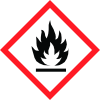


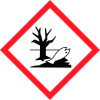
Note: Ingredients listed on restricted chemical lists
EC/CAS
203-806-2/110-82-7
Name of the chemical
Cyclohexane
Concentration
99.9-100.0
General Information
Revision date
2018-07-09
Product name
SOLANE CYCLOHEXANE
Substance name
SOLANE CYCLOHEXANE
CAS No.
110-82-7
REACH No
01-2119463273-41
supplier name
TOTAL BELGIUM
Emergency telephone
+44 1235 239670, +32 (0)78 15 51 51, +32 (0)2 264 48 48, +32 (0)3 217 71 11, +32 (0)9 240 34 90, +32 (0)16 34 87 50, +32 (0)71 44 80 00, +32 (0)4 366 72 94, +32 (0)70 245 245
Icons in SDS


Company Information
company name
TOTAL BELGIUM
e-mail address of the competent person responsible for the Safety Data Sheet
rm.be-reach-belgium-msds@total.com, rmfs.fds@total.com
GHS Information
Signal word
Danger
Hazard Codes
Hazard statements (CLP)
H225, H304, H315, H336, H400, H410
Hazard statements
Code
Statements
H225
Highly Flammable liquid and vapour
Section 2
2.1 Classification of the substance or mixture
REGULATION (EC) No 1272/2008 For the full text of the H-Statements mentioned in this Section, see Section 2.2. Flammable liquids - Category 2 - H225 Aspiration toxicity - Category 1 - H304 Skin corrosion/irritation - Category 2 - H315 Specific target organ toxicity (single exposure) - Category 3 - H336 Acute aquatic toxicity - Category 1 - H400 Chronic aquatic toxicity - Category 1 - H410
2.2 Label elements
Labelled according to REGULATION (EC) No 1272/2008
Contains
Cyclohexane EC-No 203-806-2
Signal word
DANGER
Hazard statements
H225 - Highly flammable liquid and vapour H304 - May be fatal if swallowed and enters airways H315 - Causes skin irritation H336 - May cause drowsiness or dizziness H400 - Very toxic to aquatic life H410 - Very toxic to aquatic life with long lasting effects
Precautionary statements
P273 - Avoid release to the environment P301 + P310 - IF SWALLOWED: Immediately call a POISON CENTER or doctor/physician P210 - Keep away from heat, hot surfaces, sparks, open flames and other ignition sources. No smoking P243 - Take precautionary measures against static discharge P260 - Do not breathe dust/fume/gas/mist/vapours/spray P280 - Wear protective gloves/protective clothing/eye protection/face protection P303 + P361 + P353 - IF ON SKIN (or hair): Take off immediately all contaminated clothing. Rinse skin with water/ shower P331 - Do NOT induce vomiting
2.3 Other hazards
Physical-Chemical Properties The vapours are heavier than air and may carry along the ground giving a high risk of explosion. Friction generated by product discharge can create static charges of sufficient magnitude to cause SPARKS WHICH MAY LEAD TO FIRE OR EXPLOSION.
Potential health effects
If swallowed accidentally, the product may enter the lungs due to its low viscosity and lead to the rapid development of very serious pulmonary lesions (medical survey during 48 hours). Inhalation of vapours in high concentration may cause anaesthesia and irritation of respiratory system. Vapours or mists are irritating to mucous membranes, particularly the eyes.
Environmental effects
Should not be released into the environment.



