



Note: Ingredients listed on restricted chemical lists
EC/CAS
203-473-3/107-21-1
Name of the chemical
Ethane-1,2-diol
Concentration
90-100%
EC/CAS
209-773-0/592-85-8
Name of the chemical
Mercuric thiocyanate
Concentration
0.25-≤2.5%
General Information
Revision date
2017-03-16
Product name
Chloride-52
1.2.1 Relevant identified uses
Reagent for water analysis
Emergency telephone
+ 1 866 928 0789 (English, French, Spanish
Icons in SDS


Company Information
company name
Tintometer Inc
GHS Information
Signal word
Danger
Hazard Codes
Hazard statements (CLP)
H302, H302+H332, H311, H332, H373, H400, H410
Hazard statements
Code
Statements
H302
Harmful if swallowed
Section 2
2.1 Classification of the substance or mixture
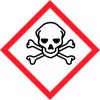
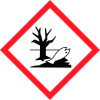
d ~ GHS06 Skull and crossbones Acute Tox. 3 H311 Toxic in contact with skin. d ~ GHS08 Health hazard STOT RE 2 H373 May cause damage to the kidneys through prolonged or repeated exposure. d ~ GHS09 Environment Aquatic Acute 1 H400 Very toxic to aquatic life. Aquatic Chronic 1 H410 Very toxic to aquatic life with long lasting effects. d ~ GHS07 Acute Tox. 4 H302 Harmful if swallowed. Acute Tox. 4 H332 Harmful if inhaled.
2.2 Label elements
The product is classified and labeled according to the Hazard Communication Standard (HCS)
Hazard pictograms
d ~ d ~ d ~ GHS06 GHS08 GHS09
Signal word
Danger
Hazardous Ingredients
ethane-1,2-diol mercury dithiocyanate (Contd. of page 1)
Hazard statements
H302+H332 Harmful if swallowed or if inhaled. H311 Toxic in contact with skin. H373 May cause damage to the kidneys through prolonged or repeated exposure. H400 Very toxic to aquatic life. H410 Very toxic to aquatic life with long lasting effects.
Precautionary statements
P260 Do not breathe mist/vapours/spray. P280 Wear protective gloves/protective clothing/eye protection. P303+P361+P353 If on skin (or hair): Take off immediately all contaminated clothing. Rinse skin with water/shower. P304+P340 IF INHALED: Remove person to fresh air and keep comfortable for breathing. P312 Call a POISON CENTER/doctor if you feel unwell. P405 Store locked up.
2.3 Other hazards
At long or repeated contact with skin it may cause dermatitis due to the degreasing effect of the solvent. CAS 107-21-1 / 592-85-8: Danger through skin absorption. Vapours of the product are heavier than air and may accumulate on the ground, in mines, drains or cellars with higher concentration.



