



Note: Ingredients listed on restricted chemical lists
EC/CAS
108-88-3
Name of the chemical
Toluene
Concentration
N/A
EC/CAS
123-86-4
Name of the chemical
acetic acid, butyl ester
Concentration
N/A
EC/CAS
203-625-9
Name of the chemical
Toluene
Concentration
N/A
General Information
Revision date
2021-04-18
Product name
4881, SOLVANT
Emergency telephone
Swiss emergency telephone number: 145 (Swiss Toxicological Information Centre
Icons in SDS
Company Information
company name
TIFLEX
e-mail address of the competent person responsible for the Safety Data Sheet
qse@tiflex.fr
GHS Information
Signal word
Danger
Hazard Codes
Hazard statements (CLP)
H225, H304, H315, H318, H336, H361d, H373, H412
Hazard statements
Code
Statements
H225
Highly Flammable liquid and vapour
Section 2
2.1 Classification of the substance or mixture
In compliance with EC regulation No. 1272/2008 and its amendments. Flammable liquid, Category 2 (Flam. Liq. 2, H225). Skin irritation, Category 2 (Skin Irrit. 2, H315). Serious eye damage, Category 1 (Eye Dam. 1, H318). Reproductive toxicity, Category 2 (Repr. 2, H361d). Specific target organ toxicity (single exposure), Category 3 (STOT SE 3, H336). Specific target organ toxicity (repeated exposure), Category 2 (STOT RE 2, H373). Aspiration hazard, Category 1 (Asp. Tox. 1, H304). Hazardous to the aquatic environment - Chronic hazard, Category 3 (Aquatic Chronic 3, H412).
2.2 Label elements
In compliance with EC regulation No. 1272/2008 and its amendments.
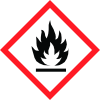
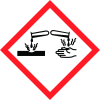
Hazard pictograms
GHS02 GHS05 GHS07 GHS08
Signal word
DANGER
Product definition
EC 203-625-9 TOLUENE 606-002-00-3 BUTANONE EC 203-631-1 CYCLOHEXANONE 607-025-00-1 N-BUTYL ACETATE
Hazard statements
H225 Highly flammable liquid and vapour. H304 May be fatal if swallowed and enters airways. H315 Causes skin irritation. H318 Causes serious eye damage. H336 May cause drowsiness or dizziness. H361d Suspected of damaging the unborn child. H373 May cause damage to organs through prolonged or repeated exposure . H412 Harmful to aquatic life with long lasting effects.
Prevention
P210 Keep away from heat, hot surfaces, sparks, open flames and other ignition sources. No smoking. P260 Do not breathe vapours. P263 Avoid contact during pregnancy. P280 Wear protective gloves/eye protection.
Response
P301 + P310 IF SWALLOWED: Immediately call a POISON CENTER or doctor. P303 + P361 + P353 IF ON SKIN (or hair): Take off immediately all contaminated clothing. Rinse skin with water/shower. P304 + P340 IF INHALED: Remove person to fresh air and keep comfortable for breathing. P305 + P351 + P338 IF IN EYES: Rinse cautiously with water for several minutes. Remove contact lenses, if present and easy to do. Continue rinsing. P312 Call a POISON CENTER or doctor if you feel unwell. P331 Do NOT induce vomiting. P332 + P313 If skin irritation occurs: Get medical advice/attention.
2.3 Other hazards
The mixture does not contain substances classified as ‘Substances of Very High Concern' (SVHC) >= 0.1% published by the European CHemicals Agency (ECHA) under article 57 of REACH: http://echa.europa.eu/fr/candidate-list-table The mixture fulfils neither the PBT nor the vPvB criteria for mixtures in accordance with annexe XIII of the REACH regulations EC 1907/2006. |> SECTION 3 : COMPOSITION/INFORMATION ON INGREDIENTS 3.2. Mixtures



