




General Information
Revision date
2023-03-10
Product name
Zinc nitrate hexahydrate
Product Synonyms
Nitric Acid, Zinc Salt, Hexahydrate
CAS No.
10196-18-6
Icons in SDS


Company Information
company name
Thermo Fisher Scientific New Zealand Ltd
e-mail address of the competent person responsible for the Safety Data Sheet
ANZinfo@thermofisher.com
GHS Information
Signal word
Danger
Hazard Codes
Hazard statements (CLP)
H272, H301, H315, H319, H335, H410
Hazard statements
Code
Statements
H272
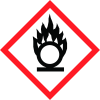
May intensify fire; oxidizer
H301
Toxic if swallowed
H315
Causes skin irritation
H319
Causes serious eye irritation
H335
May cause respiratory irritation
H410
Very toxic to aquatic life with long lasting effects
Section 2
SECTION 2: Hazards identification
GHS Classification Classification under Work Safe New Zealand Classified as hazardous in accordance with the criteria of EPA New Zealand
Physical hazards
Oxidizing solids Category 2
Health hazards
Acute Oral Toxicity Category 3 Skin Corrosion/Irritation Category 2 Serious Eye Damage/Eye Irritation Category 2 Specific target organ toxicity - (single exposure) Category 3
Environmental hazards
Acute aquatic toxicity Category 1 Chronic aquatic toxicity Category 1
Signal word
Danger
Hazard statements
H272 - May intensify fire; oxidizer H315 - Causes skin irritation H319 - Causes serious eye irritation H335 - May cause respiratory irritation H410 - Very toxic to aquatic life with long lasting effects H301 - Toxic if swallowed
Prevention
P210 - Keep away from heat, hot surfaces, sparks, open flames and other ignition sources. No smoking P220 - Keep away from clothing and other combustible materials P264 - Wash face, hands and any exposed skin thoroughly after handling P221 - Take any precaution to avoid mixing with combustibles P261 - Avoid breathing dust/fume/gas/mist/vapors/spray P280 - Wear eye protection/ face protection P270 - Do not eat, drink or smoke when using this product P271 - Use only outdoors or in a well-ventilated area P273 - Avoid release to the environment
Response
P304 + P340 - IF INHALED: Remove person to fresh air and keep comfortable for breathing P301 + P312 - IF SWALLOWED: Call a POISON CENTER or doctor if you feel unwell P302 + P352 - IF ON SKIN: Wash with plenty of soap and water P308 + P313 - IF exposed or concerned: Get medical advice/attention P305 + P351 + P338 - IF IN EYES: Rinse cautiously with water for several minutes. Remove contact lenses, if present and easy to do. Continue rinsing P332 + P313 - If skin irritation occurs: Get medical advice/attention P330 - Rinse mouth P370 + P378 - In case of fire: Use dry sand, dry chemical or alcohol-resistant foam to extinguish P362 + P364 - Take off contaminated clothing and wash it before reuse P391 - Collect spillage
Storage
P403 + P233 - Store in a well-ventilated place. Keep container tightly closed
Disposal
P501 - Dispose of contents/ container to an approved waste disposal plant
Other hazards which do not result in classification
Toxic to terrestrial vertebrates


