





Note: Ingredients listed on restricted chemical lists
EC/CAS
233-245-9/10099-74-8
Name of the chemical
Lead dinitrate
Concentration
>95
General Information
Version
4
Revision date
2026-01-09
Product name
Nitric acid, lead(2+) salt; Plumbous nitrate.; Lead dinitrate
CAS No.
10099-74-8
Emergency telephone
(800) 424-9300, 001 (202) 483-7616
Icons in SDS


Company Information
company name
Thermo Fisher Scientific India Pvt. Ltd
e-mail address of the competent person responsible for the Safety Data Sheet
laboratorysolution@thermofisher.com
GHS Information
Signal word
Danger
Hazard Codes
Hazard statements (CLP)
H272, H302, H302+H332, H317, H318, H332, H360, H372, H400, H410
Hazard statements
Code
Statements
H272
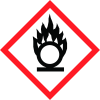
May intensify fire; oxidizer
H302
Harmful if swallowed
H302+H332
Harmful if swallowed or if inhaled
H317
May cause an allergic skin reaction
H318
Causes serious eye damage.
H332
Harmful if inhaled
H360
May damage fertility or the unborn child
H372
Causes damage to organs through prolonged or repeated exposure
H400
Very toxic to aquatic life
H410
Very toxic to aquatic life with long lasting effects
Section 2
SECTION 2: Hazards identification
CLP Classification - According to GB-CLP Regulations UK SI 2019/720 and UK SI 2020/1567 Classification of the substance or mixture GHS Classification - According to GB-CLP Regulations UK SI 2019/720 and UK SI 2020/1567
Physical hazards
Oxidizing solids Category 2 (H272)
Health hazards
Acute oral toxicity Category 4 (H302) Acute Inhalation Toxicity - Dusts and Mists Category 4 (H332) Serious Eye Damage/Eye Irritation Category 1 (H318) Skin Sensitization Category 1 Sub-category 1B (H317) Reproductive Toxicity Category 1A (H360) Specific target organ toxicity - (repeated exposure) Category 1 (H372)
Environmental hazards
Acute aquatic toxicity Category 1 (H400) Chronic aquatic toxicity Category 1 (H410) Full text of Hazard Statements: see section 16
Signal word
Danger
Hazard statements
H272 - May intensify fire; oxidizer H302 + H332 - Harmful if swallowed or if inhaled H317 - May cause an allergic skin reaction H318 - Causes serious eye damage H360 - May damage fertility or the unborn child H372 - Causes damage to organs through prolonged or repeated exposure H410 - Very toxic to aquatic life with long lasting effects
Precautionary statements
P220 - Keep away from clothing and other combustible materials P280 - Wear protective gloves/protective clothing/eye protection/face protection P302 + P352 - IF ON SKIN: Wash with plenty of soap and water P304 + P340 - IF INHALED: Remove person to fresh air and keep comfortable for breathing P305 + P351 + P338 - IF IN EYES: Rinse cautiously with water for several minutes. Remove contact lenses, if present and easy to do. Continue rinsing P310 - Immediately call a POISON CENTER or doctor/physician Additional EU labelling Restricted to professional users
2.3 Other hazards
In accordance with Annex XIII of the REACH Regulation, inorganic substances do not require assessment Toxic to terrestrial vertebrates This product does not contain any known or suspected endocrine disruptors
2.1 Classification of the substance or mixture
GHS Classification - According to GB-CLP Regulations UK SI 2019/720 and UK SI 2020/1567 Physical hazards Oxidizing solids Category 2 (H272) Health hazards Acute oral toxicity Category 4 (H302) Acute Inhalation Toxicity - Dusts and Mists Category 4 (H332) Serious Eye Damage/Eye Irritation Category 1 (H318) Skin Sensitization Category 1 Sub-category 1B (H317) Reproductive Toxicity Category 1A (H360) Specific target organ toxicity - (repeated exposure) Category 1 (H372) Environmental hazards Acute aquatic toxicity Category 1 (H400) Chronic aquatic toxicity Category 1 (H410) Full text of Hazard Statements: see section 16


