


General Information
Version
5
Revision date
2026-08-04
Product name
Cyclohexanone
Product Synonyms
Ketohexamethylene; Pimelic ketone
CAS No.
108-94-1
1.2.2. Uses advised against
This product contains one or more substance(s) on the Illicit Drug Precursors/Reagents list Verify requirements related to using, handling and storing these substances. This product does not contain any substance(s) subject to Prohibition, Authorization or Restriction. This product does not contain any substance(s) listed on the voluntary National Code of Practice for Chemicals of Security Concern
Emergency telephone
+613 9757 4559
Icons in SDS


Company Information
company name
ThermoFisher Scientific Australia Pty Ltd
e-mail address of the competent person responsible for the Safety Data Sheet
ANZinfo@thermofisher.com
GHS Information
Signal word
Danger
Hazard Codes
Hazard statements (CLP)
H226, H302+H312+H332, H315, H318, H335
Hazard statements
Code
Statements
H226
Flammable liquid and vapour
Section 2
SECTION 2: Hazards identification
Classified as hazardous according to criteria of Safe Work Australia. Classification under Safe Work Australia
Physical hazards
Flammable liquids Category 3
Health hazards
Acute Oral Toxicity Category 4 Acute Dermal Toxicity Category 4 Acute Inhalation Toxicity - Vapors Category 4 Skin Corrosion/Irritation Category 2 Serious Eye Damage/Eye Irritation Category 1 Specific target organ toxicity - (single exposure) Category 3
Environmental hazards
No hazards identified
2.2 Label elements
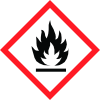
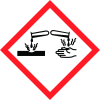
Flame Exclamation Mark Corrosion
Signal word
Danger
Hazard statements
H226 - Flammable liquid and vapor H315 - Causes skin irritation H318 - Causes serious eye damage H335 - May cause respiratory irritation H302 + H312 + H332 - Harmful if swallowed, in contact with skin or if inhaled
Precautionary statements
P210 - Keep away from heat, hot surfaces, sparks, open flames and other ignition sources. No smoking P240 - Ground and bond container and receiving equipment P241 - Use explosion-proof electrical/ ventilating/ lighting equipment P242 - Use non-sparking tools P243 - Take action to prevent static discharges P261 - Avoid breathing dust/fume/gas/mist/vapors/spray P264 - Wash face, hands and any exposed skin thoroughly after handling P270 - Do not eat, drink or smoke when using this product P271 - Use only outdoors or in a well-ventilated area P280 - Wear protective gloves/protective clothing/eye protection/face protection P303 + P361 + P353 - IF ON SKIN (or hair): Take off immediately all contaminated clothing. Rinse skin with water or shower P304 + P340 - IF INHALED: Remove person to fresh air and keep comfortable for breathing P305 + P351 + P338 - IF IN EYES: Rinse cautiously with water for several minutes. Remove contact lenses, if present and easy to do. Continue rinsing P310 - Immediately call a POISON CENTER or doctor P330 - Rinse mouth P363 - Wash contaminated clothing before reuse P370 + P378 - In case of fire: Use dry sand, dry chemical or alcohol-resistant foam to extinguish P403 + P233 - Store in a well-ventilated place. Keep container tightly closed P501 - Dispose of contents/ container to an approved waste disposal plant
Further information
Toxicity to Soil Dwelling Organisms Toxic to terrestrial vertebrates This product does not contain any known or suspected endocrine disruptors
2.1 Classification of the substance or mixture
Classified as hazardous according to criteria of Safe Work Australia Physical hazards Flammable liquids Category 3 Health hazards Acute Oral Toxicity Category 4 Acute Dermal Toxicity Category 4 Acute Inhalation Toxicity - Vapors Category 4 Skin Corrosion/Irritation Category 2 Serious Eye Damage/Eye Irritation Category 1 Specific target organ toxicity - (single exposure) Category 3 Environmental hazards No hazards identified



