


General Information
Version
4
Revision date
2025-12-22
Product name
Europium(III) nitrate hexahydrate
Product Synonyms
Nitric acid, europium(3+) salt, hexahydrate
CAS No.
10031-53-5
Emergency telephone
001-800-227-6701, +32 14 57 52 11, 001-201-796-7100, +32 14 57 52 99, 001-800-424-9300, 001-703-527-3887
Icons in SDS


Company Information
company name
Thermo Fisher Scientific Chemicals, Inc
GHS Information
Signal word
Danger
Hazard Codes
Hazard statements (CLP)
H272, H315, H319, H335, H336
Hazard statements
Code
Statements
H272
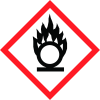
May intensify fire; oxidizer
H315
Causes skin irritation
H319
Causes serious eye irritation
H335
May cause respiratory irritation
H336
May cause drowsiness or dizziness
Section 2
SECTION 2: Hazards identification
(29 CFR 1910.1200) Classification
Signal word
Danger
Hazard statements
May intensify fire; oxidizer Causes skin irritation Causes serious eye irritation May cause respiratory irritation. May cause drowsiness and dizziness
Prevention
Wear protective gloves/protective clothing/eye protection/face protection Keep away from heat, hot surfaces, sparks, open flames and other ignition sources. No smoking Keep away from clothing and other combustible materials Take any precaution to avoid mixing with combustibles Avoid breathing dust/fume/gas/mist/vapors/spray Wash face, hands and any exposed skin thoroughly after handling Use only outdoors or in a well-ventilated area
Response
Call a POISON CENTER or doctor if you feel unwell Inhalation IF INHALED: Remove person to fresh air and keep comfortable for breathing Skin IF ON SKIN: Wash with plenty of soap and water Take off contaminated clothing If skin irritation occurs: Get medical advice/attention Eyes IF IN EYES: Rinse cautiously with water for several minutes. Remove contact lenses, if present and easy to do. Continue rinsing If eye irritation persists: Get medical advice/attention Fire Explosion risk In case of fire: Evacuate area. Fight fire remotely due to the risk of explosion Evacuate area
Storage
Store locked up Store in a closed container Store in a well-ventilated place. Keep cool
Disposal
Dispose of contents/container to an approved waste disposal plant
2.3 Other hazards
None identified
2.1 Classification of the substance or mixture
This chemical is considered hazardous according to [US] OSHA (29 CFR 1910.1200, 2024) Oxidizing solids Category 2 Skin Corrosion/Irritation Category 2 Serious Eye Damage/Eye Irritation Category 2 Specific target organ toxicity (single exposure) Category 3 Target Organs - Respiratory system, Central nervous system (CNS).


