




Note: Ingredients listed on restricted chemical lists
EC/CAS
10022-31-8
Name of the chemical
Barium-nitrate
Concentration
N/A
General Information
Version
6.1
Revision date
2022-02-17
Product name
Thermit Welding Igniters
Product name
Thermit Welding Igniters
Identification on the label/Trade name
IGNITERS†
Product Synonyms
Not Available
Chemical name
Not Applicable
1.2.1 Relevant identified uses
Igniter
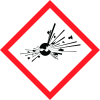
Icons in SDS


Company Information
company name
Thermit Australia
e-mail address of the competent person responsible for the Safety Data Sheet
ta@goldschmidt.com
GHS Information
Signal word
Danger
Hazard Codes
Hazard statements (CLP)
H204, H250, H261, H302, H371, H373
Hazard statements
Code
Statements
H204
Fire or projection hazard
Section 2
SECTION 2: Hazards identification
2.1 Classification of the substance or mixture
HAZARDOUS CHEMICAL. DANGEROUS GOODS. [1] Acute Toxicity (Oral) Category 4 Legend: 1. Classified by Chemwatch; 2. Classification drawn from HCIS; 3. Classification drawn from [1] Acute Toxicity (Oral) Category 4, Specific Target Organ Toxicity - Single Exposure Category 2, Specific Target Organ Toxicity - Repeated Exposure Category 2 Legend: 1. Classified by Chemwatch; 2. Classification drawn from CCID EPA NZ; 3. Classification drawn from
Signal word
Danger Danger
Hazard statements
AUH044 Risk of explosion if heated under confinement. H204 Fire or projection hazard. H250 Catches fire spontaneously if exposed to air. H261 In contact with water releases flammable gases. H302 Harmful if swallowed. Page 1 continued... H204 Fire or projection hazard. H250 Catches fire spontaneously if exposed to air. H261 In contact with water releases flammable gases. H302 Harmful if swallowed. H371 May cause damage to organs. H373 May cause damage to organs through prolonged or repeated exposure.
Prevention
P210 Keep away from heat, hot surfaces, sparks, open flames and other ignition sources. No smoking. P231+P232 Handle and store contents under inert gas. Protect from moisture. P233 Keep container tightly closed. P234 Keep only in original packaging. P250 Do not subject to grinding/shock/sources of friction. P280 Wear protective gloves, protective clothing, eye protection, face protection and hearing protection. P240 Ground and bond container and receiving equipment. P264 Wash all exposed external body areas thoroughly after handling. P270 Do not eat, drink or smoke when using this product. P222 Do not allow contact with air. P223 Do not allow contact with water. P210 Keep away from heat, hot surfaces, sparks, open flames and other ignition sources. No smoking. P231+P232 Handle and store contents under inert gas. Protect from moisture. P233 Keep container tightly closed. P234 Keep only in original packaging. P250 Do not subject to grinding/shock/sources of friction. P260 Do not breathe dust/fume. Continued... P280 Wear protective gloves, protective clothing, eye protection, face protection and hearing protection. P240 Ground and bond container and receiving equipment. P270 Do not eat, drink or smoke when using this product. P264 Wash all exposed external body areas thoroughly after handling. P222 Do not allow contact with air. P223 Do not allow contact with water.
Response
P302+P334 IF ON SKIN: Immerse in cool water or wrap in wet bandages. P302+P335+P334 IF ON SKIN: Brush off loose particles from skin. Immerse in cool water [or wrap in wet bandages]. P370+P372+P380+P373 In case of fire: Explosion risk. Evacuate area. DO NOT fight fire when fire reaches explosives. P370+P378 In case of fire: Use ... to extinguish. P370+P380+P375 In case of fire: Evacuate area. Fight fire remotely due to the risk of explosion. P301+P312 IF SWALLOWED: Call a POISON CENTER/doctor/physician/first aider if you feel unwell. P330 Rinse mouth. P302+P334 IF ON SKIN: Immerse in cool water or wrap in wet bandages. P302+P335+P334 IF ON SKIN: Brush off loose particles from skin. Immerse in cool water [or wrap in wet bandages]. P370+P372+P380+P373 In case of fire: Explosion risk. Evacuate area. DO NOT fight fire when fire reaches explosives. P370+P378 In case of fire: Use ... to extinguish. P370+P380+P375 In case of fire: Evacuate area. Fight fire remotely due to the risk of explosion. P308+P311 IF exposed or concerned: Call a POISON CENTER/doctor/physician/first aider. P314 Get medical advice/attention if you feel unwell. P301+P312 IF SWALLOWED: Call a POISON CENTER/doctor/physician/first aider if you feel unwell. P330 Rinse mouth.
Storage
P401 Store in accordance with local/regional/national/international regulations. P402+P404 Store in a dry place. Store in a closed container. P405 Store locked up. P401 Store in accordance with local/regional/national/international regulations. P402+P404 Store in a dry place. Store in a closed container.
Disposal
P501 Dispose of contents/container to authorised hazardous or special waste collection point in accordance with any local regulation. P503 Refer to manufacturer or supplier for information on disposal/recovery/recycling. Considered a Hazardous Substance according to the criteria of the New Zealand Hazardous Substances New Organisms legislation. Classified as Dangerous Goods for transport purposes. Explosives Division 1.4, Pyrophoric Solids Category 1, Substances and Mixtures which in Contact with Water Emit Flammable Gases Category 2, P501 Dispose of contents/container to authorised hazardous or special waste collection point in accordance with any local regulation. P503 Refer to manufacturer or supplier for information on disposal/recovery/recycling.


