




Note: Ingredients listed on restricted chemical lists
EC/CAS
7440-31-5
Name of the chemical
Organometallic tin
Concentration
N/A
EC/CAS
7440-22-4
Name of the chemical
Silver
Concentration
N/A
EC/CAS
7439-92-1
Name of the chemical
Blei, massiv: [Partikeldurchmesser ≥ 1 mm]
Concentration
N/A
Listed in
EC/CAS
231-141-8
Name of the chemical
Organometallic tin
Concentration
N/A
EC/CAS
231-131-3
Name of the chemical
Silver (nano) [1 nm < particle diameter ≤ 100 nm] Silver (massive) [particle diameter ≥ 1 mm]
Concentration
N/A
EC/CAS
231-100-4
Name of the chemical
Blei, massiv: [Partikeldurchmesser ≥ 1 mm]
Concentration
N/A
General Information
Revision date
2020-12-15
Product name
INDALLOY WITH NC-SMQ90 FLUX VEHICLE (LEAD CONTAINING) SOLDER PASTE
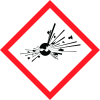
Icons in SDS
Company Information
company name
The Indium Corporation
e-mail address of the competent person responsible for the Safety Data Sheet
nswarts@indium.com, aday@indium.com
GHS Information
Signal word
Danger
Hazard Codes
Hazard statements (CLP)
H303, H317, H334, H360FD, H362, H372
Hazard statements
Code
Statements
H303
May be harmful if swallowed
H317
May cause an allergic skin reaction
H334
May cause allergy or asthma symptoms or breathing difficulties if inhaled
H360FD
May damage fertility. May damage the unborn child.
H362
May cause harm to breast-fed children
H372
Causes damage to organs through prolonged or repeated exposure
Section 2
Principle Routes of Exposure
Carcinogen listed in Eye Inhalation Skin Ingestion NTP IARC OSHA Not Listed
2.1 Classification of the substance or mixture
mixture) Skin sensitizer-Category 1B Respiratory sensitizer-Category 1B Serious eye irritation- Category 2A Repr. 1A H360FD; Lact. H362;STOT RE1,H372
2.2 Label elements
Labeling according to regulation EC No 1907/2006 GHS:
Signal word
Danger
Hazard statements
H303 May be harmful if swallowed H317 May cause an allergic skin reaction H334 May cause allergy or asthma symptoms or breathing difficulties if inhaled H360FD May damage fertility or the unborn child H362 May cause harm to breast-fed children H372 Causes damage to organs through prolonged or repeated exposure
Precautionary statements
P233 Keep container tightly closed P261 Avoid breathing dust/fume/gas/mist/vapors/spray P270 Do not eat, drink or smoke when using this product P273 Avoid release to the environment P280 Wear protective gloves/protective clothing/eye protection/face protection P362 +364 Take off contaminated clothing and wash before reuse P301 + P314 IF SWALLOWED: Get medical advice/attention if you feel unwell P302 +P352 IF ON SKIN: Wash with plenty of soap and water P304 + 341 IF INHALED: If breathing is difficult, remove victim to fresh air and keep at rest in a position comfortable for breathing P305 + 351 IF IN EYES: Rinse continuously with water for several minutes (15 mins)
Additional information
EUH201A Warning! Contains lead. Review listing. EUH208 Contains rosin. May produce an allergic reaction
Potential health effects
Eye Contact: Contact with material at room temperature or fume from material at typical re-flow temperatures over 100°C may cause eye irritation. Ingestion: This product contains metal alloy powders and organic chemicals. May be harmful if swallowed. May cause burns to the digestive tract and systematic effects. Inhalation: Vapors or fumes from this material at typical re-flow temperatures over 100°C may cause local irritation to the respiratory system. May be harmful if inhaled. Rosin may cause occupational asthma. Skin Contact: May cause skin irritation or dermatitis. Rosin may cause skin sensitization. Chronic: SILVER: Chronic skin contact or ingestion of silver powder, salts or fume can result in a condition known as Argyria, a condition with bluish pigmentation of the skin and eyes. TIN: Has been shown to increase incidence of sarcoma in animal tests. LEAD: Prolonged exposure to vapors or fumes at higher temperatures may cause respiratory irritation and systematic lead poisoning. Symptoms of lead poisoning include headache, nausea, abdominal pain, muscle and joint pain and damage to the nervous system, blood system and kidneys. Signs and symptoms of exposure – anemia. Possible carcinogenic to humans. BISMUTH: May cause kidney damage. INDIUM: May cause damage to respiratory system.


