

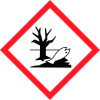


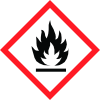
Note: Ingredients listed on restricted chemical lists
EC/CAS
203-806-2/110-82-7
Name of the chemical
Cyclohexane
Concentration
30-60%
EC/CAS
200-578-6/64-17-5
Name of the chemical
Ethanol
Concentration
5-10%
EC/CAS
205-500-4/141-78-6
Name of the chemical
acetic acid, ethyl ester
Concentration
1-5%
EC/CAS
203-625-9/108-88-3
Name of the chemical
Toluene
Concentration
<2%
EC/CAS
203-550-1/108-10-1
Name of the chemical
4-methylpentan-2-one; isobutyl methyl ketone (MIBK)
Concentration
<0.5%
EC/CAS
202-704-5/98-82-8
Name of the chemical
Cumol (2022/692)
Concentration
<0.2%
General Information
Product name
Extreme Surface Primer
1.2.1 Relevant identified uses
Used to promote adhesion of tapes to various surfaces such as polyethylene, polypropylene, ABS, PET/PBT blends, concrete, wood, glass, metal and painted metal surfaces
supplier name
Tenacious Tapes
Emergency telephone
+61 0488 010 103
Icons in SDS


Company Information
company name
Tenacious Tapes
e-mail address of the competent person responsible for the Safety Data Sheet
customerservice@tenacioustapes.com.au
GHS Information
Signal word
Warning, Danger
Hazard Codes
Hazard statements (CLP)
H225, H304, H312, H315, H319, H332, H336, H373, H410
Hazard statements
Code
Statements
H225
Highly Flammable liquid and vapour
Section 2
SECTION 2: Hazards identification
2.2 Label elements
The product is classified and labeled in accordance with CLP regulations.
Signal word
Warning, Danger
Hazard statements
• H225 Highly flammable liquid and vapour • H312 Harmful in contact with skin • H315 Causes skin irritation. • H332 Harmful if inhaled. • H304 May be fatal if swallowed and enters airways. • H373 Causes damage to organs through prolonged or repeated exposure • H319 Causes serious eye irritation. • H336 May cause drowsiness or dizziness • H410 very toxic to aquatic life with long lasting effects
Precautionary statements
Preventive measures: • P210 Keep away from heat/ sparks/ open flames/ hot surfaces. No smoking. • P233 Keep container tightly closed. • P240 Container and loading equipment grounding/equipotential connection. • P241 Use explosion-proof electrical/ ventilating/ lighting/ equipment. • P242 Use only non-sparking tools. • P243 Take precautionary measures against static discharge. • P280 Wear protective gloves/ protective clothing/ eye protection/ face protection. • P261 Avoid inhaled dust / smoke / gas / fumes / vapors / sprays. • P271 Use only outdoors or in a well-ventilated area. • P264 Thoroughly clean after operation. • P273 Avoid release to the environment. • P201 Obtain special instructions before use. • P202 Do not move until all safety precautions have been read and understood. Accident response: • P303 + P361 + P353 IF ON SKIN (or hair): Take off immediately all contaminated clothing. Rinse skin with water/shower. • P370 + P378 In case of fire: Use dry sand, dry chemical or alcohol-resistant foam to extinguish. • P302 + P352 If on skin: Wash well with water. • P312 If feeling unwell, call a detoxification center/doctor • P321 Specific treatment (see... on this label). • P362 + P364 Take off contaminated clothing and wash it before re-use • P332 + P313 If skin irritation occurs: seek medical attention. • P304 + P340 IF INHALED: Remove person to fresh air and keep comfortable for breathing. • P314 If you feel unwell, seek medical advice/attention. • P331 Do not induce vomiting. • P301 + P310 If swallowed by mistake: Immediately call a detoxification center/doctor • P370 + P378 In case of fire: Use to extinguish. • P305 + P351 + P338 IF IN EYES: Rinse cautiously with water for several minutes. Remove contact lenses, if present and easy to do. Continue rinsing • P337 + P313 If eye irritation persists: Get medical advice/attention. • P308 + P313 If exposed or concerned: Get medical advice/attention. Safe storage: • P403+P235 Store in a well-ventilated place. Keep cool. • P403+P233 Store in a well-ventilated place. Keep container tightly closed. • P405 Storage must be locked. Disposal of waste: • P501 Dispose of contents/ container to an approved waste disposal plant. Invasion route: Skin contact: Causes skin irritation. Eyes contact: Cause severe eye irritation. Inhalation: Harmful if inhaled, may cause drowsiness or dizziness, may cause respiratory irritation. Ingestion: May be fatal if swallowed and enters airways.
Health hazards
Causes skin irritation. Cause severe eye irritation. Inhalation is harmful, May cause drowsiness or dizziness. May be fatal if swallowed and enters airways.
Environmental hazards
It is extremely toxic to aquatic organisms. It is extremely toxic to aquatic organisms and has long-lasting and continuous effects. Explosion hazard: Flammable. Steam and air can form explosive mixtures, which can ignite and explode when exposed to open flames or high heat energy. Steam is heavier than air and can spread to a considerable distance at lower levels. When exposed to a source of fire, it can ignite, reignite, and explode (flash explosion). In a fire scene, heated containers or storage tanks pose a risk of explosion.
2.1 Classification of the substance or mixture
Classification according to Regulation (EC) No. 1272/2008 Flammable liquids Category 2 H225 Highly flammable liquid and vapour Acute toxicity - Category 4, Dermal H312 Harmful in contact with skin Skin Corrosion/Irritation Category 2 H315 Causes skin irritation Acute toxicity - inhalation Category 4 H332 Harmful if inhaled Aspiration hazard category 1 H304 May be fatal if swallowed and enters airways Specific target organ toxicity - repeated H373 Causes damage to organs through prolonged or repeated Category 2 exposure Serious Eye Damage / Eye Irritation H319 Causes serious eye irritation Category 2 Specific target organ toxicity - single H336 May cause drowsiness or dizziness exposure Category 3 Hazardous to the aquatic environment - H410 very toxic to aquatic life with long lasting effects chronic Category 1



