


Note: Ingredients listed on restricted chemical lists
EC/CAS
107-21-1
Name of the chemical
Ethane-1,2-diol
Concentration
N/A
EC/CAS
144-62-7
Name of the chemical
oxalic acid
Concentration
N/A
General Information
Revision date
2020-07-07
Product name
TGO
Product Synonyms
GERMANIUM DIOXIDE SOLUTION TGO
1.2.1 Relevant identified uses
Catalyst Solution
supplier name
Other than USA)
Emergency telephone
USA, 99202
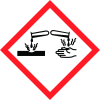
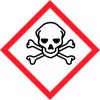
Icons in SDS
Company Information
company name
Teck Metals Ltd
GHS Information
Signal word
DANGER
Section 2
2.1 Classification of the substance or mixture
Health Physical Environmental Acute Toxicity (Oral) – Category 4 Does not meet criteria for Aquatic Toxicity – Skin Corrosion/Irritation – Category 1 any Physical Hazard Short Term Eye Damage/Eye Irritation – Category 2B Category 1 Respiratory or Skin Sensitization – Does not meet criteria Mutagenicity – Does not meet criteria Carcinogenicity – Does not meet criteria Reproductive Toxicity – Category 2 Specific Target Organ Toxicity: Acute Exposure – Category 3 Chronic Exposure – Category 1 LABEL:
Signal word
DANGER
Precautionary statements
DANGER! Causes severe skin burns and eye Obtain special instructions before use. damage. Do not handle until all safety instructions have been read and understood. Harmful if swallowed. Do not breathe mists or vapours. May cause respiratory irritation. Wear protective gloves, protective clothing and eye/face protection. Wash May cause damage to kidneys through thoroughly after handling. prolonged or repeated inhalation of mists. Do not eat, drink or smoke when using this product. Suspected of damaging fertility or the If exposed or concerned: Get medical advice/attention. unborn child. Collect spillage. Avoid release to the environment. Very toxic to aquatic life. Store locked up. Dispose of containers/contents according to local hazardous waste regulations. IF ON SKIN or HAIR: Take off immediately all contaminated clothing. Rinse skin with water or shower. Immediately call for medical assistance. Wash contaminated clothing before reuse. IF IN EYES: Rinse cautiously with water for several minutes. Do not delay irrigation in order to attempt to remove contact lenses. If eye irritation persists, get medical advice/attention. IF INHALED: Remove person to fresh air and keep comfortable for breathing. Get medical advice/attention if you feel unwell. IF SWALLOWED: Rinse mouth. DO NOT induce vomiting. Immediately call for medical assistance. Emergency Overview: A colourless, odourless liquid which is non-combustible but, in a fire, may decompose with the possible production of irritating and potentially toxic fumes. Skin or eye contact will cause irritation of tissues.
Potential health effects
Skin or eye contact will cause corrosion and/or irritation of tissue, which may be severe in the case of eye contact. Vapours or mist may be irritating to the upper respiratory system. Moderately toxic by ingestion. Reproductive effects have also been demonstrated in experimental animals for one of the major components. None of the components is listed as a human carcinogen by OSHA, the NTP, IARC, the ACGIH or the European Union (EU) (see Toxicological Information, Section 11).
Environmental effects
Germanium compounds are believed to pose a low level of environmental hazard but there is little documentation on this subject. Ethylene glycol is known to have a relatively low level of toxicity to organisms. However, the product is hazardous because of its substantial acid content and low pH (see Ecological Information, Section 12).



