


General Information
Version
10
Revision date
2023-07-13
Product name
PGMEA
Chemical name
Alternate product identifier(s)
Emergency telephone
(800) 424 - 9300
Icons in SDS


Company Information
company name
Tarr, LLC
GHS Information
Signal word
Warning
Hazard Codes
Hazard statements (CLP)
H226, H336
Hazard statements
Code
Statements
H226
Flammable liquid and vapour
Section 2
SECTION 2: Hazards identification
Classification of the substance or mixture
Health hazards
Target Organ Toxicity (Single exposure), Category 3
Physical hazards
Flammable Liquids, Category 3
2.2 Label elements
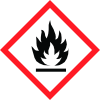
Flame Exclamation mark
Hazard statements
H226: Flammable liquid and vapour. H336: May cause drowsiness or dizziness.
Prevention
P261: Avoid breathing dust/fume/gas/mist/vapours/spray. P240: Ground and bond container and receiving equipment. P210: Keep away from heat, hot surfaces, sparks, open flames and other ignition sources. No smoking. P233: Keep container tightly closed. P243: Take action to prevent static discharges. P241: Use explosion-proof [electrical/ventilating/lighting/...] equipment. PGMEA P242: Use non-sparking tools. P271: Use only outdoors or in a well-ventilated area. P280: Wear protective gloves/protective clothing/eye protection/face protection.
Response
P304+P341 IF INHALED If breathing is difficult, remove victim to fresh air and keep at rest in a position comfortable for breathing. P306+P360 IF ON CLOTHING Rinse immediately contaminated clothing and skin with plenty of water before removing clothes. P302+P350 IF ON SKIN Gently wash with plenty of soap and water P301+P310 IF SWALLOWED Immediately call a POISON CENTER/doctor/ P308+P311 IF exposed or concerned Call a POISON CENTER/doctor/
Storage
P234: Keep only in original packaging. P102: Keep out of reach of children. P403+P233: Store in a well-ventilated place. Keep container tightly closed.
Disposal
P501: Dispose of contents/container to an approved waste disposal plant.
Potential health effects
Eye: May cause moderate irritation, including burning sensation, tearing, redness or swelling. Skin: May cause mild skin irritation. Symptoms may include redness and burning of skin. Passage of this material into the body through the skin is possible, but it is unlikely that this would result in harmful effects during safe handling and use. Ingestion May cause gastrointestinal discomfort with any or all of the following symptoms nausea, vomiting, lethargy or diarrhea. Inhalation: Prolonged overexposure to either vapor or mist may cause coughing, shortness of breath, dizziness and drunkenness.
Medical Conditions Generally Aggravated by Exposure
Pre-existing disorders or diseases of the eye. This material may affect mucous tissue and/or aggravate mucous membrane dysfunction.
Principle Routes of Exposure
Inhalation, skin absorption, skin contact, eye contact Target organ statement: Overexposure to this material (or its components) has been suggested as a cause of the following effects in laboratory animals: mild, reversible liver effects; mild, reversible kidney effects; nasal damage.
2.1 Classification of the substance or mixture
Health hazards: Target Organ Toxicity (Single exposure), Category 3 Physical hazards: Flammable Liquids, Category 3



