


Note: Ingredients listed on restricted chemical lists
EC/CAS
231-153-3/7440-44-0
Name of the chemical
Carbon black
Concentration
20<=x%<60 10<=x%<30
EC/CAS
231-159-6/7440-50-8
Name of the chemical
Copper
Concentration
1<=x%<15 5<=x%<25 1<=x%<10
EC/CAS
231-072-3/7429-90-5
Name of the chemical
Aluminium
Concentration
1<=x%<30
General Information
Revision date
2015-06-17
Product name
BATTERIE PASLODE LITHIUM
1.2.1 Relevant identified uses
Rechargeable lithium ion batteries
Emergency telephone
112
Icons in SDS


Company Information
company name
SPIT PASLODE
e-mail address of the competent person responsible for the Safety Data Sheet
msds-reach@spit.com
GHS Information
Signal word
Danger
Hazard Codes
Hazard statements (CLP)
H261, H312, H314, H317
Hazard statements
Code
Statements
H261
In contact with water releases flammable gas
Section 2
2.1 Classification of the substance or mixture
In compliance with EC regulation No. 1272/2008 and its amendments. Substance which releases flammable gases in contact with water, Category 2 (Water-react. 2, H261). Acute dermal toxicity, Category 4 (Acute Tox. 4, H312). Skin corrosion, Category 1B (Skin Corr. 1B, H314). Skin sensitisation, Category 1 (Skin Sens. 1, H317). Reacts violently with water (EUH014). This mixture does not present an environmental hazard. No known or foreseeable environmental damage under standard conditions of use.
2.2 Label elements
In compliance with EC regulation No. 1272/2008 and its amendments.
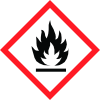
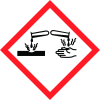
Hazard pictograms
GHS07 GHS05 GHS02
Signal word
DANGER
Product definition
LITHIUM TRANSITION METAL OXIDATE
Hazard statements
H261 In contact with water releases flammable gases. H312 Harmful in contact with skin. H314 Causes severe skin burns and eye damage. H317 May cause an allergic skin reaction. EUH014 Reacts violently with water.
Precautionary statements
P101 If medical advice is needed, have product container or label at hand. P102 Keep out of reach of children. P103 Read label before use. Disposal P501 Dispose of contents/container at a disposal facility in accordance with local regulations.
Prevention
P223 Keep away from any possible contact with water, because of violent reaction and possible flash fire. P260 Do not breathe vapours. P264 Wash hands thoroughly after handling. P280 Wear protective gloves/protective clothing/eye protection/face protection.
Response
P301 + P330 + P331 IF SWALLOWED: rinse mouth. Do NOT induce vomiting. P303 + P361 + P353 IF ON SKIN (or hair): Remove/Take off immediately all contaminated clothing. Rinse skin with water/shower. P304 + P340 IF INHALED: Remove victim to fresh air and keep at rest in a position comfortable for breathing. P305 + P351 + P338 IF IN EYES: Rinse cautiously with water for several minutes. Remove contact lenses, if present and easy to do. Continue rinsing. P312 Call a POISON CENTER or doctor/physician if you feel unwell. P333 + P313 If skin irritation or rash occurs: Get medical advice/attention. P335 + P334 Brush off loose particles from skin. Immerse in cool water / wrap in wet bandages. P363 Wash contaminated clothing before reuse. P370 + P378 In case of fire: Use ... for extinction.
Storage
P402 + P404 Store in a dry place. Store in a closed container.
2.3 Other hazards
The mixture does not contain substances classified as ‘Substances of Very High Concern' (SVHC) >= 0.1% published by the European CHemicals Agency (ECHA) under article 57 of REACH: http://echa.europa.eu/fr/candidate-list-table The mixture satisfies neither the PBT nor the vPvB criteria for mixtures in accordance with annexe XIII of the REACH regulations EC 1907/2006. THE BATTERY IS AN ARTICLE CONTAINING AN INTEGRATED MIXTURE (electrolyte - REACH definition). THE ELECTROLYTE IS CONSUMED DURING THE ARTICLE'S USE PHASE AND IS NOT REJECTED (unless the article is damaged). THE ABOVE LABEL IS THEREFORE FOR INFORMATION PURPOSES in case the ARTICLE IS DAMAGED and should not be fixed to the article. The rechargeable lithium ion batteries described in this SDS are sealed products that are not hazardous when used in accordance with the manufacturer's instructions. Do not short circuit, pierce, incinerate, crush, submerge, forcefully discharge or expose to temperatures in excess of the operating range stated on the products. Risk of fire and explosion.



