



Note: Ingredients listed on restricted chemical lists
EC/CAS
64742-95-6
Name of the chemical
Solvent naphtha (petroleum), light arom
Concentration
N/A
EC/CAS
25068-38-6
Name of the chemical
4,4'-Isopropylidenediphenol, oligomeric reaction products with 1-chloro-2,3-epoxypropane
Concentration
N/A
EC/CAS
265-199-0
Name of the chemical
Solvent naphtha (petroleum), light arom
Concentration
N/A
General Information
Revision date
2018-09-28
Product name
Poly Fix
1.2.1 Relevant identified uses
Polyurea Repair Product
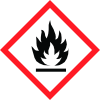
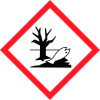
Icons in SDS
Company Information
company name
SpecChem
GHS Information
Signal word
Danger
Hazard Codes
Hazard statements (CLP)
H226, H304, H315, H317, H319, H335, H336, H341, H350, H411
Hazard statements
Code
Statements
H226
Flammable liquid and vapour
Section 2
SECTION 2: Hazards identification
1999/45/EC EMERGENCY OVERVIEW: This product is a clear to amber colored liquid with a petroleum distillate odor.
Health hazards
May cause skin, eye, and respiratory system irritation. May be an aspiration hazard Inhalation may cause drowsiness or dizziness Flammability Hazards: This product is a non-flammable liquid. Reactivity Hazards: None.
Environmental hazards
The environmental effects of this product have not been investigated, however release may cause long term adverse environmental effects. US DOT Symbols: EU and GHS Symbols:
Signal word
Danger 2.1 EU Labeling and Classification: This product meets the definition of a hazardous substance or preparation as defined by the European Union Council Directives 67/548/EEC, 1999/45/EC, 1272/2008/EC and subsequent Directives. EU HAZARD CLASSIFICATION OF INGREDIENTS PER DIRECTIVE 1272/2008/EC: Index Number: 500-033-5 is listed in Annex I 603-074-00-8 265-199-0 is listed in Annex I 649-356-00-4 Substances not listed either individually or in group entries must be self classified. Components Contributing to Classification: Bisphenol A Diglycidyl Ether Resin, Aromatic Hydrocarbon pg. 2
Classification according to GHS
Skin Irritation Category 2 Skin Sensitization Category 1 Eye Irritant Category 2 Germ Cell Mutagenicity Category 2 Chronic Aquatic Toxicity Category 2 Flammable Liquid Category 3 Carcinogenicity Category 1B STOT – SE Category 3 (Respiratory System, Central Nervous System) Aspiration Toxicity Category 1
Hazard statements
H315 Causes skin irritation H317 May cause an allergic skin reaction H319 Causes serious eye irritation H341 Suspected of causing genetic defects H411 Toxic to aquatic life with long lasting effects H226 Flammable liquid and vapour H350 May cause cancer H335 May cause respiratory irritation H336 May cause drowsiness or dizziness H304 May be fatal if swallowed and enters airways
Precautionary statements
P280 Wear protective gloves/eye protection/face protection. P264 Wash thoroughly after handling. P201 Obtain special instructions before use. P202 Do not handle until all safety precautions have been read and understood. P261 Avoid breathing dust/fume/gas/mist/vapours/spray. P272 Contaminated clothing should not be allowed out of the workplace. P273 Avoid release to the environment. P271 Use only outdoors or in a well-ventilated area. P210 Keep away from heat/sparks/open flames/hot surfaces. No smoking. P233 Keep container tightly closed. P240 Ground/Bond container and receiving equipment. P241 Use explosion-proof electrical/ventilating/lighting equipment. P242 Use only non-sparking tools. P243 Take precautionary measures against static discharge.
Response
P302+P352 IF ON SKIN: Wash with plenty of water. pg. 3 P305+P351+P338 IF IN EYES: Rinse cautiously with water for several minutes. Remove contact lenses, if present and easy to do. Continue rinsing. P333+P313 If skin irritation or rash occurs: Get medical advice/attention. P332+P313 If skin irritation occurs: Get medical advice/attention. P337+P311 If eye irritation persists: Get medical advice/attention. P362+P364 Take off contaminated clothing and wash it before reuse. P304+P340 IF INHALED: Remove person to fresh air and keep comfortable for breathing. P308+P313 IF exposed or concerned: Get medical advice/attention. P301+P310 IF SWALLOWED: Immediately call a POISON CENTER/doctor. P303+P361+P353 IF ON SKIN (or hair): Take off immediately all contaminated clothing. Rinse skin with water/shower. P370+P378 In case of fire: Use dry sand, dry chemical or alcohol resistant foam for extinction. P391 Collect spillage.
Storage
P405 Store locked up.
Disposal
P501 Dispose of contents/container in accordance with local/regional/national/international regulations. 2.3 Health Hazards or Risks From Exposure: Symptoms of Overexposure by Route of Exposure: The most significant routes of overexposure for this product are by contact with skin or eyes. The symptoms of overexposure are described in the following paragraphs. Acute: Inhalation: May cause respiratory tract irritation. May cause headaches, drowsiness, or dizziness. Skin Contact: May cause moderate irritation to skin. Repeated exposure may cause skin dryness or cracking. Eye Contact: Vapours and direct contact to the eyes may be irritating. Ingestion: May cause lung damage if aspirated. Chronic: Repeated exposure may cause skin dryness or cracking.. Target Organs: Acute: Skin, Eyes, Respiratory System, Central Nervous System Chronic: Skin.



