


General Information
Revision date
2020-01-01
Product name
EVG
1.2.1 Relevant identified uses
Oxidation Treatment
Manufacturer Name
Source Technologies
Icons in SDS


Company Information
company name
Source Technologies
e-mail address of the competent person responsible for the Safety Data Sheet
admin@sourcetechnologiesllc.com
GHS Information
Signal word
State
Section 2
SECTION 2: Hazards identification
Emergency Overview CAUTION: MAY CAUSE EYE, SKIN AND RESPIRATORY TRACT IRRITATION. INGESTION MAY CAUSE GASTRIC DISTURBANCES. Use with local exhaust ventilation. Wear a NIOSH-certified (or equivalent) organic vapor/particulate respirator. Wear NIOSH-certified chemical goggles. Wear protective clothing. Wear chemical resistant protective gloves. Eye wash fountains and safety showers must be easily accessible.
Signal word
State of matter: Liquid Color: Dark brown liquid, slightly acrid in liquid form. Odor: Mild organic
2.3 Other hazards
None known
Prevention
Do not breathe dust, fume, gas, mist vapors or spray. Wash thoroughly after handling. Use only outdoors or in a well ventilated area. Wear gloves, eye and face protection and protective clothing.
Response
IF ON SKIN Wash with plenty of soap and water. IF INHAILED Remove victim to fresh air and keep at rest in a position comfortable for breathing. IF IN EYES: Rinse cautiously with water for several minute. Remove contact lenses if present and easy to do. Continue rinsing. Call a POISON CENTER or 1 doctor if you feel unwell. Specific Treatment (see on this label). If skin or eye irritation persists, get medical attention or advice. Take off contaminated clothing and wash before reuse.
Principle Routes of Exposure
Routes of entry for solids and liquids include eye and skin contact, ingestion and inhalation. Routes of entry for gases include inhalation and eye contact. Skin contact may be a route of entry for liquefied gases. Medical conditions aggravated by overexposure: Data available do not indicate that there are medical conditions that are generally recognized as being aggravated by exposure to this substance/product. See section 11 - Toxicological information.
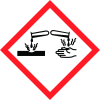
Hazard pictograms
Corrosive – Product has a slightly corrosive effect when left in prolonged contact with metals. Irritant – Product exposure to eyes, skin/body, hands, ingestion, and inhalation should be avoided. See section 4 First-Aid Measures for additional information.
Storage
Disposal Product should be stored in a well ventilated area with proper spill containment and drainage capabilities. Dike area around spill to prevent spreading, and use absorbent material to pick up spill. Dispose of water in accordance with applicable federal, state, and local laws at licensed incinerators or landfills. Do not discharge to waterways or sewer systems without authority. This material is not regulated by RCRA or CERCLA (Superfund).



