




Note: Ingredients listed on restricted chemical lists
EC/CAS
111-76-2
Name of the chemical
Ethylene glycol monobutyl ether (EGBE)
Concentration
25-38
EC/CAS
64742-89-8
Name of the chemical
Solvent naphtha (petroleum), light aliph
Concentration
15-18
EC/CAS
127087-87-0
Name of the chemical
Nonylphenolethoxylates (NPEO)
Concentration
2-14
EC/CAS
872-50-4
Name of the chemical
N-Methyl-2-Pyrrolidone; 1-methyl-2-pyrrolidone (NMP)
Concentration
0.5-5
General Information
Version
2.5
Revision date
2023-08-29
Product name
GDI Fuel System Cleaner
1.2.1 Relevant identified uses
Automotive
Emergency telephone
813-248-0585
Icons in SDS


Company Information
company name
Solid Start
GHS Information
Signal word
Danger
Hazard Codes
Hazard statements (CLP)
H225, H302, H304, H311, H311+H331, H315, H318, H331, H335, H336, H351, H360, H373, H401, H411
Hazard statements
Code
Statements
H225
Highly Flammable liquid and vapour
Section 2
SECTION 2: Hazards identification
Classification (GHS-US) Classification of the Substance or Mixture Classification (GHS-US) Flam. Liq. 2 H225 Acute Tox. 4 (Oral) H302 Asp. Tox. 1 H304 Acute Tox. 3 (Dermal) H311 Skin Irrit. 2 H315 Eye Dam. 1 H318 Acute Tox. 3 (Inhalation) H331 STOT SE 3 H336 Carc. 2 H351 Repr. 1B H360 STOT RE 2 H373 Aquatic Acute 2 H401 Aquatic Chronic 2 H411 Full text of H-phrases: see section 16
2.2 Label elements
GHS-US Labeling
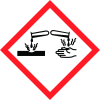
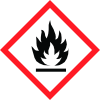
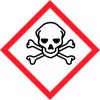
Hazard pictograms
GHS05 GHS07 GHS08 GHS09 GHS02 GHS06
Signal word
Danger
Hazard statements
H225 - Highly flammable liquid and vapor H302 - Harmful if swallowed. H304 - May be fatal if swallowed and enters airways. H311+H331- Toxic in contact with skin or if inhaled. H315 - Causes skin irritation. H318 - Causes serious eye damage. H335- May cause respiratory irritation. H336 - May cause drowsiness or dizziness. H351- Suspected of causing cancer. H360- May damage fertility or the unborn child. H373- May cause damage to organs. H411 - Toxic to aquatic life with long lasting effects.
Precautionary statements
P210 - Keep away from extremely high or low temperatures, ignition sources, and incompatible materials. - No smoking. P261 - Avoid breathing vapors, mist, or spray. P264 - Wash hands, forearms, and other exposed areas thoroughly after handling. P270 - Do not eat, drink or smoke when using this product. P271 - Use only outdoors or in a well-ventilated area. P273 - Avoid release to the environment. P280 - Wear protective gloves, protective clothing, and eye protection. P301+P310 - If swallowed: Immediately call a poison center or doctor. P301+P312 - If swallowed: Call a poison center or doctor if you feel unwell. P302+P352 - If on skin: Wash with plenty of water. P304+P340 - If inhaled: Remove person to fresh air and keep at rest in a position comfortable for breathing. P305+P351+P338 - If in eyes: Rinse cautiously with water for several minutes. Remove contact lenses, if present and easy to do. Continue rinsing. P310 - Immediately call a poison center or doctor. P321 - Specific treatment (see section 4 on this SDS). P330 - Rinse mouth. P331 - Do NOT induce vomiting. P362 - Take off contaminated clothing and wash it before reuse. P370+P378 - In case of fire: Use appropriate media (see section 5) to extinguish. P391 - Collect spillage. P405 - Store locked up. P501 - Dispose of contents/container in accordance with local, regional, national, and international regulations. P403+P233+P235 - Store in a well-ventilated place. Keep container tightly closed. Keep cool.
Other hazards
Exposure may aggravate those with pre-existing eye, skin, or respiratory conditions
Ingredient(s) with unknown acute toxicity
No data available
2.1 Classification of the substance or mixture
Classification (GHS-US) Flam. Liq. 2 H225 Acute Tox. 4 (Oral) H302 Asp. Tox. 1 H304 Acute Tox. 3 (Dermal) H311 Skin Irrit. 2 H315 Eye Dam. 1 H318 Acute Tox. 3 (Inhalation) H331 STOT SE 3 H336 Carc. 2 H351 Repr. 1B H360 STOT RE 2 H373 Aquatic Acute 2 H401 Aquatic Chronic 2 H411 Full text of H-phrases: see section 16



