



Note: Ingredients listed on restricted chemical lists
EC/CAS
64742-96-7
Name of the chemical
Solvent naphtha (petroleum), heavy aliph
Concentration
N/A
EC/CAS
111-76-2
Name of the chemical
Ethylene glycol monobutyl ether (EGBE)
Concentration
N/A
EC/CAS
64742-95-6
Name of the chemical
Solvent naphtha (petroleum), light arom
Concentration
N/A
EC/CAS
98-82-8
Name of the chemical
Cumol (2022/692)
Concentration
N/A
EC/CAS
70657-70-4
Name of the chemical
2-methoxypropylacetate
Concentration
N/A
EC/CAS
108-88-3
Name of the chemical
Toluene
Concentration
N/A
EC/CAS
71-43-2
Name of the chemical
Benzol
Concentration
N/A
General Information
Revision date
2018-03-20
Product name
Diesel Restore
1.2.1 Relevant identified uses
Automotive
Emergency telephone
813-248-0585 ChemTel
Icons in SDS
Company Information
company name
Solid Start
GHS Information
Signal word
Danger
Hazard Codes
Hazard statements (CLP)
H227, H304, H315, H319, H336, H401, H411
Hazard statements
Code
Statements
H227
Combustible liquid
Section 2
Classification (GHS-US)
Flam. Liq. 4 H227 Skin Irrit. 2 H315 Eye Irrit. 2A H319 STOT SE 3 H336 Asp. Tox. 1 H304 Aquatic Acute 2 H401 Aquatic Chronic 2 H411
Hazard statements
see section 16 : H227 - Combustible liquid. H304 - May be fatal if swallowed and enters airways. H315 - Causes skin irritation. H319 - Causes serious eye irritation. H336 - May cause drowsiness or dizziness. H401 - Toxic to aquatic life. H411 - Toxic to aquatic life with long lasting effects.
2.2 Label elements
GHS-US Labeling
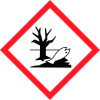
Hazard pictograms
GHS07 GHS08 GHS09
Signal word
Danger
Precautionary statements
P210 - Keep away from extremely high or low temperatures, ignition sources, and incompatible materials. - No smoking. P261 - Avoid breathing vapors, mist, or spray. P264 - Wash hands, forearms, and other exposed areas thoroughly after handling. P271 - Use only outdoors or in a well-ventilated area. P273 - Avoid release to the environment. P280 - Wear protective gloves, protective clothing, and eye protection. P301+P310 - If swallowed: Immediately call a poison center or doctor. P302+P352 - If on skin: Wash with plenty of water. P304+P340 - If inhaled: Remove person to fresh air and keep at rest in a position comfortable for breathing. P305+P351+P338 - If in eyes: Rinse cautiously with water for several minutes. Remove contact lenses, if present and easy to do. Continue rinsing. P312 - Call a poison center or doctor if you feel unwell. P321 - Specific treatment (see section 4 on this SDS). P331 - Do NOT induce vomiting. P332+P313 - If skin irritation occurs: Get medical advice/attention. P337+P313 - If eye irritation persists: Get medical advice/attention. P362+P364 - Take off contaminated clothing and wash it before reuse. P370+P378 - In case of fire: Use appropriate media (see section 5) to extinguish. P391 - Collect spillage. P403+P233 - Store in a well-ventilated place. Keep container tightly closed. P403+P235 - Store in a well-ventilated place. Keep cool. P405 - Store locked up. P501 - Dispose of contents/container in accordance with local, regional, national, and international regulations.
2.3 Other hazards
Exposure may aggravate pre-existing eye, skin, or respiratory conditions. Contains benzene, a regulated human carcinogen. Benzene has the potential to cause anemia and other blood diseases, including leukemia, after repeated and prolonged exposure. Exposure to light hydrocarbons in the same boiling range as this product has been associated in animal studies with systemic toxicity. See also Section 11 – Toxicological Information.
Ingredient(s) with unknown acute toxicity
No data available



