




Note: Ingredients listed on restricted chemical lists
EC/CAS
15245-44-0
Name of the chemical
Blei-2,4,6-trinitroresorcinat
Concentration
N/A
EC/CAS
55-63-0
Name of the chemical
Nitroglycerin; Propane-1,2,3-triyl trinitrate
Concentration
N/A
EC/CAS
84-74-2
Name of the chemical
Dibutyl phthalate
Concentration
N/A
EC/CAS
7440-66-6
Name of the chemical
Zinc ()
Concentration
N/A
EC/CAS
10022-31-8
Name of the chemical
Barium-nitrate
Concentration
N/A
EC/CAS
7440-50-8
Name of the chemical
Copper
Concentration
N/A
EC/CAS
9004-70-0
Name of the chemical
Nitrocellulose
Concentration
N/A
EC/CAS
200-240-8
Name of the chemical
Nitroglycerin; Propane-1,2,3-triyl trinitrate
Concentration
N/A
EC/CAS
201-557-4
Name of the chemical
Dibutylphthalat; DBP
Concentration
N/A
EC/CAS
231-159-6
Name of the chemical
Copper ()
Concentration
N/A
EC/CAS
239-290-0
Name of the chemical
Blei-2,4,6-trinitroresorcinat
Concentration
N/A
General Information
Revision date
2016-07-05
Product name
P22AC, P22LRSC, P25SL, P27LVL, P27SL, P22ACA, P27SLA, P27LVLA
1.2.1 Relevant identified uses
Powder-Tool Loaded Rounds are for use with Simpson Strong-Tie® Powder-Actuated Tools
1.2.2. Uses advised against
Do not tamper with Powder Loads
Icons in SDS


Company Information
company name
Simpson Strong-Tie Company Inc
GHS Information
Signal word
Danger
Hazard Codes
Hazard statements (CLP)
H204, H228, H360, H373, H400, H410
Hazard statements
Code
Statements
H204
Fire or projection hazard
H228
Flammable solid
H360
May damage fertility or the unborn child
H373
May cause damage to organs through prolonged or repeated exposure
H400
Very toxic to aquatic life
H410
Very toxic to aquatic life with long lasting effects
Section 2
SECTION 2: Hazards identification
GHS Classification General Information Powder Loads are single-shot and 10-shot strip loads for use with Simpson Strong-Tie® Powder-Actuated Tools. The Powder Loads range from 0.22 to 0.27 caliber and are available at different levels. The components of this product are sealed within a cartridge. Under normal handling of this product, no exposure to any harmful materials will occur. When the product is fired, a small amount of particles containing trace amounts of harmful substances may be produced. These particles could result in the health hazards listed below. The product has been assessed according to the Globally Harmonized System (GHS). This Safety Data Sheet covers hazards and responses for the safe use and handling of Powder Loads.
EU Classification
HazCom2012 (GHS)
Physical hazards
Explosives Division 1.4 H204: Fire or projection hazard Flammable Solid Category 1 H228: Flammable solid
Health hazards
Reproductive Toxicity Category 1A H360: May damage fertility or the unborn child STOT, Repeated Exposure Category 2 H373: May cause damage to organs through prolonged or repeated exposure
Environmental hazards
Acute Aquatic Hazard Category 1 H400: Very toxic to aquatic life Chronic Aquatic Hazard Category 1 H410: Very toxic to aquatic life with long lasting effects Main Symptoms: Long term exposure may cause chronic effects. Prolonged exposure to contents of cartridge may cause reproductive harm and depression to the central nervous system. Symptoms include headaches, dizziness, and nausea.
2.2 Label elements
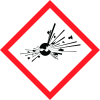
Chronic Environmental Explosive Flammable
Contains
Iron, Copper, Zinc, Nitrocellulose, Nitroglycerin, Normal Lead Styphnate
Signal word
DANGER!
Hazard statements
H204: Fire or projection hazard. H228: Flammable solid. H360: May damage fertility or the unborn child. H373: May cause damage to organs through prolonged or repeated exposure (CNS). H400: Very toxic to aquatic life. H410: Very toxic to aquatic life with long lasting effects.
Prevention
P102: Keep out of reach of children. P201: Obtain special instructions before use. P202: Do not handle until all safety precautions have been read and understood. P210: Keep away from heat, hot surfaces, sparks, open flames, and other ignition sources. No smoking. P234: Keep only in original packaging. P235: Keep cool. P240: Ground and bond container and receiving equipment. P241: Use explosion-proof [electrical/ventilating/lighting/…] equipment. P250: Do not subject to grinding/shock/friction. P260: Do not breathe dust. P264: Wash hands thoroughly after handling. P270: Do not eat, drink, or smoke when using this product. P271: Use only outdoors or in a well-ventilated area. P272: Avoid release into environment. P280: Wear protective gloves/protective clothing/eye protection/face protection.
Response
P301+P312: IF SWALLOWED: Call a POISON CENTER/doctor if you feel unwell. P302+P352: IF ON SKIN: Wash with plenty of water. P332+P313: If skin irritation occurs: Get medical advice/attention. P363: Wash contaminated clothing before reuse. P304+P312: IF INHALED: Call a POISON CENTER/doctor if you feel unwell. P305+P351+P338 IF IN EYES Rinse cautiously with water for several minutes. Remove contact lenses, if present and easy to do. Continue rinsing. P337+P313: If eye irritation persists: Get medical advice/attention. P308+P313: If exposed or concerned: Get medical advice/attention. P370+P378: In case of fire: Use foam, carbon dioxide, dry powder or water fog for extinction. P372: Explosion risk. P373: DO NOT fight fire when fire reaches explosives. P375: Fight fire remotely due to the risk of explosion. P380: Evacuate area. P391: Collect spillage.
Storage
P401: Store in accordance with local/regional regulations.
Disposal
P501: Dispose of contents/container in accordance with local/regional regulations.
Supplemental label elements
None known
2.3 Other hazards
Powder Loads in Powder-Actuated Tools can result in serious injury or death with improper use. Always read instructions for safe use before handling Powder-Actuated Tools. The discharge of Powder Loads may result in a small amount of particles being generated, which may be irritating to respiratory tract. Inhalation of high concentrations of metallic copper dusts or fumes may cause nasal irritation and/or nausea, vomiting and stomach pain. Nitroglycerin will produce dilation of blood vessels and drop in blood pressure which may affect the heart and has been shown to cause methemoglobinemia (cyanosis). Ensure that good work practices and the necessary precautionary measures are taken to maintain safe use of the product. If deemed necessary, an approved respirator can be used to control exposure to dust that may occur.


