

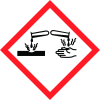
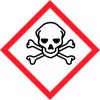
General Information
Revision date
2015-04-15
Product name
CF800 PART B
CAS No.
68953-58-2:may
Icons in SDS
Company Information
company name
Simiron
GHS Information
Signal word
Warning
Section 2
SECTION 2: Hazards identification
OSHA Hazard Overview
2.1 Classification of the substance or mixture
Skin irritation category 2, skin sensitizer category 1, Serious eye damage/Eye irritation category 2B, Skin sensitization category 1, Acute inhalation toxicity category 4, Acute toxicity oral category 4, Long term hazards to aquatic environment Category 3
2.2 Label elements
Elements and Precautionary Statements Exclamation Mark,
Hazard statements
Warning Causes skin irritation Warning May cause an allergic skin reaction Warning Causes eye irritation Warning Harmful if inhaled. Warning Harmful if swallowed. Harmful to aquatic life with long lasting effects
Precautionary statements
P102 Keep out of reach of children. P103 Read label before use P264 Wash hands thoroughly after handling. P280 Wear protective gloves/protective clothing/eye protection/face protection. P261 Avoid breathing dust/fume/gas/mist/vapours/spray. P272 Contaminated work clothing should not be allowed out of the workplace. P264 Wash hands thoroughly after handling. P270 Do not eat, drink or smoke when using this product P272 Contaminated work clothing should not be allowed out of the workplace P271 Use only outdoors or in a well-ventilated area P273 Avoid release to the environment.
Response
P302 + P352 IF ON SKIN: wash with plenty of soap and water. P333 + P313 IF SKIN irritation or rash occurs: Get medical advice/attention. P362 + P364 take off contaminated clothing and wash it before reuse. P305 + P351 + P338 If in eyes: Rinse cautiously with water for several minutes. Remove contact lenses, if present and easy to do. Continue rinsing. P337 + P313 IF eye irritation persists: Get medical advice/attention. P301 + P312 IF SWALLOWED: call a POISON CENTER or doctor/physician IF you feel unwell. P330 Rinse mouth. P304 + P340 IF INHALED: Remove victim to fresh air and Keep at rest in a position comfortable for breathing P312 Call a POISON CENTER or doctor/physician if you feel unwell. P501 Dispose of contents/container to a waste disposal facility in accordance with local, state, federal or international laws Other Non-classifiable potential hazards Carcinogen category 2
HMIS® ratings
HEALTH: 2 FLAMMABILITY: 1 REACTIVITY: 0 PERSONAL PROTECTIVE EQUIPMENT: G
Potential health effects
EYES: WILL CAUSE BURNS TO EYES. HIGH VAPOR CONCENTRATIONS CAN CAUSE SEVERE IRRITATION TO THE EYES. SKIN: WILL CAUSE BURNS TO THE SKIN INGESTION: LIQUID CAN CAUSE SEVERE DAMAGE TO MUCOUS MEMBRANES IF SWALLOWED. INHALATION: HIGH CONCENTRATIONS OF VAPOR CAN CAUSE IRRITATION TO THE RESPIRATORY TRACT, NAUSEA, AND DIZZINESS. HEALTH HAZARDS (ACUTE AND CHRONIC): PROLONGED OR REPEATED EXPOSURE MAY CAUSE ASTHMA AND SKIN SENSITIZATION OR OTHER ALLERGIC RESPONSES.
Medical Conditions Generally Aggravated by Exposure
RESPIRATORY CONDITIONS OR OTHER ALLERGIC AILMENTS. CARCINOGENICITY OSHA: NO NTP: yes IARC: yes ADDITIONAL CARCINOGENICITY INFORMATION: Some colors may contain carbon black - Explanation Of Carcinogenicity: IARC MONOGRAPHS ON EVALUATION OF CARCINOGENIC RISK OF CHEMICALS TO MAN, VOL 65, PG 149, 1996: GROUP 2B. crystalline silica is listed by IARC as a group I carcinogen (lung) based on sufficient evidence in occupationally exposed humans and sufficient evidence in animals. Crystalline Silica is also listed by the NTP as a known human carcinogen. Product may contain ethyl benzene as a component of xylene (IARC 2B). Titanium Dioxide is listed by IARC as possibly carcinogenic to humans (group 2B).



