

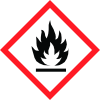
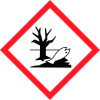
Note: Ingredients listed on restricted chemical lists
EC/CAS
231-175-3/7440-66-6
Name of the chemical
Zinc
Concentration
<= 100 %
General Information
Revision date
2023-05-26
Product name
Zinc, powder, 5 max. part. size (micron), weight 500 g, min. particle size 1 micron
CAS No.
7440-66-6
REACH No
is
Emergency telephone
0800 181 7059 (CHEMTREC Deutschland
Icons in SDS


Company Information
Company name
Sigma-Aldrich Chemie GmbH
E-mail address of the competent person responsible for the Safety Data Sheet
technischerservice@merckgroup.com
GHS Information
Signal word
Danger
Hazard Codes
Hazard statements (CLP)
H250, H251, H260, H400, H410
Hazard statements
Code
Statements
H250
Catches fire spontaneously if exposed to air
Section 2
2.1 Classification of the substance or mixture
Classification
2.2 Label elements
Labelling
Signal word
Danger Danger
Hazard statements
H250 Catches fire spontaneously if exposed to air. H251 Self-heating; may catch fire. H260 In contact with water releases flammable gases which may ignite spontaneously. H410 Very toxic to aquatic life with long lasting effects. Reduced Labeling (<= 125 ml) H250 Catches fire spontaneously if exposed to air. H251 Self-heating; may catch fire.
Precautionary statements
P210 Keep away from heat, hot surfaces, sparks, open flames and other ignition sources. No smoking. P222 Do not allow contact with air. P231 + P232 Handle and store contents under inert gas. Protect from moisture. P235 Keep cool. P273 Avoid release to the environment. P370 + P378 In case of fire: Use dry sand, dry chemical or alcohol-resistant foam to extinguish. P210 Keep away from heat, hot surfaces, sparks, open flames and other ignition sources. No smoking. P222 Do not allow contact with air. P231 + P232 Handle and store contents under inert gas. Protect from moisture. P235 Keep cool. P370 + P378 In case of fire: Use dry sand, dry chemical or alcohol-resistant foam to extinguish.
Supplemental label elements
none none
2.3 Other hazards
This substance/mixture contains no components considered to be either persistent, bioaccumulative and toxic (PBT), or very persistent and very bioaccumulative (vPvB) at levels of 0.1% or higher.



