

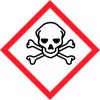


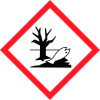
General Information
Revision date
2023-03-15
Product name
p-Tolylhydrazine hydrochloride
CAS No.
637-60-5
REACH No
is
Emergency telephone
0800 181 7059 (CHEMTREC Deutschland
Icons in SDS


Company Information
company name
Sigma-Aldrich Chemie GmbH
e-mail address of the competent person responsible for the Safety Data Sheet
technischerservice@merckgroup.com
GHS Information
Signal word
Danger
Hazard Codes
Hazard statements (CLP)
H301, H301+H311+H331, H311, H317, H331, H350, H400, H410
Hazard statements
Code
Statements
H301
Toxic if swallowed
Section 2
2.1 Classification of the substance or mixture
Classification
2.2 Label elements
Labelling
Signal word
Danger Danger
Hazard statements
H301 + H311 + H331 Toxic if swallowed, in contact with skin or if inhaled. H317 May cause an allergic skin reaction. H350 May cause cancer. H410 Very toxic to aquatic life with long lasting effects. Reduced Labeling (<= 125 ml) H317 May cause an allergic skin reaction. H350 May cause cancer. H301 + H311 + H331 Toxic if swallowed, in contact with skin or if inhaled.
Precautionary statements
P201 Obtain special instructions before use. P273 Avoid release to the environment. P280 Wear protective gloves/ protective clothing. P301 + P310 + P330 IF SWALLOWED: Immediately call a POISON CENTER/ doctor. Rinse mouth. P302 + P352 + P312 IF ON SKIN: Wash with plenty of water.Call a POISON CENTER/ doctor if you feel unwell. P304 + P340 + P311 IF INHALED: Remove person to fresh air and keep comfortable for breathing. Call a POISON CENTER/ doctor. P201 Obtain special instructions before use. P280 Wear protective gloves/ protective clothing. P301 + P310 + P330 IF SWALLOWED: Immediately call a POISON CENTER/ doctor. Rinse mouth. P302 + P352 + P312 IF ON SKIN: Wash with plenty of water.Call a POISON CENTER/ doctor if you feel unwell. P304 + P340 + P311 IF INHALED: Remove person to fresh air and keep comfortable for breathing. Call a POISON CENTER/ doctor.
Supplemental label elements
none none
2.3 Other hazards
This substance/mixture contains no components considered to be either persistent, bioaccumulative and toxic (PBT), or very persistent and very bioaccumulative (vPvB) at levels of 0.1% or higher.



