

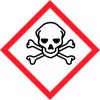


Note: Ingredients listed on restricted chemical lists
EC/CAS
201-039-8/77-58-7
Name of the chemical
Dibutylzinndilaurat; Dibutyl[bis(dodecanoyloxy)]stannan (2017/776)
Concentration
0,891-0
EC/CAS
212-485-8/822-06-0
Name of the chemical
Hexamethylene diisocyanate
Concentration
<4,5
General Information
Revision date
2019-07-23
Product name
PUVB
Emergency telephone
Belgium
Icons in SDS

Company Information
company name
Sidec
e-mail address of the competent person responsible for the Safety Data Sheet
safety@sidec.be
GHS Information
Signal word
Danger
Hazard Codes
Hazard statements (CLP)
H360, H412
Hazard statements
Code
Statements
H360
May damage fertility or the unborn child
Section 2
CLP CLASSIFICATION
CLP]Mixtures/Substances SDS EU 2015 According to Regulation (EU) 2015/830 (REACH Annex II) Repr. 1B H360 Aquatic Chronic 3 H412
Hazard statements
see section 16 : H360 - May damage fertility or the unborn child. H412 - Harmful to aquatic life with long lasting effects.
2.2 Label elements
Labelling according to Regulation (EC) No. 1272/2008 [CLP] Extra labelling to displayExtra classification(s) to display
Hazard pictograms
GHS08
Signal word
Danger
Hazardous Ingredients
Dibutyltin dilaurate
Precautionary statements
P201 - Obtain special instructions before use. P202 - Do not handle until all safety precautions have been read and understood. P273 - Avoid release to the environment. P280 - Wear protective gloves, protective clothing, eye protection. P308+P313 - IF exposed or concerned: Get medical advice/attention. P405 - Store locked up.
Supplemental label elements
EUH208 - Contains Dibutyltin dilaurate(77-58-7), Hexamethylene diisocyanate(822-06-0), p- toluenesulphonyl isocyanate(4083-64-1). May produce an allergic reaction.
Adverse physicochemical, human health and environmental effects
Toxic if inhaled. Causes skin irritation. May cause an allergic skin reaction. May damage fertility. May damage the unborn child. May cause respiratory irritation. Harmful to aquatic life with long lasting effects. May damage fertility or the unborn child. Harmful if inhaled.
Other hazards which do not result in classification
None, to our knowledge.



