



Note: Ingredients listed on restricted chemical lists
General Information
Revision date
2019-01-08
Product name
Xylene
Product Synonyms
Reaction Mass of Ethylbenzene and Xylenes (REACH)
CAS No.
1330-20-7
REACH No
01-2119488216-32-0001,
1.2.1 Relevant identified uses
Solvent., Raw material for use in the chemical industry
Emergency telephone
+44 (0) 1235 239 670
Icons in SDS
Company Information
company name
Shell (Switzerland)
e-mail address of the competent person responsible for the Safety Data Sheet
sccmsds@shell.com
GHS Information
Signal word
Danger
Hazard Codes
Hazard statements (CLP)
H226, H304, H312, H315, H319, H332, H335, H373, H412
Hazard statements
Code
Statements
H226
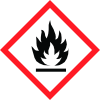
Flammable liquid and vapour
Section 2
CLP CLASSIFICATION
Flammable liquids, Category 3 H226: Flammable liquid and vapour. Aspiration hazard, Category 1 H304: May be fatal if swallowed and enters airways. Acute Toxicity, Category 4, Dermal H312: Harmful in contact with skin. Skin irritation, Category 2 H315: Causes skin irritation. Eye irritation, Category 2 H319: Causes serious eye irritation. Acute Toxicity, Category 4, Inhalation H332: Harmful if inhaled. 1 / 106 Specific target organ toxicity - single H335: May cause respiratory irritation. exposure, Category 3, Respiratory system Specific target organ toxicity - repeated H373: May cause damage to organs through exposure, Category 2, Inhalation, prolonged or repeated exposure. Auditory system Long-term (chronic) aquatic hazard, H412: Harmful to aquatic life with long lasting Category 3 effects.
2.2 Label elements
REGULATION (EC) No 1272/2008)
Signal word
Danger
Physical hazards
H226 Flammable liquid and vapour.
Health hazards
H304 May be fatal if swallowed and enters airways. H312 Harmful in contact with skin. H315 Causes skin irritation. H319 Causes serious eye irritation. H332 Harmful if inhaled. H335 May cause respiratory irritation. H373 May cause damage to organs (Auditory system) through prolonged or repeated exposure if inhaled.
Environmental hazards
H412 Harmful to aquatic life with long lasting effects.
Prevention
P210 Keep away from heat, hot surfaces, sparks, open flames and other ignition sources. No smoking. P243 Take action to prevent static discharges. P280 Wear protective gloves/ protective clothing/ eye protection/ face protection. P260 Do not breathe dust/ fume/ gas/ mist/ vapours/ spray.
Response
P303 + P361 + P353 IF ON SKIN (or hair): Take off immediately all contaminated clothing. Rinse skin with water/shower. P301 + P310 IF SWALLOWED: Immediately call a POISON CENTER/doctor. P331 Do NOT induce vomiting. P332 + P313 If skin irritation occurs: Get medical advice/ 2 / 106 attention.
Storage
No precautionary phrases.
Disposal
No precautionary phrases.
2.3 Other hazards
The substance does not fulfill all screening criteria for persistence, bioaccumulation and toxicity and hence is not considered to be PBT or vPvB. May form flammable/explosive vapour-air mixture. This material is a static accumulator. Even with proper grounding and bonding, this material can still accumulate an electrostatic charge. If sufficient charge is allowed to accumulate, electrostatic discharge and ignition of flammable air- vapour mixtures can occur. Vapours may cause drowsiness and dizziness.



