


General Information
Version
2.2
Revision date
2023-12-01
Product name
ShellSol TD
1.2.1 Relevant identified uses
Industrial Solvent
Emergency telephone
4970-7391 / 4970, (+54 911) 4970-7391
Icons in SDS


Company Information
company name
Shell CAPSA
GHS Information
Signal word
Danger
Hazard Codes
Hazard statements (CLP)
H226, H304, H316, H411
Hazard statements
Code
Statements
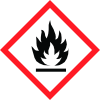
H226
Flammable liquid and vapour
Section 2
SECTION 2: Hazards identification
GHS Classification GHS Classification Flammable liquids Category 3
Aspiration hazard
Category 1 Skin irritation Category 3 Long-term (chronic) aquatic Category 2 hazard
Signal word
Danger
Physical hazards
H226 Flammable liquid and vapour
Health hazards
H304 May be fatal if swallowed and enters airways H316 Causes mild skin irritation
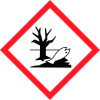
Environmental hazards
H411 Toxic to aquatic life with long lasting effects
Prevention
P210 Keep away from heat, hot surfaces, sparks, open flames and other ignition sources. No smoking. P240 Ground and bond container and receiving equipment. P241 Use explosion-proof electrical/ ventilating/ lighting equip- ment. P242 Use non-sparking tools. P243 Take action to prevent static discharges. P280 Wear protective gloves/ protective clothing/ eye protec- tion/ face protection. P273 Avoid release to the environment.
Response
P303 + P361 + P353 IF ON SKIN (or hair): Take off immediate- ly all contaminated clothing. Rinse skin with water or shower. P370 + P378 In case of fire: Use appropriate media to extin- guish. P301 + P310 IF SWALLOWED: Immediately call a POISON CENTER/ doctor. P331 Do NOT induce vomiting. P332 + P313 If skin irritation occurs: Get medical advice/ atten- tion. P391 Collect spillage.
Storage
P403 + P233 Store in a well-ventilated place. Keep container tightly closed. P235 Keep cool. P405 Store locked up.
Disposal
P501 Dispose of contents and container to appropriate waste site or reclaimer in accordance with local and national regula- tions.
Other hazards which do not result in classification
May form flammable/explosive vapour-air mixture. This material is a static accumulator. Even with proper grounding and bonding, this material can still accumulate an electrostatic charge. If sufficient charge is allowed to accumulate, electrostatic discharge and ignition of flammable air- vapour mixtures can occur. Repeated exposure may cause skin dryness or cracking.
2.1 Classification of the substance or mixture
Flammable liquids : Category 3 Aspiration hazard : Category 1 Skin irritation : Category 3 Long-term (chronic) aquatic : Category 2 hazard



