


Note: Ingredients listed on restricted chemical lists
EC/CAS
68814-67-5
Name of the chemical
Gases (petroleum), refinery
Concentration
N/A
EC/CAS
106-97-8
Name of the chemical
n-Butan, enthält 0,1% Butadien
Concentration
0 - 80
EC/CAS
75-28-5
Name of the chemical
iso-Butan, enthält 0,1% Butadien
Concentration
0 - 80
General Information
Version
2.0
Revision date
2025-05-06
Product name
Propane
1.2.1 Relevant identified uses
Intermediate Refinery Stream Used as a domestic, commercial, industrial and automotive fuel, a feedstock in chemical processes
Emergency telephone
1 (703) 527-3887, 1 (800) 424-9300
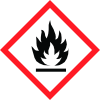
Icons in SDS


Company Information
company name
4000-500 Centre Street SE
GHS Information
Signal word
Danger
Hazard Codes
Hazard statements (CLP)
H220, H280
Hazard statements
Code
Statements
H220
Extremely flammable gas
Section 2
SECTION 2: Hazards identification
2.1 Classification of the substance or mixture
Flammable gases : Category 1A Gases under pressure : Liquefied gas
Signal word
Danger
Physical hazards
H220 Extremely flammable gas H280 Contains gas under pressure; may explode if heated
Health hazards
Not classified as a health hazard under GHS criteria
Environmental hazards
Not classified as an environmental hazard under GHS criteria
Prevention
P102 Keep out of reach of children. P210 Keep away from heat, sparks, open flame and hot surfac- es. No smoking. P243 Take action to prevent static discharges.
Response
P377 Leaking gas fire: Do not extinguish, unless leak can be stopped safely. P381 Eliminate all ignition sources if safe to do so.
Storage
P410 + P403 Protect from sunlight. Store in a well-ventilated place.
Disposal
No precautionary phrases.
Other hazards which do not result in classification
Vapours are heavier than air. Vapours may travel across the ground and reach remote ignition sources causing a flashback fire danger. High gas concentrations will displace available air; unconsciousness and death may occur sud- denly from lack of oxygen. Exposure to rapidly expanding gases may cause frost burns to eyes and/or skin. This material has the potential to be a static accumulator. Even with proper grounding and bonding, this material can still accumulate an electrostatic charge. If sufficient charge is allowed to accumulate, electrostatic discharge and ignition of flammable air- vapour mixtures can occur. Breathing of high vapour concentrations may cause central nervous system (CNS) depression resulting in dizziness, light-headedness, headache, nausea and loss of coordination. Continued inhalation may result in unconsciousness and death.



