

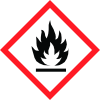

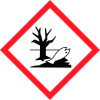
Note: Ingredients listed on restricted chemical lists
EC/CAS
123-86-4
Name of the chemical
acetic acid, butyl ester
Concentration
N/A
EC/CAS
141-78-6
Name of the chemical
acetic acid, ethyl ester
Concentration
N/A
EC/CAS
9004-36-8
Name of the chemical
cellulose acetate butyrate
Concentration
N/A
General Information
Revision date
2019-01-06
Product name
BRIGHT RED TONER
1.2.1 Relevant identified uses
Basecoat for automotive refinishing. Professional use only
1.2.2. Uses advised against
No other use information available
Icons in SDS
Company Information
company name
SeVan Products Ltd
e-mail address of the competent person responsible for the Safety Data Sheet
sevanpaint@sevanpro.com
GHS Information
Signal word
Warning
Hazard Codes
Hazard statements (CLP)
H226, H312, H315, H319, H332, H335, H400, H412
Hazard statements
Code
Statements
H226
Flammable liquid and vapour
Section 2
SECTION 2: Hazards identification
Emergency Outline: Transparent flammable liquid and vapor with slight odor. Its vapor forms explosive mixtures when meets air. May cause combustion and explosion when meets with open flames and high heat. Easy to generate and accumulate static electricity. Fast flow velocity. It may cause eye, nose and throat irritation. May cause central nervous system depression if inhaled.
Hazard statements
categories Flammable liquids Category 3 H226-flammable liquid and vapor Acute toxicity (skin) Category 4 H312-harmful in contact with skin Acute toxicity (inhalation) Category 4 H332-harmful if inhaled Skin irritation Category 2 H315-causes skin irritation Eye irritation Category 2A H319-causes serious eye irritation Specific target organ toxicity (single exposure) Category 3 H335- may cause respiratory irritation (respiration tract irritation) Acute hazard to the aquatic environment Category 2 H400-very toxic to aquatic life Long-term aquatic hazard Category 2 H412-harmful to aquatic life with long lasting effects The percentage of the unknown toxic components: 6.5% H226 Flammable liquid and vapor. H312 harmful in contact with skin H332 Harmful if inhaled. H315 May cause skin irritation. H319 May cause serious eye irritation. H335 May cause respiratory irritation H400 Very toxic to aquatic life H412 Harmful to aquatic life with long lasting effects
Prevention
P201 Get instruction before use. P202 Read all safety precautions before remove. P233 Keep container tightly closed. P235 Keep cool. P240 Ground and bond container and receiving equipment. P271 Use only outdoors or in a well-ventilated area. P210 Keep away from heat, hot surfaces, sparks, open flames and other ignition sources. Use non-sparking tools. P243 Take action to prevent static discharges. P241 Use explosive-proof [electrical/ventilating/lighting…] equipment. P280 Wear protective glove/protective clothing/eye protection/face protection. P261 Avoid breathing dust/fume/gas/mist/vapour/spray. P273 Avoid release to the environment. Response to accidents: P312 Call a POISON CENTER/doctor/…if you feel unwell. P304+P340 IF INHALED: Remove person to fresh air and keep comfortable for breathing. P305+P351+P338 IF IN EYES: Rinse cautiously with water for several minutes. Remove contact lenses, if present and easy to do. Continue rinsing. P337+P313 If eye irritation persists: Get medical advice/attention. P303+P361+P353 IF ON SKIN (or hair): Take off immediately all contaminated clothing. Rinse skin with water [or shower]. If irritation gets worse (redness, rash, blister), get medical attention immediately. P332+P313 If skin irritation occurs: Get medical advice/attention. P370+P378 In case of fire: Use…to extinguish. P391 Collect spillage. Safe storage: P403+P235 Store in a well-ventilated place. P405 Store locked up.
Disposal
P501 Dispose of contents/container to…
Other physicochemical hazards
Flammable liquid and vapor.
Health hazards
It is hazardous if inhaled or on skin. It causes skin irritation and severe eye irritation, and it may cause respiration tract irritation.
Environmental hazards
It is hazardous to aquatic life with long lasting effects.



