

Note: Ingredients listed on restricted chemical lists
EC/CAS
88-85-7
Name of the chemical
Dinoseb (6-sec-butyl-2,4-dinitrophenol)
Concentration
>98
General Information
Revision date
2011-03-31
Product name
Dinoseb
CAS No.
88-85-7
supplier name
Santa Cruz Biotechnology, Inc
Emergency telephone
+613 9573 3112
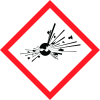
Icons in SDS


Company Information
company name
Santa Cruz Biotechnology, Inc
Section 2
SECTION 2: Hazards identification
CHEMWATCH HAZARD RATINGS Min Max Flammability: 1 Toxicity: 3 Body Contact: 3 Min/Nil=0 Low=1 Reactivity: 2 Moderate=2 High=3 Chronic: 3 Extreme=4 CANADIAN WHMIS SYMBOLS EMERGENCY OVERVIEW RISK Heating may cause an explosion. Danger of cumulative effects. Irritating to eyes. Limited evidence of a carcinogenic effect. May cause harm to the unborn child. Possible risk of impaired fertility. Toxic by inhalation, in contact with skin and if swallowed. Very toxic to aquatic organisms, may cause long-term adverse effects in the aquatic environment. Risk of explosion if heated under confinement.
Potential Acute Health Effects
SWALLOWED Toxic effects may result from the accidental ingestion of the material; animal experiments indicate that ingestion of less than 40 gram may be fatal or may produce serious damage to the health of the individual. The substance and/or its metabolites may bind to hemoglobin inhibiting normal uptake of oxygen. This condition, known as "methemoglobinemia", is a form of oxygen starvation (anoxia). Symptoms of dinitrophenol poisoning include a rapid increase in body temperature, breathing rate and heart rate. Oxygen demand is raised even faster, causing oxygen deficiency and acid-base imbalance (acidosis) to occur. EYE There is evidence that material may produce eye irritation in some persons and produce eye damage 24 hours or more after instillation. Severe inflammation may be expected with pain. SKIN Skin contact with the material may produce toxic effects; systemic effectsmay result following absorption. The material is not thought to be a skin irritant (as classified using animal models). Abrasive damage however, may result from prolonged exposures. Open cuts, abraded or irritated skin should not be exposed to this material. Entry into the blood-stream, through, for example, cuts, abrasions or lesions, may produce systemic injury with harmful effects. Examine the skin prior to the use of the material and ensure that any external damage is suitably protected. INHALED The material is not thought to produce respiratory irritation (as classified using animal models). Nevertheless inhalation of dusts, or fume, especially for prolonged periods, may produce respiratory discomfort and occasionally, distress. Persons with impaired respiratory function, airway diseases and conditions such as emphysema or chronic bronchitis, may incur further disability if excessive concentrations of particulate are inhaled. Inhalation of vapors or aerosols (mists, fumes), generated by the material during the course of normal handling, may produce toxic effects.
Potential chronic health
Repeated or long-term occupational exposure is likely to produce cumulative health effects involving organs or biochemical systems. There has been concern that this material can cause cancer or mutations, but there is not enough data to make an assessment. Ample evidence exists, from results in experimentation, that developmental disorders are directly caused by human exposure to the material. Ample evidence from experiments exists that there is a suspicionthis material directly reduces fertility. There is limited evidence that, skin contact with this product is more likely to cause a sensitization reaction in some persons compared to the general population. Long term exposure to high dust concentrations may cause changes in lung function i.e. pneumoconiosis; caused by particles less than 0.5 micron penetrating and remaining in the lung. 2,4-dinitrophenol can cause skin eruption, peripheral nerve damage, liver and kidney damage, and rarely cataracts. Repeated or prolonged contact may produce an allergic or irritant inflammation of the skin. Exposure over a long period of time to nitrophenols may produce kidney and liver damage. Inflammation of the colon, intestine, liver, stomach, and enlargement of the spleen may occur. The US EPA has determined that an adequate margin of safety does NOT exist between the use of dinoseb and the potential effects of inducing birth defects or producing sterility in man. Studies with laboratory animals suggest that dinoseb has the potential to affect the immunological system. Dinoseb induced liver tumours in female mice in long term studies. Dinseb is teratogenic and embryotoxic in mice and rats when given by intraperitoneal injection, but not when given in sub-lethal oral doses. Adverse developmental effects include anomalies of the neurological and skeletal systems, adverse male reproductive effects and decreased reproductive performance and foetal viability in animals.


