


Note: Ingredients listed on restricted chemical lists
EC/CAS
202-830-0/100-21-0
Name of the chemical
terephthalic acid
Concentration
N/A
EC/CAS
223-289-7/3811-04-9
Name of the chemical
Potassium chlorate
Concentration
N/A
EC/CAS
200-334-9/57-50-1
Name of the chemical
Sucrose, pure C12H22O11
Concentration
N/A
EC/CAS
9004-70-0
Name of the chemical
Nitrocellulose
Concentration
N/A
EC/CAS
231-159-6/7440-50-8
Name of the chemical
Copper
Concentration
N/A
EC/CAS
231-176-9/7440-67-7
Name of the chemical
Zirconium and its compounds, with the exception of the substances listed under reference number 50 in Annex III, and the zirconium lakes, pigments or salts of the colouring agents when listed in Annex IV
Concentration
N/A
EC/CAS
231-072-3/7429-90-5
Name of the chemical
Aluminium
Concentration
N/A
EC/CAS
231-912-9/7778-74-7
Name of the chemical
Potassium Perchlorate
Concentration
N/A
EC/CAS
209-774-6/592-87-0
Name of the chemical
Lead thiocyanate
Concentration
N/A
EC/CAS
204-539-4/122-39-4
Name of the chemical
Diphenylamine
Concentration
N/A
EC/CAS
231-846-0/7758-97-6
Name of the chemical
Bleichromat (790/2009)
Concentration
N/A
EC/CAS
215-168-2
Name of the chemical
Iron Oxide Red
Concentration
N/A
EC/CAS
209-150-3
Name of the chemical
Aluminium, zinc, magnesium and calcium stearates
Concentration
N/A
General Information
Revision date
2015-08-13
Product name
Pocket Tactical Grenade OC
1.2.2. Uses advised against
Contact manufacturer
Emergency telephone
(800)255-3924, +1 (813)248-0585
Icons in SDS


Company Information
company name
Safariland, LLC
GHS Information
Signal word
Warning
Hazard Codes
Hazard statements (CLP)
H204, H315, H319, H335, H412
Hazard statements
Code
Statements
H204
Fire or projection hazard
Section 2
SECTION 2: Hazards identification
NFPA Rating Classification of the substance or mixture
Hazard pictograms
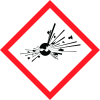
GHS01 GHS07
Hazardous Ingredients
Oleoresin Capsicum
Hazard statements
The following Hazard Statements are applicable only to the EU regulations and not the US GHS regulation: H412. H204 Fire or projection hazard. H315 Causes skin irritation. H319 Causes serious eye irritation. H335 May cause respiratory irritation. H412 Harmful to aquatic life with long lasting effects.
Precautionary statements
P210 Keep away from heat, hot surfaces, sparks, open flames and other ignition sources. No smoking. P261 Avoid breathing dust. P264 Wash thoroughly after handling. P280 Wear protective gloves / eye protection / face protection. P271 Use only outdoors or in a well-ventilated area. P305+P351+P338 IF IN EYES: Rinse cautiously with water for several minutes. Remove contact lenses, if present and easy to do. Continue rinsing. P304+P340 IF INHALED: Remove person to fresh air and keep comfortable for breathing. P312 Call a POISON CENTER/doctor if you feel unwell. P332+P313 If skin irritation occurs: Get medical advice/attention. P337+P313 If eye irritation persists: Get medical advice/attention. P302+P352 IF ON SKIN: Wash with plenty of water. P370+P378 In case of fire Use for extinction CO2, powder or water spray P362+P364 Take off contaminated clothing and wash it before reuse. P401 Store in accordance with local/regional/national/international regulations. P405 Store locked up. P403+P233 Store in a well-ventilated place. Keep container tightly closed. P501 Dispose of contents/container in accordance with local/regional/national/international regulations.
Additional information
Can become highly flammable in use. · NFPA ratings (scale 0 - 4) Health = 2 0 Fire = 0 2 4 Reactivity = 4 This substance possesses oxidizing properties. (Cont'd. from page 2) · HMIS-ratings (scale 0 - 4) HEALTH 2 Health = 2 Fire = 0 FIRE 0 Reactivity = 4 REACTIVITY 4 * - Indicates a long term health hazard from repeated or prolonged exposures.
PBT Substances
Not applicable
vPvB Substances
Not applicable · Explosive Product Notice PREVENTION OF ACCIDENTS IN THE USE OF EXPLOSIVES - The prevention of accidents in the use of explosives is a result of careful planning and observance of the best known practices. The explosives user must remember that he is dealing with a powerful force and that various devices and methods have been developed to assist him in directing this force. He should realize that this force, if misdirected, may either kill or injure both him and his fellow workers. WARNING - All explosives are dangerous and must be carefully handled and used following approved safety procedures either by or under the direction of competent, experienced persons in accordance with all applicable federal, state, and local laws, regulations, or ordinances. If you have any questions or doubts as to how to use any explosive product, DO NOT USE IT before consulting with your supervisor, or the manufacturer, if you do not have a supervisor. If your supervisor has any questions or doubts, he should consult the manufacturer before use.
2.1 Classification of the substance or mixture
· Classification according to Regulation (EC) No 1272/2008 Classifications listed are applicable to the OSHA GHS Hazard Communication Standard (29CFR1910.1200). exploding bomb Expl. 1.4 H204 Fire or projection hazard. Skin Irrit. 2 H315 Causes skin irritation. Eye Irrit. 2 H319 Causes serious eye irritation. STOT SE 3 H335 May cause respiratory irritation. Aquatic Chronic 3 H412 Harmful to aquatic life with long lasting effects. · Additional information: There are no other hazards not otherwise classified that have been identified. 0 % of the mixture consists of component(s) of unknown toxicity.


