


Note: Ingredients listed on restricted chemical lists
EC/CAS
75-09-2
Name of the chemical
Methylene chloride
Concentration
>60%
General Information
Revision date
2016-08-03
Product name
CS Solution
1.2.1 Relevant identified uses
Incapacitating agent
1.2.2. Uses advised against
Contact manufacturer
Icons in SDS


Company Information
company name
Safariland, LLC
GHS Information
Signal word
Danger
Hazard Codes
Hazard statements (CLP)
H273, H302, H315, H317, H319, H331, H334, H335, H336, H351, H371, H401, H432
Section 2
2.1 Classification of the substance or mixture
Australia, New Zealand) Australia ADG – Dangerous Goods (Classified according to National Transport Commision Australian Dangerous Goods Code) Australia NOHSC – Hazardous Substance (Classified according to Worksafe Australia NOHSC 2011 National Code of Practice) New Zealand HSNO - Hazardous (Classified according to the Minimum Degrees of Hazard Regulations 2001)
Hazard statements
New Zealand HSNO Classification) HSNO 6.1C Inh. Tox. 3 H331 Toxic if inhaled. HSNO 6.1D Oral Tox. 4 H302 Harmful if swallowed. (Cont'd. from page 1) HSNO 6.1E STOT SE 3 H335 May cause respiratory irritation. HSNO 6.3A Skin Irr. 2 H315 Causes skin irritation. HSNO 6.4A Eye Irrit. 2A H319 Causes serious eye irritation. HSNO 6.5A Resp. Sens. 1 H334 May cause allergy or asthma symptoms or breathing difficulties if inhaled. HSNO 6.5B Skin Sens. 1 H317 May cause an allergic skin reaction. HSNO 6.7B Carc.. 2 H351 Suspected of causing cancer. HSNO 6.9B STOT SE 3 H336 May cause drowsiness or dizziness. HSNO 6.9B STOT SE2 H371 May cause damage to organs (inhalation). HSNO 9.1D Aquatic Acute 2 H401 Toxic to aquatic life. HSNO 9.3B H432 Toxic to terrestrial vertebrates. The following Hazard Statements are only applicable to New Zealand, and are not applicable to Australia: H371, H401, H432. H371 May cause damage to organs (inhalation). H432 Toxic to terrestrial vertebrates. H302 Harmful if swallowed. H331 Toxic if inhaled. H315 Causes skin irritation. H319 Causes serious eye irritation. H334 May cause allergy or asthma symptoms or breathing difficulties if inhaled. H317 May cause an allergic skin reaction. H351 Suspected of causing cancer. H335-H336 May cause respiratory irritation. May cause drowsiness or dizziness. H401 Toxic to aquatic life.
2.2 Label elements
Classifications listed also are applicable to the Australian and the New Zealand Codes of Practice for the writing of Safety Data Sheets. The product is classified and labelled according to the Globally Harmonised System (GHS).
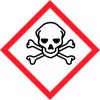
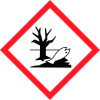
Hazard pictograms
Required for New Zealand. GHS09 GHS06 GHS08
Signal word
Danger
Hazardous Ingredients
dichloromethane [(2-chlorophenyl)methylene]malononitrile
Precautionary statements
The following Precautionary Statements are applicable only to New Zealand and not to Australia: H273. P284 is not legally required, yet has been added as product is desgned to be aerosolised. P201 Obtain special instructions before use. P202 Do not handle until all safety precautions have been read and understood. (Cont'd. from page 2) P284 [In case of inadequate ventilation] wear respiratory protection. P261 Avoid breathing dust/fume/gas/mist/vapours/spray. P264 Wash thoroughly after handling. P280 Wear protective gloves/protective clothing/eye protection/face protection. P273 Avoid release to the environment. P270 Do not eat, drink or smoke when using this product. P271 Use only outdoors or in a well-ventilated area. P272 Contaminated work clothing should not be allowed out of the workplace. P305+P351+P338 IF IN EYES: Rinse cautiously with water for several minutes. Remove contact lenses, if present and easy to do. Continue rinsing. P321 Specific treatment (see on this label). P302+P352 IF ON SKIN: Wash with plenty of water. P304+P340 IF INHALED: Remove person to fresh air and keep comfortable for breathing. P342+P311 If experiencing respiratory symptoms: Call a POISON CENTER/doctor. P333+P313 If skin irritation or rash occurs: Get medical advice/attention. P337+P313 If eye irritation persists: Get medical advice/attention. P301+P312 IF SWALLOWED: Call a POISON CENTER/doctor if you feel unwell. P330 Rinse mouth. P308+P313 IF exposed or concerned: Get medical advice/attention. P362+P364 Take off contaminated clothing and wash it before reuse. P405 Store locked up. P403+P233 Store in a well-ventilated place. Keep container tightly closed. P501 Dispose of contents/container in accordance with local/regional/national/international regulations.
Other hazards
There are no other hazards not otherwise classified that have been identified
PBT Substances
Not applicable
vPvB Substances
Not applicable



