



Note: Ingredients listed on restricted chemical lists
EC/CAS
112-34-5
Name of the chemical
2-(2-butoxyethoxy)ethanol
Concentration
2.5-15
General Information
Version
5
Revision date
2021-03-18
Product name
REMOVE PW2
1.2.1 Relevant identified uses
Removes ink from screen-printing screens
Manufacturer Name
SAATI
Emergency telephone
800-535-5053, 352-323-3500
Icons in SDS


Company Information
company name
SAATI
e-mail address of the competent person responsible for the Safety Data Sheet
info.us@saati.com
GHS Information
Signal word
DANGER
Hazard Codes
Hazard statements (CLP)
H226, H315, H317, H319, H335, H360, H371
Hazard statements
Code
Statements
H226
Flammable liquid and vapour
Section 2
SECTION 2: Hazards identification
GHS CLASSIFICATIONS Health Target Organ Toxicity (Single exposure), Category 3 Eye Irritation, Category 2A Skin Irritation, Category 2 Skin Sensitization, Category 1 Reproductive Toxicity, Category 1 Target Organ Toxicity (Repeated exposure), Category 2 Physical Flammable Liquids, Category 3
2.2 Label elements
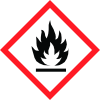
Flame
Health hazards
Exclamation mark
Signal word
DANGER
Hazard statements
H226: Flammable liquid and vapour. H335: May cause respiratory irritation. H319: Causes serious eye irritation. H315: Causes skin irritation. H317: May cause an allergic skin reaction. H360: May damage fertility or the unborn child (state specific effect if known)(state route of exposure if it is conclusively proven that no other routes of exposure cause the hazard). H371: May cause damage to organs (or state all organs affected, if known)(state route of exposure if it is conclusively proven that no other routes of exposure cause the hazard). Page 2 of 6
Prevention
P210: Keep away from heat, hot surfaces, sparks, open flames and other ignition sources. No smoking. P233: Keep container tightly closed. P240: Ground and bond container and receiving equipment. P241: Use explosion-proof [electrical/ventilating/lighting/...] equipment. P242: Use non-sparking tools. P243: Take action to prevent static discharges. P271: Use only outdoors or in a well-ventilated area. P264: Wash skin thoroughly after handling. P280: Wear protective gloves/protective clothing/eye protection/face protection. P272: Contaminated work clothing should not be allowed out of the workplace. P202: Do not handle until all safety precautions have been read and understood. P260: Do not breathe dust/fume/gas/mist/vapours/spray.
Response
P303+P361+P353 IF ON SKIN (or hair) Take off immediately all contaminated clothing. Rinse skin with water [or shower] P370+P378 In case of fire Use water spray, alcohol resistant foam, dry chemical or carbon dioxide to extinguish P304+P340 IF INHALED Remove person to fresh air and keep comfortable for breathing P312: Call a POISON CENTER/doctor/physician if you feel unwell. P305+P351+P338 IF IN EYES Rinse cautiously with water for several minutes. Remove contact lenses, if present and easy to do. Continue rinsing. P337+P313 If eye irritation persists Get medical advice/attention P332+P313 If skin irritation occurs Get medical advice/attention P362: Take off contaminated clothing. P308+P313 IF exposed or concerned Get medical advice/ attention
Storage
P235: Keep cool. P403+P233: Store in a well-ventilated place. Keep container tightly closed. P405: Store locked up.
Disposal
P501: Dispose of contents/container in accordance to federal/state/local regulations. COMMENTS: Specific target organ toxicity - single exposure (Category 3), Central nervous system, H335
2.1 Classification of the substance or mixture
Health: Target Organ Toxicity (Single exposure), Category 3 Eye Irritation, Category 2A Skin Irritation, Category 2 Skin Sensitization, Category 1 Reproductive Toxicity, Category 1 Target Organ Toxicity (Repeated exposure), Category 2 Physical: Flammable Liquids, Category 3



