


Note: Ingredients listed on restricted chemical lists
EC/CAS
202-860-4/100-52-7
Name of the chemical
benzaldehyde
Concentration
40-50%
EC/CAS
204-402-9/120-51-4
Name of the chemical
Benzyl benzoate
Concentration
70-<80%
EC/CAS
201-550-6/84-66-2
Name of the chemical
Diethyl phthalate (DEP),5
Concentration
20-<50%
EC/CAS
232-476-2/8050-15-5
Name of the chemical
Resin acids and Rosin acids, hydrogenated, methyl esters
Concentration
10-20%
EC/CAS
227-813-5/5989-27-5
Name of the chemical
(R)-p-mentha-1,8-diene
Concentration
5-<10%
EC/CAS
202-086-7/91-64-5
Name of the chemical
2H-1-Benzopyran-2-one
Concentration
2-5%
EC/CAS
203-213-9/104-55-2
Name of the chemical
Cinnamaldehyde/3-phenyl-propen-2-al
Concentration
1-<5%
EC/CAS
204-465-2/121-33-5
Name of the chemical
4-Hydroxy-3-methoxybenz-aldehyde (40)
Concentration
5-<10%
EC/CAS
204-872-5/127-91-3
Name of the chemical
β-pinene
Concentration
1-<5%
EC/CAS
226-394-6/5392-40-5
Name of the chemical
Citral
Concentration
1-<5%
EC/CAS
202-680-6/98-55-5
Name of the chemical
2-(4-methylcyclohex-3-en-1-yl)propan-2-ol; p-Menth-1-en-8-ol (alpha-Terpineol); 1-methyl-4-(1-methylvinyl)cyclohexan-1-ol (beta-Terpineol); 1-methyl-4-(1-methylethylidene)cyclohexan-1-ol (gamma-Terpineol) (40)
Concentration
1-<5%
EC/CAS
203-341-5/105-87-3
Name of the chemical
2,6-Octadien-1-ol, 3,7-dimethyl-,1-acetate, (2E)- (40)
Concentration
1-<3%
EC/CAS
203-375-0/106-22-9
Name of the chemical
Citronellol/ (±) 3,7-Dimethyl-6-octen-1-ol
Concentration
0.1-<1%
EC/CAS
203-377-1/106-24-1
Name of the chemical
2,6-Octadien-1-ol, 3,7-dimethyl-, (2E)
Concentration
0.1-<1%
EC/CAS
204-116-4/115-95-7
Name of the chemical
3,7-Dimethyl octa-1,6-diene-3-yl acetate (40)
Concentration
1 -< 3%
EC/CAS
204-881-4/128-37-0
Name of the chemical
2,6-di-tert-butyl-p-cresol
Concentration
0.1-<1%
EC/CAS
205-341-0/138-86-3
Name of the chemical
1-methyl-4-prop-1-en-2-yl-cyclohexene; dl-limonene (racemic); Dipentene (37)
Concentration
0.1-<1%
EC/CAS
209-578-0/586-62-9
Name of the chemical
p-Mentha-1,4(8)-diene (38)
Concentration
0.1-<1%
EC/CAS
201-134-4/78-70-6
Name of the chemical
1,6-Octadien-3-ol, 3,7-dimethyl
Concentration
1 -< 3%
EC/CAS
201-291-9/80-56-8
Name of the chemical
α-pinene
Concentration
0.1-<1%
EC/CAS
201-328-9/81-14-1
Name of the chemical
4‘-tert-Butyl-2‘,6‘-dimethyl-3‘,5‘-dinitroacetophenon, Musk Ketone (790/2009)
Concentration
0.1-<1%
EC/CAS
202-794-6/99-85-4
Name of the chemical
gamma-Terpinene; p-Mentha-1,4-diene
Concentration
0.1-<1%
EC/CAS
227-815-6/5989-54-8
Name of the chemical
(S)-p-mentha-1,8-diene; (l-limonene) (37)
Concentration
<0.1%
EC/CAS
201-746-1/87-44-5
Name of the chemical
(1R,4E,9S)-4,11,11-Trimethyl-8-methylenebicyclo[7.2.0]undec-4-ene (40)
Concentration
<0.1%
EC/CAS
202-795-1/99-86-5
Name of the chemical
p-Mentha-1,3-diene (38)
Concentration
<0.1%
EC/CAS
123-68-2
Name of the chemical
Allyl hexanoate
Concentration
< 0.3
EC/CAS
203-532-3/107-92-6
Name of the chemical
butyric acid
Concentration
0.1-<1%
EC/CAS
205-550-7/142-62-1
Name of the chemical
hexanoic acid
Concentration
0.1-<1%
General Information
Product name
Fruit Loops
1.2.1 Relevant identified uses
Compound used in customer substance/mixture/product
Manufacturer Name
Rustic Escentuals
Emergency telephone
(800) 255-3924, +1 813 248-0585
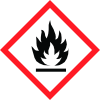
Icons in SDS


Company Information
company name
Rustic Escentuals
GHS Information
Signal word
Danger
Hazard Codes
Hazard statements (CLP)
H226, H302, H304, H313, H315, H317, H319, H332, H335, H400, H411
Hazard statements
Code
Statements
H226
Flammable liquid and vapour
Section 2
SECTION 2: Hazards identification
Regulation (EC) No. 1272/2008] OSHA Classification of the substance or mixture This mixture has not been tested as a whole. The effects, listed below, are based on evaluation of individual components in accordance with the provisions of the regulation(s) noted below
Signal word
Danger
Hazard statements
H226 Flammable liquid and vapour H302 Harmful if swallowed H304 May be fatal if swallowed and enters airways. H313 May be harmful in contact with skin H315 Causes skin irritation. H317 May cause an allergic skin reaction. H319 Causes serious eye irritation. H332 Harmful if inhaled H400 Very toxic to aquatic life. H411 Toxic to aquatic life with long lasting effects.
Precautionary statements
P210 Keep away from heat, sparks, open flames and hot surfaces. - No smoking. P233 Keep container tightly closed P235 Keep cool P240 Ground/bond container and receiving equipment P241 Use explosion-proof electrical/ventilating/light/.../equipment P242 Use only non-sparking tools P243 Take precautionary measures against static discharge P261 Avoid breathing vapor or dust. P264 Wash hands and other contacted skin thoroughly after handling. P270 Do not eat, drink or smoke when using this product P271 Use only outdoors or in a well-ventilated area P272 Contaminated work clothing should not be allowed out of the workplace P273 Avoid release to the environment P280 Wear protective gloves/eye protection/face protection. P301/310 IF SWALLOWED: Immediately call a POISON CENTER or doctor/physician. P302/352 IF ON SKIN: Wash with plenty of soap and water. P303/P361/P353 IF ON SKIN (or hair): Remove/Take off immediately all contaminated clothing Rinse skin with water/shower P304/P312/P340 IF INHALED: Call a POISON CENTER or doctor/physician if you feel unwell Remove victim to fresh air and keep at rest in a position comfortable for breathing P305/351/338 IF IN EYES: Rinse cautiously with water for several minutes. Remove contact lenses, if present and easy to do. Continue rinsing. P305/P351/P338 IF IN EYES: Rinse cautiously with water for several minutes Remove contact lenses if present and easy to do. continue rinsing P312 Call a POISON CENTRE or doctor/physician if you feel unwell. P312 Call a POISON CENTER or doctor/physician if you feel unwell P331 Do not induce vomiting. P333/P313 If skin irritation or a rash occurs: Get medical advice/attention P337/P313 If eye irritation persists: Get medical advice/attention P340 Remove victim to fresh air and keep at rest in a position comfortable for breathing P352 Wash with soap and water P362 Take off contaminated clothing and wash before reuse. P370 + P378 In case of fire: Use Carbon dioxide (CO2), Dry chemical, or Foam for extinction. Do not use a direct water jet on burning material P391 Collect spillage. P403/235 Store in a well-ventilated place. Keep cool. P405 Store locked up. P501 Dispose of contents/container to approved disposal site, in accordance with local regulations.
2.3 Other hazards
16.2% of the mixture consists of component(s) of unknown acute oral toxicity. 98.98% of the mixture consists of component(s) of unknown acute inhalation toxicity. 12.83% of the mixture consists of component(s) of unknown acute hazards to the aquatic environment. 13.74% of the mixture consists of component(s) of unknown long-term hazards to the aquatic environment.
2.1 Classification of the substance or mixture
This mixture has not been tested as a whole. The effects, listed below, are based on evaluation of individual components in accordance with the provisions of the regulation(s) noted below. Classification according to GHS and (EC) No 1272/2008 (CLP) Flammable Liquids, Category 3 H226: Flammable liquid and vapour Acute Toxicity Oral, Category 4 H302: Harmful if swallowed Acute Toxicity Dermal, Category 5 H304: May be fatal if swallowed and enters airways Skin Corrosion/Irritation, Category 2 H313: May be harmful in contact with skin Sensitization, Skin, Category 1A H315: Causes skin irritation Eye Damage/Eye Irritation, Category 2A H317: May cause an allergic skin reaction Acute Toxicity Inhalation, Category 1 H319: Causes serious eye irritation Target Organ Systemic Toxicity - Single H332: Harmful if inhaled Exposure, Category 3-RI H335: May cause respiratory irritation Aquatic Acute Toxicity, Category 1 H400: Toxic to aquatic life Aquatic Chronic Toxicity, Category 2 H411: Harmful to aquatic life with long lasting effects Classification OSHA (Provisions 1910.1200 of title 29) Flammability Class II Flammable Liquid Acute Dermal/Eye 12 : Causes moderate skin irritation. 16 : Causes eye irritation. 9 : Harmful if absorbed through the skin. Acute Inhalation 24 : Causes respiratory tract irritation. 25 : Inhalation at high levels may cause: difficulty in breathing, tremors, labored breathing, hypothermia, lethargy, ataxia. Acute Oral 2 : Harmful if swallowed Genotoxicity 36 : Suspected of causing genetic defects Reproductive/Developmental 39 : Causes reproductive/developmental toxicity in animals. Sensitization/Allergic Response 31 : May cause allergic skin reaction. Target Organ Effects 26 : Prolonged or repeated ingestion may cause damage to: kidneys, liver, spleen, thymus gland, blood, stomach, testes, brain, bile duct, tongue, mucous membranes, musculo-skeletal system. 28 : Prolonged or repeated Dermal Exposure may cause damage to: kidneys, skin Carcinogenicity This mixture contains ingredients identified as carcinogens, at 0.1% or greater, by the following:None [X] ACGIH [ ] IARC [ ] NTP [ ] OSHA [ ]



