




Note: Ingredients listed on restricted chemical lists
EC/CAS
9004-70-0
Name of the chemical
Nitrocellulose
Concentration
25-50%
EC/CAS
55-63-0
Name of the chemical
Nitroglycerin; Propane-1,2,3-triyl trinitrate
Concentration
15-35%
EC/CAS
84-74-2
Name of the chemical
Dibutyl phthalate
Concentration
2-12%
EC/CAS
7440-50-8
Name of the chemical
Copper
Concentration
≤2.5%
EC/CAS
141-78-6
Name of the chemical
acetic acid, ethyl ester
Concentration
≤2.5%
EC/CAS
122-39-4
Name of the chemical
Diphenylamine
Concentration
≤2.5%
General Information
Revision date
2019-01-07
Product name
TESAR1, TESAR2, TESAR3, TESAR4, TESAR5, TESAR6, HP-Cutter, FB82H, FBC,MB70S, FTR-P1, FTR-P2
1.2.2. Uses advised against
No further relevant information
Icons in SDS


Company Information
company name
Royal Arms International, Inc
e-mail address of the competent person responsible for the Safety Data Sheet
Sales@RoyalArms.com
GHS Information
Signal word
Danger
Hazard Codes
Hazard statements (CLP)
H204, H302, H302+H332, H332, H341, H350, H360, H373, H401, H411
Hazard statements
Code
Statements
H204
Fire or projection hazard
H302
Harmful if swallowed
H302+H332
Harmful if swallowed or if inhaled
H332
Harmful if inhaled
H341
Suspected of causing genetic defects
H350
May cause cancer
H360
May damage fertility or the unborn child
H373
May cause damage to organs through prolonged or repeated exposure
H401
Toxic to aquatic life
H411
Toxic to aquatic life with long lasting effects
Section 2
SECTION 2: Hazards identification
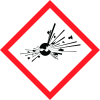
NFPA Rating Classification of the substance or mixture Exploding bomb Expl. 1.4 H204 Fire or projection hazard
Health hazards
Muta. 2 H341 Suspected of causing genetic defects Carc. 1B H350 May cause cancer Repr. 1B H360 May damage fertility or the unborn child STOT RE 2 H373 May cause damage to organs through prolonged or repeated exposure
Environmental hazards
Aquatic Chronic 2 H411 Toxic to aquatic life with long lasting effects Acute Tox. 4 H302 Harmful if swallowed Acute Tox. 4 H332 Harmful if inhaled Aquatic Acute 2 H401 Toxic to aquatic life
Signal word
Danger
Hazardous Ingredients
Nitroglycerine Dibutyl phthalate 1,3-diethyldiphenylurea diphenylamine nitrosodiphenylamine
Hazard statements
H204 Fire or projection hazard. H302+H332 Harmful if swallowed or if inhaled. H341 Suspected of causing genetic defects. H350 May cause cancer. H360 May damage fertility or the unborn child. H373 May cause damage to organs through prolonged or repeated exposure. H401 Toxic to aquatic life. H411 Toxic to aquatic life with long lasting effects.
Precautionary statements
P201 Obtain special instructions before use. P202 Do not handle until all safety precautions have been read and understood. P210 Keep away from heat/sparks/open flames/hot surfaces. - No smoking. P240 Ground/bond container and receiving equipment. P250 Do not subject to grinding/shock/friction. P260 Do not breathe dust/fume/gas/mist/vapors/spray. P261 Avoid breathing dust/fume/gas/mist/vapors/spray. P264 Wash thoroughly after handling. P270 Do not eat, drink or smoke when using this product. P271 Use only outdoors or in a well-ventilated area. P273 Avoid release to the environment. P280 Wear protective gloves/protective clothing/eye protection/face protection. P301+P312 If swallowed: Call a poison center/doctor if you feel unwell. P330 Rinse mouth. P304+P340 IF INHALED: Remove person to fresh air and keep comfortable for breathing. P308+P313 IF exposed or concerned: Get medical advice/attention. P314 Get medical advice/attention if you feel unwell. P370+P380 In case of fire: Evacuate area. P372 Explosion risk in case of fire. P373 DO NOT fight fire when fire reaches explosives. P374 Fight fire with normal precautions from a reasonable distance. P391 Collect spillage. P401 Store in accordance with local/regional/national/international regulations. P405 Store locked up. P501 Dispose of contents/container in accordance with local/regional/national/international regulations. · Unknown acute toxicity: This value refers to knowledge of known, established toxicological or ecotoxicological values. 28 % of the mixture consists of component(s) of unknown toxicity.
Classification system
NFPA/HMIS Definitions 0-Least, 1-Slight, 2-Moderate, 3-High, 4-Extreme · NFPA ratings (scale 0 - 4) Health = 1 2 Fire = 2 1 3 Reactivity = 3 · HMIS-ratings (scale 0 - 4) HEALTH 1 Health = 1 FIRE 2 Fire = 2 REACTIVITY 3 Physical Hazard = 3
2.3 Other hazards
None known
2.1 Classification of the substance or mixture
Exploding bomb Expl. 1.4 H204 Fire or projection hazard. Health hazard Muta. 2 H341 Suspected of causing genetic defects. Carc. 1B H350 May cause cancer. Repr. 1B H360 May damage fertility or the unborn child. STOT RE 2 H373 May cause damage to organs through prolonged or repeated exposure. Environment Aquatic Chronic 2 H411 Toxic to aquatic life with long lasting effects. Acute Tox. 4 H302 Harmful if swallowed. Acute Tox. 4 H332 Harmful if inhaled. Aquatic Acute 2 H401 Toxic to aquatic life.


