


Note: Ingredients listed on restricted chemical lists
EC/CAS
270-704-2/68476-85-7
Name of the chemical
Petroleum gases, liquefied
Concentration
70-90%
EC/CAS
200-661-7/67-63-0
Name of the chemical
Propan-2-ol
Concentration
1-10%
General Information
Version
9
Revision date
2016-02-04
Product name
DRY PTFE SPRAY
1.2.1 Relevant identified uses
Multi-purpose food grade PTFE spray for light, dry lubrication
Emergency telephone
+44 (0) 113 232 2600
Icons in SDS


Company Information
company name
ROCOL
e-mail address of the competent person responsible for the Safety Data Sheet
customer-service@rocol.com
GHS Information
Signal word
Danger
Hazard Codes
Hazard statements (CLP)
H222, H229, H319
Hazard statements
Code
Statements
H222
Extremely flammable aerosol
Section 2
SECTION 2: Hazards identification
Classification under CLP Classification of the substance or mixture Classification under CLP Eye Irrit. 2: H319; Flam. Aerosol 1: H222; -: H229
Most important adverse effects
Extremely flammable aerosol. Pressurised container: May burst if heated. Causes serious eye irritation
Hazard statements
H222: Extremely flammable aerosol. H229 Pressurised container May burst if heated H319: Causes serious eye irritation.
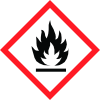
Hazard pictograms
GHS02: Flame GHS07: Exclamation mark Page: 2
Signal word
Danger
Precautionary statements
P210: Keep away from heat, hot surfaces, sparks, open flames and other ignition sources. No smoking. P211: Do not spray on an open flame or other ignition source. P251: Do not pierce or burn, even after use. P280: Wear protective gloves/protective clothing/eye protection/face protection. P305+351+338 IF IN EYES Rinse cautiously with water for several minutes. Remove contact lenses, if present and easy to do. Continue rinsing. P410+412: Protect from sunlight. Do not expose to temperatures exceeding 50 ºC.
Other hazards
Combustion may also generate: decomposition products that may lead to polymer fume fever (24 - 48 hr influenza-like symptoms).
PBT Substances
This product is not identified as a PBT/vPvB substance.
2.1 Classification of the substance or mixture
Classification under CLP: Eye Irrit. 2: H319; Flam. Aerosol 1: H222; -: H229 Most important adverse effects: Extremely flammable aerosol. Pressurised container: May burst if heated. Causes serious eye irritation.



