



Note: Ingredients listed on restricted chemical lists
EC/CAS
123-86-4
Name of the chemical
acetic acid, butyl ester
Concentration
N/A
EC/CAS
64742-95-6
Name of the chemical
Solvent naphtha (petroleum), light arom
Concentration
N/A
EC/CAS
822-06-0
Name of the chemical
Hexamethylene diisocyanate
Concentration
N/A
EC/CAS
265-199-0
Name of the chemical
Solvent naphtha (petroleum), light arom
Concentration
N/A
EC/CAS
212-485-8
Name of the chemical
Hexamethylene diisocyanate
Concentration
N/A
General Information
Revision date
2018-01-29
Product name
E-9105
1.2.1 Relevant identified uses
Catalyst
Emergency telephone
34 972 478060 (8 00-12 45 / 14 15-17 30 h) ROBERLO (Spain) (GMT + 1 00
Icons in SDS
Company Information
company name
Roberlo s.a
e-mail address of the competent person responsible for the Safety Data Sheet
msds@roberlo.com
GHS Information
Signal word
Danger
Hazard Codes
Hazard statements (CLP)
H226, H315, H317, H319, H332, H335, H373, H412
Hazard statements
Code
Statements
H226
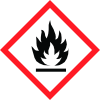
Flammable liquid and vapour
Section 2
CLP CLASSIFICATION
Flammable liquids, Category 3 H226: Flammable liquid and vapour. Acute toxicity, Category 4 H332: Harmful if inhaled. Skin irritation, Category 2 H315: Causes skin irritation. Eye irritation, Category 2 H319: Causes serious eye irritation. Skin sensitisation, Category 1 H317: May cause an allergic skin reaction. Specific target organ toxicity - single H335: May cause respiratory irritation. exposure, Category 3, Respiratory system Specific target organ toxicity - repeated H373: May cause damage to organs through exposure, Category 2 prolonged or repeated exposure if inhaled. Chronic aquatic toxicity, Category 3 H412: Harmful to aquatic life with long lasting effects.
2.2 Label elements
REGULATION (EC) No 1272/2008)
Signal word
Danger
Hazard statements
H226 Flammable liquid and vapour. H315 Causes skin irritation. H317 May cause an allergic skin reaction. H319 Causes serious eye irritation. H332 Harmful if inhaled. H335 May cause respiratory irritation. H373 May cause damage to organs through prolonged or repeated exposure if inhaled. H412 Harmful to aquatic life with long lasting effects.
Prevention
P210 Keep away from heat, hot surfaces, sparks, open flames and other ignition sources. No smoking. P280 Wear protective gloves/ protective clothing/ eye protection/ face protection. P260 Do not breathe vapours. P260 Do not breathe spray.
Response
P301 + P310 IF SWALLOWED: Immediately call a POISON CENTER/doctor. P331 Do NOT induce vomiting. P370 + P378 In case of fire: Use dry sand, dry chemical or alcohol-resistant foam to extinguish. P362 + P364 Take off contaminated clothing and wash it before reuse.
Disposal
P501 Dispose of contents/ container to an approved waste disposal plant.
Hazardous Ingredients
HDI oligomers, isocyanurate xylene (mixture of isomers) Solvent naphtha (petroleum), light arom. hexamethylene-di-isocyanate
2.3 Other hazards
This substance/mixture contains no components considered to be either persistent, bioaccumulative and toxic (PBT), or very persistent and very bioaccumulative (vPvB) at levels of 0.1% or higher.



