

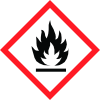
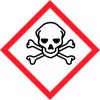


Note: Ingredients listed on restricted chemical lists
EC/CAS
111-76-2
Name of the chemical
Ethylene glycol monobutyl ether (EGBE)
Concentration
N/A
EC/CAS
9016-45-9
Name of the chemical
Nonylphenolethoxylates (NPEO)
Concentration
N/A
EC/CAS
872-50-4
Name of the chemical
N-Methyl-2-Pyrrolidone; 1-methyl-2-pyrrolidone (NMP)
Concentration
N/A
EC/CAS
5989-27-5
Name of the chemical
(R)-p-mentha-1,8-diene
Concentration
N/A
General Information
Revision date
2018-04-01
Product name
SW150
1.2.1 Relevant identified uses
Screen Wash
Emergency telephone
800-255-3924, International 813-248-0585
Icons in SDS
Company Information
company name
RhinoTech, Inc
GHS Information
Signal word
Danger
Hazard Codes
Hazard statements (CLP)
H226, H304, H311, H315, H317, H319, H332, H335, H336, H360
Hazard statements
Code
Statements
H226
Flammable liquid and vapour
Section 2
Hazard categories
H226 Flammable liquids 3 H304
Aspiration hazard
1 H311 Acute toxicity, dermal 3 H315 Skin corrosion/irritation 2 H317 Sensitization, skin 1 H319 Serious eye damage/eye irritation 2A H332 Acute toxicity, inhalation 4 H335 Specific target organ toxicity, single exposure (Respiratory Tract Irritation) 3 H336 Specific target organ toxicity, single exposure (Narcotic Effect) 3 H360 Reproductive toxicity 1B HANDLE IN ACCORDANCE WITH GOOD INDUSTRIAL HYGIENE AND SAFETY PRACTICES
2.2 Label elements
GHS-US labeling
Signal word
Danger
Hazard statements
H226: Flammable liquid and vapor H304: May be fatal if swallowed and enters airways H311: Toxic in contact with skin H315: Causes skin irritation H317: May cause allergic skin reaction H319: Causes serious eye irritation H332: Harmful if inhaled H335: May cause repertory irritation H336: May cause drowsiness or dizziness H360: May damage fertility or the unborn child
Precautionary statements
P201: Obtain special instructions before use P202: Do not handle until all safety precautions have been read and understood P210: Keep away from heat/sparks/open flames/hot surfaces. -No smoking. P233: Keep container tightly closed P240: Ground/bond container and receiving equipment P241: Use explosion-proof electrical/ventilating/lighting/equipment P242: Use only non-sparking tools P243: Take precautionary measures against static charge P261: Avoid breathing dust/fumes/gas/mist/spray P264: Wash thoroughly after handling P271: Use only outdoors or in a well-ventilated area P272: Contaminated work clothing should not be allowed out of the workplace P280: Wear protective gloves/protective clothing/eye protection/face protection P312: Call a POISON CENTER or doctor/physician if you feel unwell P321: Specific treatment (see SECTION 4) P322: Specific measures (see SECTION 4) P331: Do NOT induce vomiting P361: Remove/Take off immediately all contaminated clothing P362: Take off contaminated clothing and wash before reuse P363: Wash contaminated clothing before reuse P301+310 IF SWALLOWED Immediately call a POISON CENTER or doctor/physician P302+352 IF ON SKIN Wash with soap and water P303+361+353 IF ON SKIN (or hair) Remove/Take off immediately all contaminated clothing. Rinse skin with water/shower P304+340 IF INHALED Remove victim to fresh air and keep at rest in a position comfortable for breathing P305+351+338 IF IN EYES Rinse cautiously with water for several minutes. Remove contact lenses if present and easy to do – continue rinsing P308+313 IF exposed or concerned Get medical advice/attention P332+313 If skin irritation occurs Get medical advice/attention P333+313 If skin irritation or a rash occurs Get medical advice/attention P337+313: If eye irritation persists get medical advice/attention P370+378 In case of fire Use suitable extinguishing media for extinction (SEE SECTION 5) P403+233: Store in a well ventilated place. Keep container tightly closed P403+235: Store in a well ventilated place. Keep cool P405: Store locked up P501: Dispose of contents/container in accordance with local, state and federal authorities.
2.3 Other hazards
No additional information available 2.4.
Ingredient(s) with unknown acute toxicity
No data available



