


Note: Ingredients listed on restricted chemical lists
EC/CAS
215-137-3/1305-62-0
Name of the chemical
Calcium dihydroxide
Concentration
<20
General Information
Revision date
2020-03-16
Product name
CEMSEC
Emergency telephone
+32 (0)70 245 245
Icons in SDS


Company Information
company name
Rewah
e-mail address of the competent person responsible for the Safety Data Sheet
info@rewah.com
GHS Information
Signal word
Danger
Hazard Codes
Hazard statements (CLP)
H302, H315, H317, H318, H319, H335
Hazard statements
Code
Statements
H302
Harmful if swallowed
Section 2
CLP CLASSIFICATION
Acute Tox. 4 (Oral) H302 Skin Irrit. 2 H315 Eye Dam. 1 H318 Eye Irrit. 2 H319 Skin Sens. 1 H317 STOT SE 3 H335
Hazard statements
see section 16 : H302 - Harmful if swallowed. H315 - Causes skin irritation. H317 - May cause an allergic skin reaction. H318 - Causes serious eye damage. H335 - May cause respiratory irritation.
Adverse physicochemical, human health and environmental effects
Harmful if swallowed. May cause respiratory irritation. Causes skin irritation. May cause an allergic skin reaction. Causes serious eye damage.
2.2 Label elements
Labelling according to Regulation (EC) No. 1272/2008 [CLP] Extra labelling to displayExtra classification(s) to display
Hazard pictograms
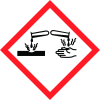
GHS05 GHS07
Signal word
Danger
Hazardous Ingredients
Cement Portland
Precautionary statements
P261 - Avoid breathing dust, fume, gas, mist, spray, vapours. P280 - Wear protective gloves, eye protection, protective clothing. P302+P352 - IF ON SKIN: Wash with plenty of water, soap. P304+P340 - IF INHALED: Remove person to fresh air and keep comfortable for breathing. P305+P351+P338 - IF IN EYES: Rinse cautiously with water for several minutes. Remove contact lenses, if present and easy to do. Continue rinsing. P310 - Immediately call a POISON CENTER, a doctor. P332+P313 - If skin irritation occurs: Get medical advice/attention. P501 - Dispose of contents/container to Initially, natural hydraulic lime must be made neutral by hardening in water and the containers must be completely emptied..
2.3 Other hazards
No additional information available



