


Note: Ingredients listed on restricted chemical lists
EC/CAS
7439-92-1
Name of the chemical
Blei, massiv: [Partikeldurchmesser ≥ 1 mm]
Concentration
35-85
Listed in
EC/CAS
7440-50-8
Name of the chemical
Copper
Concentration
0-25
EC/CAS
9004-70-0
Name of the chemical
Nitrocellulose
Concentration
1-10
EC/CAS
7440-36-0
Name of the chemical
Antimony
Concentration
0-5
EC/CAS
55-63-0
Name of the chemical
Nitroglycerin; Propane-1,2,3-triyl trinitrate
Concentration
0.5-5
EC/CAS
7440-38-2
Name of the chemical
Arsenic (As)
Concentration
0-1.5
EC/CAS
15245-44-0
Name of the chemical
Blei-2,4,6-trinitroresorcinat
Concentration
<0.25
General Information
Version
2.0
Revision date
2020-02-18
Product name
Shotshell Ammunition; with lead shot, buckshot and slugs (lead and lead core)
Product Synonyms
Premier® High Velocity Magnum Turkey Loads / Premier® Magnum Turkey Loads / Nitro Turkey® Magnum Loads / Nitro Pheasant® Loads / Hog Hammer® Buckshot / Nitro Mag® Magnum Loads / Express® XLR Extra Long Range Loads / Express® Magnum Buckshot Loads / Expr...
1.2.1 Relevant identified uses
Shotshell Ammunition; with lead shot, buckshot and slugs (lead and lead core)
1.2.2. Uses advised against
Uses other than listed on the manufacturer product label
supplier name
Remington Arms Company, LLC
Emergency telephone
1-800-424-9300
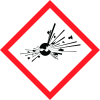
Icons in SDS


Company Information
company name
Remington Arms Company, LLC
GHS Information
Signal word
Danger
Hazard Codes
Hazard statements (CLP)
H204, H350, H373
Hazard statements
Code
Statements
H204
Fire or projection hazard
H350
May cause cancer
H373
May cause damage to organs through prolonged or repeated exposure
Section 2
SECTION 2: Hazards identification
Classification of the substance or mixture GHS US classification Expl. 1.4 H204 Carc. 1B H350 STOT RE 2 H373 Fire or projection hazard May cause cancer May cause damage to organs through prolonged or repeated exposure
Hazard statements
see section 16 : H204 - Fire or projection hazard H350 - May cause cancer H373 - May cause damage to organs through prolonged or repeated exposure
2.2 Label elements
GHS US labeling
Signal word
Danger
Precautionary statements
P201 - Obtain special instructions before use. P202 - Do not handle until all safety precautions have been read and understood. P210 - Keep away from heat, hot surfaces, sparks, open flames and other ignition sources. No smoking. P240 - Ground/Bond container and receiving equipment. P250 - Do not subject to grinding/shock/friction. P260 - Do not breathe dust/fume/gas/mist/vapours/spray. P280 - Wear protective gloves/protective clothing/eye protection/face protection. P308+P313 - If exposed or concerned: Get medical advice/attention. P314 - Get medical advice/attention if you feel unwell. P370+P380 - In case of fire: Evacuate area. P372 - Explosion risk in case of fire. P373 - DO NOT fight fire when fire reaches explosives. 02/18/2020 EN (English US) Page 1 P374 - Fight fire with normal precautions from a reasonable distance. P401 - Store in accordance with local regulations on explosives. P405 - Store locked up. P501 - Dispose of contents/container to hazardous or special waste collection point, in accordance with local, regional, national and/or international regulation.
Other hazards which do not result in classification
This product is considered an explosive article. Each product covered by this Safety Data Sheet is sealed ammunition. The ammunition contains hazardous substances, which under normal conditions of use are not in contact with the user. If the item is fractured or intentionally disassembled prior to actuation, exposure to the contents of this ammunition may cause the following health effects. Toxic if swallowed, fatal in contact with skin, and harmful if inhaled. Contents may cause cancer, an allergic skin reaction, and damage to organs through prolonged or repeated exposure.
Ingredient(s) with unknown acute toxicity
Not applicable
2.1 Classification of the substance or mixture
GHS US classification Expl. 1.4 H204 Fire or projection hazard Carc. 1B H350 May cause cancer STOT RE 2 H373 May cause damage to organs through prolonged or repeated exposure Full text of hazard classes and H-statements : see section 16


