



Note: Ingredients listed on restricted chemical lists
EC/CAS
204-658-1/123-86-4
Name of the chemical
acetic acid, butyl ester
Concentration
30-50%
EC/CAS
205-500-4/141-78-6
Name of the chemical
acetic acid, ethyl ester
Concentration
10-30%
EC/CAS
400-830-7
Name of the chemical
A mixture of: α-3-(3-(2H-benzotriazol-2-yl)-5-tert-butyl-4-hydroxyphenyl)propionyl-ω-hydroxypoly(oxyethylene); α-3-(3-(2H-benzotriazol-2-yl)-5-tert-butyl-4-hydroxyphenyl)propionyl-ω-3-(3-(2H-benzotriazol-2-yl)-5-tert-butyl-4-hydroxyphenyl)propionyloxypoly
Concentration
1-10%
General Information
Revision date
2022-06-13
Product name
FENECOAT SOLVENT
Icons in SDS


Company Information
company name
Regalead
e-mail address of the competent person responsible for the Safety Data Sheet
darren.baker@regalead.co.uk
GHS Information
Signal word
Danger
Hazard Codes
Hazard statements (CLP)
H225, H315, H317, H319, H336, H373, H412
Hazard statements
Code
Statements
H225
Highly Flammable liquid and vapour
Section 2
SECTION 2: Hazards identification
Classification under CLP Classification of the substance or mixture Classification under CLP STOT SE 3: H336; Aquatic Chronic 3: H412; Eye Irrit. 2: H319; Flam. Liq. 2: H225; Skin Irrit. 2: H315; Skin Sens. 1: H317; -: EUH066; STOT RE 2: H373
Most important adverse effects
Repeated exposure may cause skin dryness or cracking. Highly flammable liquid and vapour. Causes skin irritation. May cause an allergic skin reaction. Causes serious eye irritation. May cause drowsiness or dizziness. Harmful to aquatic life with long lasting effects. May cause damage to organs through prolonged or repeated exposure
Hazard statements
EUH066: Repeated exposure may cause skin dryness or cracking. H225: Highly flammable liquid and vapour. H315: Causes skin irritation. H317: May cause an allergic skin reaction. H319: Causes serious eye irritation. H336: May cause drowsiness or dizziness. Page: 2 H412: Harmful to aquatic life with long lasting effects. H373: May cause damage to organs through prolonged or repeated exposure.
Hazard pictograms
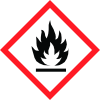
GHS02: Flame GHS07: Exclamation mark GHS08: Health hazard
Signal word
Danger
Precautionary statements
P210: Keep away from heat, hot surfaces, sparks, open flames and other ignition sources. No smoking. P241: Use explosion-proof equipment. P280: Wear protective gloves/protective clothing/eye protection/face protection. P303+P361+P353 IF ON SKIN (or hair) Take off immediately all contaminated clothing Rinse skin with water . P362+P364: Take off contaminated clothing and wash it before reuse. P305+P351+P338 IF IN EYES Rinse cautiously with water for several minutes. Remove contact lenses, if present and easy to do. Continue rinsing. P405: Store locked up. P501: Dispose of contents/container to hazardous or special waste collection point, in accordance with local, regional, national and/or international regulation.
Other hazards
May cause damage to organs through prolonged or repeated exposure.
PBT Substances
This product is not identified as a PBT/vPvB substance.
2.1 Classification of the substance or mixture
Classification under CLP: STOT SE 3: H336; Aquatic Chronic 3: H412; Eye Irrit. 2: H319; Flam. Liq. 2: H225; Skin Irrit. 2: H315; Skin Sens. 1: H317; -: EUH066; STOT RE 2: H373 Most important adverse effects: Repeated exposure may cause skin dryness or cracking. Highly flammable liquid and vapour. Causes skin irritation. May cause an allergic skin reaction. Causes serious eye irritation. May cause drowsiness or dizziness. Harmful to aquatic life with long lasting effects. May cause damage to organs through prolonged or repeated exposure.



