


Note: Ingredients listed on restricted chemical lists
EC/CAS
64741-89-5
Name of the chemical
Distillates (petroleum), solvent-refined light paraffinic, if they contain > 3 % w/w DMSO extract
Concentration
N/A
EC/CAS
121158-58-5
Name of the chemical
Phenol, dodecyl-, branched
Concentration
N/A
EC/CAS
64742-54-7
Name of the chemical
Distillates (petroleum), hydrotreated heavy paraffinic
Concentration
N/A
EC/CAS
64742-65-0
Name of the chemical
Distillates (petroleum), solvent-dewaxed heavy paraffinic
Concentration
N/A
EC/CAS
64742-70-7
Name of the chemical
Paraffin oils (petroleum), catalytic dewaxed heavy
Concentration
N/A
EC/CAS
265-091-3
Name of the chemical
Distillates (petroleum), solvent-refined light paraffinic, if they contain > 3 % w/w DMSO extract
Concentration
N/A
EC/CAS
310-154-3
Name of the chemical
Phenol, dodecyl-, verzweigt Phenol, 2-dodecyl-, verzweigt Phenol, 3-dodecyl-, verzweigt Phenol, 4-dodecyl-, verzweigt Phenol, (Tetrapropenyl)-Derivate (2016/1179)
Concentration
N/A
EC/CAS
265-157-1
Name of the chemical
Distillates (petroleum), hydrotreated heavy paraffinic
Concentration
N/A
EC/CAS
265-169-7
Name of the chemical
Distillates (petroleum), solvent-dewaxed heavy paraffinic
Concentration
N/A
EC/CAS
265-174-4
Name of the chemical
Paraffin oils (petroleum), catalytic dewaxed heavy
Concentration
N/A
General Information
Revision date
2018-04-17
Product name
Eni Aster TA/E
Emergency telephone
CNIT +39 0382 24444 (24h) (IT + EN
Icons in SDS
Company Information
company name
Refining & Marketing
e-mail address of the competent person responsible for the Safety Data Sheet
SDSInfo@eni.com
GHS Information
Signal word
Danger
Hazard Codes
Hazard statements (CLP)
H304, H411
Hazard statements
Code
Statements
H304
May be fatal if swallowed and enters airways
Section 2
SECTION 2: Hazards identification
EC) No 1272/2008]
CLP CLASSIFICATION
EU-GHS / CLP]Mixtures/Substances SDS EU 2015 According to Regulation (EU) 2015/830 (REACH Annex II) Asp. Tox. 1 H304 Aquatic Chronic 2 H411
Hazard statements
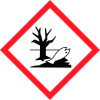
see section 16 : H304 - May be fatal if swallowed and enters airways. H411 - Toxic to aquatic life with long lasting effects.
Adverse physicochemical, human health and environmental effects
Aspiration into lungs can cause a chemical pneumonia. Toxic to aquatic organisms, may cause long-term adverse effects in the aquatic environment. For specific information about the toxicological/ecotoxicological properties and classification of this product, see Sect. 11 and/or Sect. 12.
2.2 Label elements
Labelling according to Regulation (EC) No. 1272/2008 [CLP] Extra labelling to displayExtra classification(s) to display
Hazard pictograms
GHS08 GHS09
Signal word
Danger Hazardous ingredients and/or with
Contains
Distillates (petroleum), solvent-refined light paraffinic relevant occupational exposure limits
Precautionary statements
P273 - Avoid release to the environment. P301+P310 - IF SWALLOWED: Immediately call a POISON CENTER/doctor P331 - Do NOT induce vomiting. P391 - Collect spillage. P501 - Dispose of contents and container to according to national or local regulations. Child-resistant fastening : Not applicable Tactile warning : Not applicable Other: General advice : (Not applicable - Classified as dangerous according to (EC) No 1272/2008) Other hazards (not relevant for classification) Physical/chemical : This product is combustible, but not classified as Flammable. The creation of flammable vapour mixtures takes place at temperatures which are higher than normal ambient levels. Health : If the product is handled or used at high temperature, contact with hot product or vapours may cause burns,Any substance, in case of accidents involving pressurized circuits and the like, may be accidentally injected under the skin, even without external damage. In such a case, the victim should be brought to an hospital as soon as possible, to get specialized medical treatment,Do not wait for symptoms to develop.
Environmental hazards
None Contaminants : In exceptional cases (i.e prolunged storage in tanks contaminated with water, and (air contaminants or other substances) presence of anaerobic sulfate-reducing microbial colonies), the product may undergo a degradation and generate small amounts of sulfur compounds, including H2S,See Heading 16
Other hazards which do not result in classification
None. This substance/mixture does not meet the PBT criteria of REACH regulation, annex XIII This substance/mixture does not meet the vPvB criteria of REACH regulation, annex XIII



