



Note: Ingredients listed on restricted chemical lists
EC/CAS
64742-95-6
Name of the chemical
Solvent naphtha (petroleum), light arom
Concentration
100%
EC/CAS
108-88-3
Name of the chemical
Toluene
Concentration
30-50%
General Information
Revision date
2022-03-21
Product name
Solvent X3B
Product Synonyms
No Data Available
Chemical name
Solvent naphtha, petroleum, light aromatic
1.2.1 Relevant identified uses
Industrial solvent
Emergency telephone
+61-2-97333000, +64-9-2506222...
Icons in SDS


Company Information
company name
Redox Ltd
GHS Information
Signal word
Danger
Hazard Codes
Hazard statements (CLP)
H225, H304, H315, H335, H336, H360FD, H373, H411
Hazard statements
Code
Statements
H225
Highly Flammable liquid and vapour
Section 2
SECTION 2: Hazards identification
Poisons Schedule (Aust) Schedule 5 Redox Ltd Australia New Zealand Malaysia Corporate Office Sydney Phone +61 2 9733 3000 Adelaide Auckland Kuala Lumpur Locked Bag 15 Minto NSW 2566 Australia Fax +61 2 9733 3111 Brisbane Christchurch USA 2 Swettenham Road Minto NSW 2566 Australia E-mail sydney@redox.com Melbourne Hawke’s Bay Los Angeles All Deliveries: 4 Holmes Road Minto NSW 2566 Australia Web www.redox.com Perth UK Oakland ABN 92 000 762 345 Sydney London Mexico Saltillo Globally Harmonised System Hazard Classification Hazardous according to the criteria of the Globally Harmonised System of Classification and Labelling of Chemicals (GHS)
Hazard categories
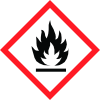
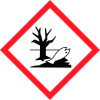
Flammable Liquids - Category 2 Skin Corrosion/Irritation - Category 2 Toxic To Reproduction - Category 1A Specific Target Organ Toxicity (Single Exposure) - Category 3 Specific Target Organ Toxicity (Repeated Exposure) - Category 2 Aspiration Hazard - Category 1 Long-term Hazard To The Aquatic Environment - Category 2 Pictograms
Signal word
Danger Hazard Statements H225 Highly flammable liquid and vapour H304 May be fatal if swallowed and enters airways H315 Causes skin irritation H335 May cause respiratory irritation H336 May cause drowsiness or dizziness H360FD May damage fertility. May damage the unborn child H373 May cause damage to organs through prolonged or repeated exposure H411 Toxic to aquatic life with long lasting effects
Prevention
P201 Obtain special instructions before use. P210 Keep away from heat/sparks/open flames/hot surfaces. No smoking. P233 Keep container tightly closed. P240 Ground and bond container and receiving equipment. P241 Use explosion-proof electrical/ventilating/lighting and all other equipment. P242 Use non-sparking tools. P243 Take action to prevent static discharges. P260 Do not breathe fume/gas/mist/vapours/spray. P271 Use only outdoors or in a well-ventilated area. P280 Wear protective gloves/protective clothing/eye protection/face protection and suitable respirator. P273 Avoid release to the environment.
Response
P301 + P310 IF SWALLOWED: Immediately call a POISON CENTER or doctor. P303 + P361 + P353 IF ON SKIN (or hair): Take off immediately all contaminated clothing. Rinse skin with water or shower. P304 + P340 IF INHALED: Remove victim to fresh air and keep comfortable for breathing. P331 Do NOT induce vomiting. P362 Take off contaminated clothing. P391 Collect spillage. P370 + P378 In case of fire: Use foam, water spray or fog. Dry chemical powder, carbon dioxide, sand or earth may be used for small fires only for extinction. P332 + P313 If skin irritation occurs: Get medical attention. P308 + P313 IF exposed or concerned: Get medical attention. P312 Call a POISON CENTER or doctor if you feel unwell.
Storage
P405 Store locked up. P403 + P235 Store in a well-ventilated place. Keep cool.
Disposal
P501 Dispose of contents/container in accordance with local / regional / national / international regulations. National Transport Commission (Australia) Australian Code for the Transport of Dangerous Goods by Road & Rail (ADG Code)
Classifications
Dangerous Goods according to the criteria of the Australian Code for the Transport of Dangerous Goods by Road & Rail (ADG Code) Environmental Protection Authority (New Zealand) Hazardous Substances and New Organisms Amendment Act 2015
HSNO Classifications
Physical 3.1C Flammable liquid - medium hazard
Health hazards
6.1E Substances that are acutely toxic –May be harmful, Aspiration hazard 6.3A Substances that are irritating to the skin 6.8A Substances that are known or presumed human reproductive or developmental toxicants 6.9B Substances that are harmful to human target organs or systems Environmental 9.1B Substances that are ecotoxic in the aquatic environment
2.1 Classification of the substance or mixture
Hazardous according to the criteria of the Globally Harmonised System of Classification and Labelling of Chemicals (GHS) Hazard Categories Flammable Liquids - Category 2 Skin Corrosion/Irritation - Category 2 Toxic To Reproduction - Category 1A Specific Target Organ Toxicity (Single Exposure) - Category 3 Specific Target Organ Toxicity (Repeated Exposure) - Category 2 Aspiration Hazard - Category 1 Long-term Hazard To The Aquatic Environment - Category 2 Pictograms Signal Word Danger Hazard Statements H225 Highly flammable liquid and vapour. H304 May be fatal if swallowed and enters airways. H315 Causes skin irritation. H335 May cause respiratory irritation. H336 May cause drowsiness or dizziness. H360FD May damage fertility. May damage the unborn child. H373 May cause damage to organs through prolonged or repeated exposure. H411 Toxic to aquatic life with long lasting effects.



