


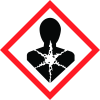
Note: Ingredients listed on restricted chemical lists
EC/CAS
101-68-8
Name of the chemical
4,4’-Methylenediphenyl diisocyanate
Concentration
N/A
EC/CAS
5873-54-1
Name of the chemical
2,4’-Methylenediphenyl diisocyanate
Concentration
N/A
EC/CAS
202-966-0
Name of the chemical
4,4'-Methylendiphenyldiisocyanat 2,2'-Methylendiphenyldiisocyanat 2,4'-Methylendiphenyldiisocyanat Methylendiphenyldiisocyanat (790/2009)
Concentration
N/A
EC/CAS
227-534-9
Name of the chemical
4,4'-Methylendiphenyldiisocyanat 2,2'-Methylendiphenyldiisocyanat 2,4'-Methylendiphenyldiisocyanat Methylendiphenyldiisocyanat (790/2009)
Concentration
N/A
General Information
Revision date
2016-02-19
Product name
Structan Express
1.2.2. Uses advised against
known
supplier name
Rectavit N.V
Manufacturer Name
Rectavit N.V
Icons in SDS
Company Information
company name
Rectavit N.V
e-mail address of the competent person responsible for the Safety Data Sheet
msds@rectavit.be
GHS Information
Signal word
Danger
Hazard Codes
Hazard statements (CLP)
H315, H317, H319, H332, H334, H335, H351, H373
Hazard statements
Code
Statements
H315
Causes skin irritation
Section 2
2.1 Classification of the substance or mixture
Classified as dangerous according to the criteria of Regulation (EC) No 1272/2008 Class Category
Hazard statements
Carc. category 2 H351: Suspected of causing cancer. Acute Tox. category 4 H332: Harmful if inhaled. STOT RE category 2 H373: May cause damage to organs through prolonged or repeated exposure if inhaled. Eye Irrit. category 2 H319: Causes serious eye irritation. STOT SE category 3 H335: May cause respiratory irritation. Skin Irrit. category 2 H315: Causes skin irritation. Resp. Sens. category 1 H334: May cause allergy or asthma symptoms or breathing difficulties if inhaled. Skin Sens. category 1 H317: May cause an allergic skin reaction. H351 Suspected of causing cancer. H332 Harmful if inhaled. H373 May cause damage to organs through prolonged or repeated exposure if inhaled. H319 Causes serious eye irritation. H335 May cause respiratory irritation. H315 Causes skin irritation. Reason for revision: 15 Created by: Brandweerinformatiecentrum voor gevaarlijke stoffen vzw (BIG) Publication date 2003-01-30 134-16099-480-en Technische Schoolstraat 43 A, B-2440 Geel Date of revision 2016-02-19 http://www.big.be © BIG vzw H334 May cause allergy or asthma symptoms or breathing difficulties if inhaled. H317 May cause an allergic skin reaction.
Contains
4,4'-methylenediphenyl diisocyanate; o-(p-isocyanatobenzyl)phenyl isocyanate; aromatic polyisocyanate prepolymer
Signal word
Danger
Precautionary statements
P101 If medical advice is needed, have product container or label at hand. P102 Keep out of reach of children. P280 Wear protective gloves, protective clothing and eye protection/face protection. P304 + P340 IF INHALED: Remove person to fresh air and keep comfortable for breathing. P302 + P352 IF ON SKIN: Wash with plenty of water and soap. P333 + P313 If skin irritation or rash occurs: Get medical advice/attention. P305 + P351 + P338 IF IN EYES: Rinse cautiously with water for several minutes. Remove contact lenses, if present and easy to do. Continue rinsing. P312 Call a POISON CENTER/doctor if you feel unwell. P501 Dispose of contents/container in accordance with local/regional/national/international regulation.
Additional information
Persons already sensitised to diisocyanates may develop allergic reactions when using this product. - Persons suffering from asthma, eczema or skin problems should avoid contact, including dermal contact, with this product. - This product should not be used under conditions of poor ventilation unless a protective mask with an appropriate gas filter (i.e. type A1 according to standard EN 14387) is used.
2.3 Other hazards
No other hazards known



