


Note: Ingredients listed on restricted chemical lists
EC/CAS
203-905-0/111-76-2
Name of the chemical
Ethylene glycol monobutyl ether (EGBE)
Concentration
1-5%
EC/CAS
203-448-7/106-97-8
Name of the chemical
n-Butan, enthält 0,1% Butadien
Concentration
10-30%
EC/CAS
200-857-2/75-28-5
Name of the chemical
iso-Butan, enthält 0,1% Butadien
Concentration
5-10%
EC/CAS
64742-95-6
Name of the chemical
Solvent naphtha (petroleum), light arom
Concentration
1-5%
General Information
Revision date
2015-03-27
Product name
RED PRIMER
1.2.1 Relevant identified uses
Paint aerosol
supplier name
Quest Consumables Ltd
Emergency telephone
0044 (0) 7970 779978
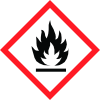
Icons in SDS


Company Information
company name
Quest Consumables Ltd
e-mail address of the competent person responsible for the Safety Data Sheet
sales@questconsumables.com
GHS Information
Signal word
Danger
Hazard Codes
Hazard statements (CLP)
H222, H229, H319, H336
Hazard statements
Code
Statements
H222
Extremely flammable aerosol
Section 2
SECTION 2: Hazards identification
Classification (1999/45/EEC) Classification of the substance or mixture Classification (EC 1272/2008)
Other physicochemical hazards
Flam. Aerosol 1 - H222 Human health EUH066;Eye Irrit. 2 - H319;STOT SE 3 - H336
Environmental hazards
Not classified Classification (1999/45/EEC) Xi;R36. F+;R12. R66, R67. The Full Text for all R-Phrases and Hazard Statements are Displayed in Section 16 Human health Vapours/aerosol spray may irritate the respiratory system. May irritate eyes and skin. In high concentrations, vapours and aerosol mists have a narcotic effect and may cause headache, fatigue, dizziness and nausea Environment The product is not expected to be hazardous to the environment Physical and Chemical Hazards The product is extremely flammable, and explosive vapour/air mixtures may be formed even at normal room temperatures. Aerosol containers can explode when heated, due to excessive pressure build-up. When sprayed on a naked flame or any incandescent material the aerosol vapours can be ignited
Signal word
Danger
Hazard statements
H222 Extremely flammable aerosol. H319 Causes serious eye irritation. H336 May cause drowsiness or dizziness.
Precautionary statements
P102 Keep out of reach of children. P271 Use only outdoors or in a well-ventilated area. P280 Wear protective gloves/protective clothing/eye protection/face protection. P261 Avoid breathing vapour/spray. P264 Wash contaminated skin thoroughly after handling. P304+340 IF INHALED: Remove victim to fresh air and keep at rest in a position comfortable for breathing. P305+351+338 IF IN EYES: Rinse cautiously with water for several minutes. Remove contact lenses, if present and easy to do. Continue rinsing. P337+313 If eye irritation persists: Get medical advice/attention.
Supplemental label elements
P210 Keep away from heat/sparks/open flames/hot surfaces. - No smoking. P211 Do not spray on an open flame or other ignition source. P251 Pressurized container: Do not pierce or burn, even after use. P312 Call a POISON CENTER or doctor/physician if you feel unwell. P410+412 Protect from sunlight. Do not expose to temperatures exceeding 50 °C/122° F. P501 Dispose of contents/container in accordance with local regulations. EUH066 Repeated exposure may cause skin dryness or cracking.
Contains
SOL024 Acetone H229 Pressurised container: May burst if heated
Other hazards
Not Classified as PBT/vPvB by current EU criteria
2.1 Classification of the substance or mixture
Classification (EC 1272/2008) Physical and Chemical Hazards Flam. Aerosol 1 - H222 Human health EUH066;Eye Irrit. 2 - H319;STOT SE 3 - H336 Environment Not classified. Classification (1999/45/EEC) Xi;R36. F+;R12. R66, R67. The Full Text for all R-Phrases and Hazard Statements are Displayed in Section 16. Human health Vapours/aerosol spray may irritate the respiratory system. May irritate eyes and skin. In high concentrations, vapours and aerosol mists have a narcotic effect and may cause headache, fatigue, dizziness and nausea. Environment The product is not expected to be hazardous to the environment. Physical and Chemical Hazards The product is extremely flammable, and explosive vapour/air mixtures may be formed even at normal room temperatures. Aerosol containers can explode when heated, due to excessive pressure build-up. When sprayed on a naked flame or any incandescent material the aerosol vapours can be ignited.



