



Note: Ingredients listed on restricted chemical lists
EC/CAS
111-76-2
Name of the chemical
Ethylene glycol monobutyl ether (EGBE)
Concentration
<15
EC/CAS
127-18-4
Name of the chemical
Tetrachloroethylene
Concentration
<15
EC/CAS
64742-82-1
Name of the chemical
Naphtha (petroleum), hydrodesulfurized heavy
Concentration
<15 <10
General Information
Revision date
2021-09-01
Product name
GREASE RELEASE
supplier name
Pty Ltd
Emergency telephone
13 11 26 (Australia wide
Icons in SDS


Company Information
company name
Pty Ltd
e-mail address of the competent person responsible for the Safety Data Sheet
csvic@fhp-ww.com
GHS Information
Signal word
Danger
Hazard Codes
Hazard statements (CLP)
H225, H303, H304, H315, H318, H332, H335, H351, H411
Hazard statements
Code
Statements
H225
Highly Flammable liquid and vapour
Section 2
Hazard pictograms
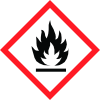
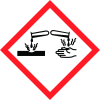
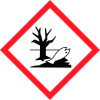
GHS02: Flame GHS05: Corrosion GHS07: Exclamation mark GHS08: Health hazard GHS09: Environment
Signal word
DANGER
2.1 Classification of the substance or mixture
Hazardous according to the criteria of the Globally Harmonised System of Classification and Labelling of Chemicals (GHS). Flammable liquids – Category 2 Acute toxicity (inhalation) – Category 4 Acute toxicity (oral) – Category 5 Serious eye damage – Category 1 Skin irritation – Category 2 Carcinogenicity – Category 2
Aspiration hazard
Category 1 Specific target organ toxicity (repeated exposure) – Category 2
Hazard statements
H225: Highly flammable liquid and vapour. H303: May be harmful if swallowed H304: May be fatal if swallowed and enters airways. H318: Causes serious eye damage. H315: Causes skin irritation. H351: Suspected of causing cancer. H335: May cause respiratory irritation. H332: Harmful if inhaled. H411: Toxic to aquatic life with long lasting effects. AUH066: Repeated exposure may cause skin dryness or cracking.
Prevention
P102: Keep out of reach of children. P201: Obtain special instructions before use. P202: Do not handle until all safety precautions have been read and understood. P210: Keep away from heat, sparks, open flames and hot surfaces. - No smoking. P233: Keep container tightly closed. P243: Take precautionary measures against static discharge. P260: Do not breathe fume/mist/vapours/spray. P264: Wash contacted areas thoroughly after handling. P271: Use only outdoors or in a well-ventilated area. P281: Use personal protective equipment as required.
Response
P331: Do NOT induce vomiting. P362: Take off contaminated clothing and wash before reuse. P363: Wash contaminated clothing before reuse. P301+P310 IF SWALLOWED Immediately call a POISON CENTRE or doctor P303+P361+P353 IF ON SKIN (or hair) Remove immediately all contaminated clothing. Rinse skin with water P304+P340 IF INHALED Remove victim to fresh air and keep at rest in a position comfortable for breathing P305+P351+P338 IF IN EYES Rinse cautiously with water for several minutes. Remove contact lenses, if present and easy to do. Continue rinsing. P308+P313 If exposed or concerned Get medical advice P332+P313 If skin irritation occurs Get medical advice P337+P313 If eye irritation persists Get medical advice P391: Collect spillage. P370+P378: In case of fire, use carbon dioxide, dry chemical, foam, water fog. Alcohol resistant foam is the preferred firefighting medium but, if it is not available, normal foam can be used.
Storage
P402+P404: Store in a dry place. Store in a closed container. P403+P235: Store in a well-ventilated place. Keep cool.
Disposal
P501: Dispose of small quantities and empty containers by wrapping with paper and putting in garbage. For larger quantities, if recycling or reclaiming is not possible, use a commercial waste disposal service. Emergency Overview Physical Description & Colour: Colourless liquid. Odour: Solvent odour.
Health hazards
Highly flammable liquid and vapour. May be fatal if swallowed and enters airways. Causes serious eye damage. Causes skin irritation. Suspected of causing cancer. May cause respiratory irritation. Harmful if inhaled.
SUSMP Classification
S6 (POISON)
Potential health effects
Inhalation: Short Term Exposure: High vapour pressures may cause drowsiness and dizziness. In addition product may be mildly irritating, although unlikely to cause anything more than mild transient discomfort. Long Term Exposure: This product is carcinogenic by inhalation exposure. Vapours may cause drowsiness and dizziness. Skin Contact: Short Term Exposure: Available data shows that this product is harmful, but symptoms are not available. In addition, product is a skin irritant. Symptoms may include itchiness and reddening of contacted skin. Other symptoms may also become evident, but all should disappear once exposure has ceased. Long Term Exposure: Repeated exposure may cause skin dryness or cracking. Eye Contact: Short Term Exposure: This product is an eye irritant. Symptoms may include stinging and reddening of eyes and watering which may become copious. Other symptoms may also become evident. If exposure is brief, symptoms should disappear once exposure has ceased. However, lengthy exposure or delayed treatment may cause permanent damage. Long Term Exposure: No data for health effects associated with long term eye exposure. Ingestion: Short Term Exposure: Significant oral exposure is considered to be unlikely. Because of the low viscosity of this product, it may directly enter the lungs if swallowed, or if subsequently vomited. Once in the lungs, it is very difficult to remove and can cause severe injury or death. However, this product is an oral irritant. Symptoms may include burning sensation and reddening of skin in mouth and throat. Other symptoms may also become evident, but all should disappear once exposure has ceased. Long Term Exposure: No data for health effects associated with long term ingestion. Carcinogen Status: SWA: Perchloroethylene is classified by SWA as a Class 3 Carcinogen, possibly carcinogenic to humans. See the SWA website for further details. A web address has not been provided as addresses frequently change. NTP: Perchloroethylene is classified by NTP as reasonably anticipated to be carcinogenic to humans. See the NTP website for further details. A web address has not been provided as addresses frequently change. IARC: Xylene is Class 3 - unclassifiable as to carcinogenicity to humans. 2-butoxyethanol is Class 3 - unclassifiable as to carcinogenicity to humans. Perchloroethylene is classed 2a by IARC - probably carcinogenic to humans. See the IARC website for further details. A web address has not been provided as addresses frequently change.



