



Note: Ingredients listed on restricted chemical lists
EC/CAS
144-62-7
Name of the chemical
oxalic acid
Concentration
<3
EC/CAS
7647-01-0
Name of the chemical
Hydrochloric acid
Concentration
<0.5
General Information
Revision date
2021-09-01
Product name
COFFEE BREAK
1.2.1 Relevant identified uses
Removal of tannin stains from fabric and fibres
supplier name
Pty Ltd
Emergency telephone
13 11 26 (Australia wide
Icons in SDS


Company Information
company name
Pty Ltd
e-mail address of the competent person responsible for the Safety Data Sheet
csvic@fhp-ww.com
GHS Information
Signal word
Danger
Hazard Codes
Hazard statements (CLP)
H302, H318, H402
Hazard statements
Code
Statements
H302
Harmful if swallowed
Section 2
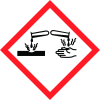
Hazard pictograms
GHS05: Corrosion. GHS07: Exclamation mark GHS09: Environment.
Signal word
DANGER
2.1 Classification of the substance or mixture
Hazardous according to the criteria of the Globally Harmonised System of Classification and Labelling of Chemicals (GHS). Serious eye damage – Category 1 Skin irritation – Category 2 Acute toxicity (oral) – Category 4
Hazard statements
H318: Causes serious eye damage. P315: Causes skin irritation. H302: Harmful if swallowed. H402: Harmful to aquatic life.
Prevention
P102: Keep out of reach of children. P264: Wash affected areas thoroughly after handling. P280: Wear protective gloves, protective clothing and eye or face protection.
Response
P301+P330+P331 IF SWALLOWED Rinse mouth. Do NOT induce vomiting P303+P361+P353 IF ON SKIN (or hair) Remove immediately all contaminated clothing. Wash with plenty of soap and water. P362: Take off contaminated clothing and wash before reuse. P305+P351+P338 IF IN EYES Rinse cautiously with water for several minutes. Remove contact lenses, if present and easy to do. Continue rinsing. P390: Absorb spillage to prevent material damage. P391: Collect spillage.
Storage
P403+P233: Store in a well-ventilated place. Keep container tightly closed.
Disposal
P501: Dispose of contents and containers to landfill. Emergency Overview Physical Description & Colour: Clear, colourless liquid. Odour: Pungent acidic odour.
Health hazards
Causes serious eye damage. Causes skin irritation. Harmful if swallowed
SUSMP Classification
S6 (POISON)
Potential health effects
Inhalation: Short Term Exposure: Available data indicates that this product is an inhalation irritant. Symptoms may include headache, irritation of nose and throat and increased secretion of mucous in the nose and throat. Other symptoms may also become evident, but they should disappear after exposure has ceased. Long Term Exposure: No data for health effects associated with long term inhalation. Skin Contact: Short Term Exposure: Available data indicates that this product is a severe skin irritant. Symptoms may include extreme itchiness and reddening of contacted skin. Other symptoms such as blisters may also become evident, and may last long after exposure has ceased. Long Term Exposure: No data for health effects associated with long term skin exposure. Eye Contact: Short Term Exposure: Causes severe eye damage. Severe eye irritation, watering and redness, can cause burns to the eye. Risk of serious or permanent eye lesions. Long Term Exposure: No data for health effects associated with long term eye exposure. Ingestion: Short Term Exposure: Significant oral exposure is considered to be unlikely. However, this product is a severe oral irritant. Symptoms may include extreme pain and reddening of skin in mouth and throat. Other symptoms such as blisters may also become evident, and may last long after exposure has ceased. Long Term Exposure: No data for health effects associated with long term ingestion. Carcinogen Status: SWA: No significant ingredient is classified as carcinogenic by SWA. NTP: No significant ingredient is classified as carcinogenic by NTP. IARC: Hydrochloric Acid is Class 3 - unclassifiable as to carcinogenicity to humans. See the IARC website for further details. A web address has not been provided as addresses frequently change.



