



Note: Ingredients listed on restricted chemical lists
EC/CAS
205-500-4/141-78-6
Name of the chemical
acetic acid, ethyl ester
Concentration
≥0.5-
EC/CAS
215-204-7/1313-27-5
Name of the chemical
Molybdenum trioxide
Concentration
≥15- <35
EC/CAS
232-261-3/7803-55-6
Name of the chemical
Ammonium trioxovanadate
Concentration
≥2-<7
EC/CAS
601-648-2/111-76-2
Name of the chemical
Ethylene glycol monobutyl ether (EGBE)
Concentration
≥0.5-
EC/CAS
265-199-0/64742-95-6
Name of the chemical
Solvent naphtha (petroleum), light arom
Concentration
≥0.3- <1
EC/CAS
200-578-6/64-17-5
Name of the chemical
Ethanol
Concentration
≥50- <70 >50%
EC/CAS
200-578-6/67-56-1
Name of the chemical
Methanol
Concentration
<0.3 ≥3-<10
EC/CAS
203-905-0
Name of the chemical
Ethylene glycol monobutyl ether (EGBE)
Concentration
≥0.5-
General Information
Revision date
2019-11-22
Product name
GMS Marking fluid
Product Synonyms
Ethanol Molybdenum trioxide, ammonium trioxovanadate, 2-butoxyethanol, ethyl acetate, solvent naphtha (petroleum), light, aromatic and condensation products of
Manufacturer Name
Pryor Marking Technology
Icons in SDS


Company Information
company name
Pryor Marking Technology
e-mail address of the competent person responsible for the Safety Data Sheet
info@pryormarking.com
GHS Information
Signal word
Danger
Hazard Codes
Hazard statements (CLP)
H225, H302, H315, H319, H335, H340, H350, H361, H373, H412
Hazard statements
Code
Statements
H225
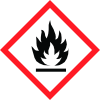
Highly Flammable liquid and vapour
Section 2
CLP CLASSIFICATION
Flam Liq. 2 H225 Acute Tox. 4 H302 Skin Irrit.2 H315 Eye Irrit. 2 H319 STOT SE 3 H335 Muta. 1B H340 Carc. 1B H350 Repr. 2 H361 STOT RE 2 H373 Aquatic Chronic 3 H412 For full text see section 16.
2.2 Label elements
According to Regulation (EC) No. 1272/2008 (CLP) Product Name GHS02 GHS07 GHS08
Signal word
Danger
Hazard statements
H225 Highly flammable liquid and vapour H302 Harmful if swallowed H315 Causes skin irritation H319 Causes serious eye irritation H335 May cause respiratory irritation H340 May cause genetic defects H350 May cause cancer H361 Suspected of damaging fertility or the unborn child (oral) H373 May cause damage to organs through prolonged or repeated exposure (respiratory tract, inhalation) H412 Harmful to aquatic life with long lasting effects
Precautionary statements
P201 Obtain special instructions before use P210 Keep away from heat, hot surfaces, sparks, open flames and other ignition sources. No smoking. P260 Do not breathe dust/fumes/gas/mist/vapours/spray. P280 Wear protective gloves/protective clothing/eye protection/face protection. P308 + P313 IF exposed or concerned: Get medical advice/attention P403 + P233 Store in a well-ventilated place. Keep container tightly closed. P501 Dispose of contents/container in accordance with local/national regulation Supplementary Hazard EUH208 Contains condensation products of dimerised fatty acids, Information (EU) C18-unsaturated, with N,N-dimethyl-1,3-propanediamine and 1,3-propanediamine. May produce an allergic reaction.
Hazardous Ingredients
Ethanol Molybdenum trioxide Ammonium trioxovanadate 2-butoxyethanol Ethyl acetate Solvent naphtha (petroleum), light, aromatic
Special rules for supplemental label elements for certain mixtures
Restricted to professional users.
2.3 Other hazards
May form explosive peroxides. None of the components are considered to be PBT or vPvB. Restricted to professional users.



