



Note: Ingredients listed on restricted chemical lists
EC/CAS
6484-52-2
Name of the chemical
Ammonium Nitrate (AN)
Concentration
N/A
EC/CAS
68334-30-5
Name of the chemical
Fuels, diesel, except if the full refining history is known and it can be shown that the substance from which it is produced is not a carcinogen
Concentration
N/A
General Information
Revision date
2018-08-20
Product name
PRIMEX ANFO
Product Synonyms
AMMONIUM NITRATE/FUEL OIL, ANFO 94/6
1.2.1 Relevant identified uses
Blasting explosive
supplier name
Prime Blasting Services Ltd
Emergency telephone
0800 111 077 (ALL HOURS
Icons in SDS

Company Information
company name
Prime Blasting Services Ltd
e-mail address of the competent person responsible for the Safety Data Sheet
prime@primeexplosives.co.nz
GHS Information
Signal word
Danger
Hazard Codes
Hazard statements (CLP)
H201, H302, H315, H319, H373, H413
Hazard statements
Code
Statements
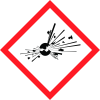
H201
Explosive; mass explosion hazard
Section 2
SECTION 2: Hazards identification
Classified as a Dangerous Good according to NZS 5433:2012 Transport of Dangerous Goods on Land. Classified as hazardous according to criteria in the HS (Minimum Degrees of Hazard) Regulations 2001.
Signal word
DANGER Subclasses: Subclass 1.1 Category D Subclass 6.1 Category D - Substances which are acutely toxic. Subclass 6.3 Category A - Substances that are irritating to the skin. Subclass 6.4 Category A - Substances that are irritating to the eye. Subclass 6.9 Category B - Substances that are harmful to human target organs or systems. Subclass 9.1 Category D - Substances that are slightly harmful to the aquatic environment or are otherwise designed for biocidal action. The 'Hazardous Substances (Tracking) Regulations 2001' are applicable to this material.
Hazard statements
H201 Explosive; mass explosion hazard. H302 Harmful if swallowed. H315 Causes skin irritation. H319 Causes serious eye irritation. H373 May cause damage to organs through prolonged or repeated exposure. H413 May cause long lasting harmful effects to aquatic life.
Prevention
P210 Keep away from heat/sparks/open flames/hot surfaces. No smoking. P250 Do not subject to grinding/shock/friction/fire or other sources of ignition. P260 Do not breathe dust/vapours. P264 Wash hands thoroughly after handling. P270 Do not eat, drink or smoke when using this product. P280 Wear protective gloves/protective clothing/eye protection/face protection. P273 Avoid release to the environment.
Response
P370+P380 In case of fire: Evacuate area. P372 Explosion risk in case of fire. P373 DO NOT fight fire when fire reaches explosives. P301+P312 IF SWALLOWED: Call a POISON CENTER or doctor/physician if you feel unwell. P330 Rinse mouth. P302+P352 IF ON SKIN: Wash with plenty of soap and water. P321 Specific treatment (see First Aid Measures on the Safety Data Sheet). P332+P313 If skin irritation occurs: Get medical advice/attention. P362 Take off contaminated clothing before re-use. P305+P351+P338 IF IN EYES: Rinse cautiously with water for several minutes. Remove contact lenses, if present and easy to do. Continue rinsing. P337+P313 If eye irritation persists: Get medical advice/attention. P314 Get medical advice/attention if you feel unwell.
Storage
P401 Store in accordance with Hazardous Substances (Class 1 to 5) Control Regulations 2001.
Disposal
P501 In case of a substance that is in compliance with a HSNO approval other than a Part 6A (Group Standards) approval, a label must provide a description of one or more appropriate and achievable methods for the disposal of a substance in accordance with the Hazardous Substances (Disposal) Regulations 2001. This may also include any method of disposal that must be avoided.



