



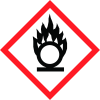
Note: Ingredients listed on restricted chemical lists
EC/CAS
211-128-3/630-08-0
Name of the chemical
Carbon monoxide
Concentration
1.0%
EC/CAS
231-783-9/7727-37-9
Name of the chemical
Nitrogen N2
Concentration
N/A
General Information
Revision date
2012-10-01
Product name
NON-FLAMMABLE GAS MIXTURE Containing One or More of the Following Components in a Nitrogen Balance Gas: Oxygen, 0.0015-23.5%; Methane, 0.0005-2.5%; Carbon Monoxide, 0.0005-1.0%; Hydrogen Sulfide, 0.001-0.025%
Product Synonyms
Not Applicable
Chemical name
Not Applicable
1.2.1 Relevant identified uses
Calibration of Monitoring and Research Equipment
Emergency telephone
(800)255-3924, +1 813 248 0585
Icons in SDS


Company Information
company name
PPoorrttaaG GA
GHS Information
Signal word
Danger
Hazard Codes
Hazard statements (CLP)
H270, H280, H304
Hazard statements
Code
Statements
H270
May cause or intensify fire; oxidizer
H280
Contains gas under pressure; may explode if heated
H304
May be fatal if swallowed and enters airways
Section 2
SECTION 2: Hazards identification
According to European Directive 67/548/EEC as amended EMERGENCY OVERVIEW: This gas mixture is a colorless gas which has a rotten-egg odor (due to the presence of Hydrogen Sulfide). The odor cannot be relied on as an adequate warning of the presence of this gas mixture, because olfactory fatigue occurs after over-exposure to Hydrogen Sulfide. Hydrogen Sulfide and Carbon Monoxide (another component of this gas mixture) are toxic to humans in relatively low concentrations. Over-exposure to this gas mixture can cause skin or eye irritation, nausea, dizziness, headaches, collapse, unconsciousness, coma, and death. Additionally, releases of this gas mixture may produce oxygen-deficient atmospheres (especially in small confined spaces or other poorly-ventilated environments); individuals in such atmospheres may be asphyxiated. US DOT SYMBOLS
Signal word
Danger EU LABELING AND CLASSIFICATION
Precautionary statements
H270: May cause or intensify fire, oxidizer P261: Avoid breathing gas. H280: Contains gas under pressure, may explode if heated P271: Use only in well ventilated area. H304: May be fatal if swallowed and enters airways P281: Use personal protective equipment as required. P314: Get medical advice/attention if you feel unwell Hazard Symbol(s): P403: Store in a well ventilated place. [Xn] Harmful; [O] Oxidizer R8: Contact with combustible material may cause fire S9: Keep container in a well ventilated area R48/20 Harmful danger of serious damage to health by S23: Do not breath gas prolonged exposure through inhalation S36/37: Wear suitable protective clothing and gloves. R65: Harmful may cause lung damage if swallowed R67: Vapors may cause drowsiness and dizziness. HEALTH HAZARDS OR RISKS FROM EXPOSURE: ACUTE: Due to the small size of the individual cylinder of this gas mixture, no unusual health effects from exposure to the product are anticipated under routine circumstances of use. However the Hydrogen Sulfide and Carbon Monoxide components of this gas mixture are toxic to humans. Over-exposure to this gas mixture can cause nausea, dizziness, headaches, collapse, unconsciousness, coma, and death. Due to the presence of Hydrogen Sulfide, over-exposures to this gas mixture can also irritate the skin and eyes; severe eye contamination can result in blindness. CHRONIC: Severe over-exposures to the Hydrogen Sulfide component of this gas mixture, which do not result in death, may cause long-term symptoms such as memory loss, paralysis of facial muscles, or nerve tissue damage. In serious cases of over-exposure, the eyes can be permanently damaged. Skin disorders and respiratory conditions may be aggravated by repeated over-exposures to this gas product. Refer to Section 11 (Toxicology Information) for additional information on the components of this gas mixture. Chronic exposure to oxygen-deficient atmospheres (below 18% oxygen in air) may affect the heart and nervous system. TARGET ORGANS: ACUTE: Respiratory system, blood system, central nervous system effects, cardiovascular system, skin, eyes. CHRONIC Neurological system, reproductive system, eyes.
Hazard statements
Simple Asphyxiant
2.1 Classification of the substance or mixture
Classification of the substance or mixture according to Regulation (EC) No1272/2008 Aspiration Hazard Category 1 Oxidizing Gas Category Pressurized Gas According to European Directive 67/548/EEC as amended. Harmful by inhalation, pressurized gas, oxidizing


