

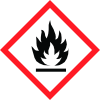
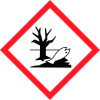

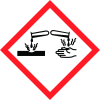
Note: Ingredients listed on restricted chemical lists
EC/CAS
236-675-5/13463-67-7
Name of the chemical
Reaction mass of titanium dioxide and silver chloride
Concentration
20- <30
EC/CAS
265-199-0/64742-95-6
Name of the chemical
Solvent naphtha (petroleum), light arom
Concentration
10-<20
EC/CAS
231-545-4/7631-86-9
Name of the chemical
Silver adsorbed on silicon dioxide
Concentration
1-<5
EC/CAS
201-126-0/78-59-1
Name of the chemical
3,5,5-Trimethyl-2-cyclohexen-1-on
Concentration
1-<5
EC/CAS
202-049-5/91-20-3
Name of the chemical
Naphthalene,3
Concentration
0.1-<1
EC/CAS
202-704-5/98-82-8
Name of the chemical
Cumol (2022/692)
Concentration
0.1-<1
General Information
Version
12
Revision date
2026-07-10
Product name
POLYESTER (FIREPROOF DR) TOP ET4
1.2.1 Relevant identified uses
Industrial applications, Used by spraying
1.2.2. Uses advised against
Product is not intended, labelled or packaged for consumer use
Emergency telephone
+82-51-620-8220
Icons in SDS


Company Information
company name
PPG SSC
e-mail address of the competent person responsible for the Safety Data Sheet
Korea.MSDS@ppg.com
GHS Information
Signal word
Danger
Hazard Codes
Hazard statements (CLP)
H226, H315, H317, H318, H334, H340, H350, H372, H411
Hazard statements
Code
Statements
H226
Flammable liquid and vapour
Section 2
SECTION 2: Hazards identification
2.1 Classification of the substance or mixture
LÍQUIDOS INFLAMABLES - Categoría 3 IRRITACIÓN CUTÁNEA - Categoría 3 peligrosa o mezcla IRRITACIÓN OCULAR - Categoría 2A SENSIBILIZACIÓN CUTÁNEA - Categoría 1 CARCINOGENICIDAD - Categoría 1B TOXICIDAD PARA LA REPRODUCCIÓN - Categoría 2 TOXICIDAD ESPECÍFICA DE ÓRGANOS BLANCO (EXPOSICIONES REPETIDAS) - Categoría 2 Porcentaje de la mezcla consistente de ingrediente(s) de toxicidad aguda desconocida: 27.2 % (oral), 58.2 % (dérmica), 52.4 % (inhalación)
Hazard statements
H226 - Líquido y vapores inflamables. H316 - Provoca una leve irritación cutánea. H317 - Puede provocar una reacción cutánea alérgica. H319 - Provoca irritación ocular grave. H350 - Puede provocar cáncer. H361 - Susceptible de perjudicar la fertilidad o dañar al feto. H373 - Puede provocar daños en los órganos tras exposiciones prolongadas o repetidas. (órganos auditivos)
Prevention
P201 - Procurarse las instrucciones antes del uso. P202 - No manipular antes de haber leído y comprendido todas las precauciones de seguridad. P280 - Usar guantes de protección, y ropa de prot eccin y equipo de protección para la cara o los ojos. P210 - Mantener alejado del calor, chispas, llamas al descubierto, superficies calientes y otras fuentes de ignición. No fumar. P260 - No respirar vapor. P264 - Lavarse cuidadosamente después de la manipulación. P272 - La ropa de trabajo contaminada no debe salir del lugar de trabajo.
Response
P308 + P313 - En caso de exposición demostrada o supuesta: Consultar a un médico. P303 + P361 + P353 - En caso de contacto con la piel (o el pelo): Quitar inmediatamente toda la ropa contaminada. Enjuagar la piel con agua. P333 + P313 - En caso de irritación cutánea o sarpullido: Consultar a un médico. P305 + P351 + P338 - En caso de contacto con los ojos: Enjuagar con agua cuidadosamente durante varios minutos. Quitar los lentes de contacto, cuando estén presentes y pueda hacerse con facilidad. Proseguir con el lavado. P337 + P313 - Si la irritación ocular persiste: Consultar a un médico.
Storage
P405 - Guardar bajo llave.
Disposal
P501 - Eliminar el contenido y recipiente conforme a todas las reglamentaciones locales, regionales, nacionales e internacionales. Otros peligros que no contribuyen en la : Los polvos resultantes del lijado y del amolado pueden ser nocivos si se inhalan. Contiene una sustancia que puede emitir formaldehido si se almacena más allá de
Classifications
su vida útil y/o durante el curado a temperaturas de curado superiores a 60ºC/140ºF. El contacto prolongado o repetido puede resecar la piel y causar irritación. La exposición repetida a altas concentraciones de vapor puede causar irritacion del sistema respiratorio y daño permanentes en el cerebro y en el sistema nervioso central. La inhalación de concentraciones de vapor o aerosol superiores a los límites recomendados causa dolores de cabeza, mareos y náuseas, y puede provocar la pérdida de consciencia o la muerte. Desprende vapores tóxicos cuando se calienta. Vea la sección 11 para la Información Toxicológica



