


Note: Ingredients listed on restricted chemical lists
EC/CAS
14808-60-7
Name of the chemical
Silica, crystalline
Concentration
10-<30
EC/CAS
7789-06-2
Name of the chemical
Strontium chromate
Concentration
10-<30
EC/CAS
100-51-6
Name of the chemical
Benzyl Alcohol
Concentration
1-<10
EC/CAS
1477-55-0
Name of the chemical
1,3-benzenedimethanamine
Concentration
1-<10
General Information
Version
10.03
Revision date
2025-12-01
Product name
CA 7700A BASE COMPONENT
1.2.1 Relevant identified uses
Coating
supplier name
PPG INDUSTRIES NEW ZEALAND LTD
Emergency telephone
1-412-391-1618
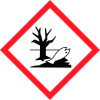
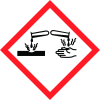
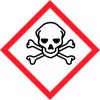
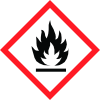
Icons in SDS


Company Information
company name
PPG INDUSTRIES NEW ZEALAND LTD
GHS Information
Signal word
Danger
Hazard Codes
Hazard statements (CLP)
H225, H302, H315, H317, H318, H331, H334, H335, H340, H350, H361, H370, H372, H410
Hazard statements
Code
Statements
H225
Highly Flammable liquid and vapour
Section 2
SECTION 2: Hazards identification
HSNO Classification FLAMMABLE LIQUIDS - Category 2 ACUTE TOXICITY (oral) - Category 4 ACUTE TOXICITY (inhalation) - Category 3 SKIN IRRITATION - Category 2 SERIOUS EYE DAMAGE - Category 1 RESPIRATORY SENSITISATION - Category 1 SKIN SENSITISATION - Category 1 GERM CELL MUTAGENICITY - Category 1 CARCINOGENICITY - Category 1 REPRODUCTIVE TOXICITY - Category 2 SPECIFIC TARGET ORGAN TOXICITY - SINGLE EXPOSURE - Category 1 SPECIFIC TARGET ORGAN TOXICITY - SINGLE EXPOSURE (Respiratory tract irritation) - Category 3 SPECIFIC TARGET ORGAN TOXICITY - REPEATED EXPOSURE - Category 1 SHORT-TERM (ACUTE) AQUATIC HAZARD - Category 1 LONG-TERM (CHRONIC) AQUATIC HAZARD - Category 1
Signal word
Danger
Hazard statements
Highly flammable liquid and vapour. Harmful if swallowed. Causes skin irritation. May cause an allergic skin reaction. Causes serious eye damage. Toxic if inhaled. May cause allergy or asthma symptoms or breathing difficulties if inhaled. May cause respiratory irritation. May cause genetic defects. May cause cancer. Suspected of damaging fertility or the unborn child. Causes damage to organs. Causes damage to organs through prolonged or repeated exposure. Very toxic to aquatic life with long lasting effects.
Prevention
Do not handle until all safety precautions have been read and understood. Wear protective gloves, protective clothing and eye or face protection. Wear respiratory protection. Keep away from heat, hot surfaces, sparks, open flames and other ignition sources. No smoking. Avoid release to the environment. Do not breathe vapour. Wash thoroughly after handling.
Response
Collect spillage. IF exposed or concerned: Call a POISON CENTER or doctor. IF INHALED: Remove person to fresh air and keep comfortable for breathing. Call a POISON CENTER or doctor. If experiencing respiratory symptoms: Call a POISON CENTER or doctor. IF ON SKIN: Wash with plenty of water. If skin irritation or rash occurs: Get medical advice or attention. Take off contaminated clothing and wash it before reuse. IF IN EYES: Rinse cautiously with water for several minutes. Remove contact lenses, if present and easy to do. Continue rinsing. Immediately call a POISON CENTER or doctor.
Storage
Store in a well-ventilated place. Keep container tightly closed.
Disposal
Dispose of contents and container in accordance with all local, regional, national and international regulations.
Other hazards which do not result in classification
Prolonged or repeated contact may dry skin and cause irritation. Contains a substance that may emit formaldehyde if stored beyond its shelf life and/or during cure at curing temperatures greater than 60C/140F. This material is classified as hazardous according to criteria in the Hazardous Substances (Minimum Degrees of Hazard) Notice 2017 and has been classified according to the Hazardous Substances (Classifications) Notice 2017. This material is classified as DANGEROUS GOODS according to criteria in New Zealand Land Transport Rule: Dangerous Goods 2005.
2.1 Classification of the substance or mixture
FLAMMABLE LIQUIDS - Category 2 ACUTE TOXICITY (oral) - Category 4 ACUTE TOXICITY (inhalation) - Category 3 SKIN IRRITATION - Category 2 SERIOUS EYE DAMAGE - Category 1 RESPIRATORY SENSITISATION - Category 1 SKIN SENSITISATION - Category 1 GERM CELL MUTAGENICITY - Category 1 CARCINOGENICITY - Category 1 REPRODUCTIVE TOXICITY - Category 2 SPECIFIC TARGET ORGAN TOXICITY - SINGLE EXPOSURE - Category 1 SPECIFIC TARGET ORGAN TOXICITY - SINGLE EXPOSURE (Respiratory tract irritation) - Category 3 SPECIFIC TARGET ORGAN TOXICITY - REPEATED EXPOSURE - Category 1 SHORT-TERM (ACUTE) AQUATIC HAZARD - Category 1 LONG-TERM (CHRONIC) AQUATIC HAZARD - Category 1 Symbol



