



Note: Ingredients listed on restricted chemical lists
EC/CAS
112-34-5
Name of the chemical
2-(2-butoxyethoxy)ethanol
Concentration
1-5
EC/CAS
108-88-3
Name of the chemical
Toluene
Concentration
1-5
EC/CAS
64742-48-9
Name of the chemical
Naphtha (petroleum), hydrotreated heavy
Concentration
0.5-1.5
EC/CAS
64742-95-6
Name of the chemical
Solvent naphtha (petroleum), light arom
Concentration
0.5-1.5
EC/CAS
91-20-3
Name of the chemical
Naphthalene,3
Concentration
N/A
EC/CAS
127519-17-9
Name of the chemical
Alkyl (C7-C9), 3-[3-(2H-benzotriazol-2-yl)-5-(1,1-dimethylethyl)-4-hydroxyphenyl]propionates, mixture of branched and linear
Concentration
N/A
General Information
Version
6.01
Revision date
2026-01-05
Product name
POLYCRON TITANIUM
1.2.1 Relevant identified uses
Industrial applications
supplier name
PPG Canada Inc
Emergency telephone
1-888-774-2001
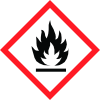
Icons in SDS


Company Information
company name
PPG Canada Inc
GHS Information
Signal word
Danger
Hazard Codes
Hazard statements (CLP)
H226, H315, H317, H319, H350, H361, H373
Hazard statements
Code
Statements
H226
Flammable liquid and vapour
Section 2
SECTION 2: Hazards identification
Classement de la substance ou du mélange Dangers physiques non classifiés ailleurs - Catégorie 1 TOXICITÉ AIGUË (inhalation) - Catégorie 1 IRRITATION OCULAIRE - Catégorie 2A SENSIBILISATION CUTANÉE - Catégorie 1B MUTAGÉNICITÉ SUR LES CELLULES GERMINALES - Catégorie 1B CANCÉROGÉNICITÉ - Catégorie 1B TOXICITÉ POUR LA REPRODUCTION - Catégorie 2 TOXICITÉ POUR CERTAINS ORGANES CIBLES - EXPOSITIONS RÉPÉTÉES - Catégorie 2
Hazard statements
Peut provoquer une allergie cutanée. Provoque une sévère irritation des yeux. Mortel par inhalation. Peut induire des anomalies génétiques. Peut provoquer le cancer. Susceptible de nuire à la fertilité ou au foetus. Risque présumé d’effets graves pour les organes à la suite d’expositions répétées ou d’une exposition prolongée. (cerveau) Éviter tout contact avec des matières organiques.
Precautionary statements
Prévention : Se procurer les instructions avant utilisation. Ne pas manipuler avant d’avoir lu et compris toutes les précautions de sécurité. Porter des gants de protection, des vêtements et équipement de protection des yeux ou du visage. Lorsque la ventilation du local est insuffisante, porter un équipement de protection respiratoire. Utiliser seulement en plein air ou dans un endroit bien ventilé. Ne pas respirer les poussières. Se laver soigneusement après manipulation. Les vêtements de travail contaminés ne devraient pas sortir du lieu de travail. Intervention : EN CAS d'exposition prouvée ou suspectée: Consulter un médecin. EN CAS D'INHALATION: Transporter la personne à l'extérieur et la maintenir dans une position où elle peut confortablement respirer. Appeler immédiatement un CENTRE ANTIPOISON ou un médecin. EN CAS DE CONTACT AVEC LA PEAU: Laver abondamment à l'eau. En cas d'irritation ou d'éruption cutanée: Consulter un médecin. Enlever les vêtements contaminés et les laver avant réutilisation. EN CAS DE CONTACT AVEC LES YEUX: Rincer avec précaution à l'eau pendant plusieurs minutes. Enlever les lentilles de contact si la victime en porte et si elles peuvent être facilement enlevées. Continuer à rincer. Si l'irritation des yeux persiste: Consulter un médecin. Stockage : Garder sous clef. Élimination : Éliminer le contenu et le récipient conformément à toutes les réglementations locales, régionales, nationales et internationales. Éléments d'une étiquette : Tenir à l'écart des vêtements, des produits incompatibles et des matières complémentaire combustibles. Cette matière augmente les risques d'incendie et peut contribuer à la combustion. Les poussières de ponçage et de meulage peuvent être nocives si inhalées. Ce produit contient du formaldehyde ou peut dégager du formaldehyde à raison de plus de 0.5 ppm dans certaines conditions. Le formaldéhyde présente un danger connu de cancer et constitue un sensibilisant cutané ainsi qu'un sensibilisant respiratoire. Émet des fumées toxiques lorsque chauffé. Pourcentage du mélange constitué de composants de toxicité aiguë inconnue: 5.3 % (orale), 67.3 % (cutanée), 76.3 % (par inhalation)
2.1 Classification of the substance or mixture
Dangers physiques non classifiés ailleurs - Catégorie 1 substance ou du mélange TOXICITÉ AIGUË (inhalation) - Catégorie 1 IRRITATION OCULAIRE - Catégorie 2A SENSIBILISATION CUTANÉE - Catégorie 1B MUTAGÉNICITÉ SUR LES CELLULES GERMINALES - Catégorie 1B CANCÉROGÉNICITÉ - Catégorie 1B TOXICITÉ POUR LA REPRODUCTION - Catégorie 2 TOXICITÉ POUR CERTAINS ORGANES CIBLES - EXPOSITIONS RÉPÉTÉES - Catégorie 2



